Silver formal wear brings a light, polished character to men’s occasion dressing, spanning pale silver-gray tailoring, fabrics with a restrained sheen, and metallic accents worn with a traditional suit or tuxedo. The color can feel understated or expressive depending on the fabric and how much of it appears in the outfit. A matte silver-gray suit has a softer presence than a reflective jacket, while a silver tie or pocket square adds a smaller highlight against dark tailoring. That range makes silver relevant to weddings, proms, formal receptions, and evening celebrations where the invitation leaves room for personal style. Its appearance also changes with the setting: a smooth fabric may look softly luminous in daylight and more reflective beneath ballroom lighting or a camera flash. A groom standing beside a partner in white, a prom attendee posing against a dark backdrop, and a guest seated at a candlelit reception may each want a distinct level of shine. Pale silver creates a crisp contrast with black, while deeper pewter tones deliver a quieter effect. Neither color nor sheen alone makes an outfit appropriate for every dress code, however. Traditional black tie generally calls for a black or midnight-blue tuxedo, with silver better suited to carefully chosen accents when the occasion is conservative. A silver-gray suit is a separate option for celebrations that welcome suits rather than require tuxedos. Within those expectations, silver offers an alternative to familiar dark neutrals without depending on an elaborate pattern. Its visual interest comes from the relationship between shade, texture, and light. An outfit with one reflective element often feels more balanced than several competing finishes, especially in group photographs. For wedding parties, coordinating the undertone and level of sheen can create a cohesive appearance without requiring every accessory to match exactly. The result can be distinctive enough for a milestone celebration while remaining grounded in classic tailoring.
Fabric and fit determine how silver formal wear looks beyond the first photograph. Silver describes a color or visual effect, not a particular fiber, so the material label matters as much as the shade. Wool can provide a supple drape and a comparatively subdued surface, while blends may offer a smoother finish or help the fabric retain its shape. Fine contrasting yarns can produce a silvery effect without an overtly metallic surface; other fabrics use glossy yarns or special finishes for stronger reflection. Satin is a weave rather than a fiber, and its smooth face can make a pale gray tone appear brighter. A textured weave, by contrast, breaks up the light and can make the same general color feel less glossy. These distinctions matter when an outfit needs to hold its appearance through a ceremony, dinner, and several hours of dancing. Lining, seam construction, and the behavior of the fabric at the elbows and knees all contribute to comfort and durability. Highly reflective surfaces may make wrinkles, pulls, or abrasion more noticeable, so a finish that suits the intended use is more valuable than shine alone. Fit is equally visible in a light-colored garment. Jacket shoulders should sit smoothly, the collar should rest neatly against the shirt collar, and the front should close without pronounced pulling around the button. A slim silhouette can look clean without restricting a handshake or a comfortable seat at dinner; a roomier cut can still appear precise when the shoulders and trouser length are proportioned well. Trousers should hang cleanly through the thigh and settle over dress shoes without excessive bunching. Trying the full outfit while sitting, walking, and bending the arms reveals more than a still pose in front of a mirror. For someone dressing for a long reception or an awards dinner, that ease of movement helps the clothes look composed throughout the event rather than only at arrival.
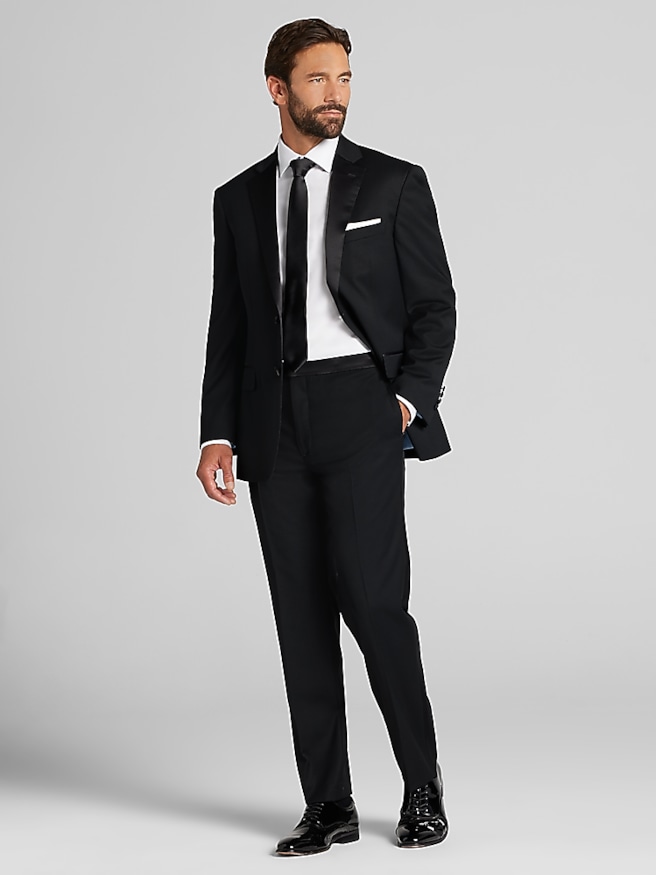
The supporting colors give silver formal wear much of its character. A crisp white shirt creates clear separation beneath silver-gray tailoring, and black shoes provide a firm visual foundation. Black accents sharpen the contrast, while navy, burgundy, or a muted blue can introduce color without competing with the fabric’s sheen. A silver tie against a white shirt produces a gentler contrast, so a subtle woven texture can help keep the two surfaces visually distinct. With a tuxedo, the bow tie, shirt, waist covering, and shoes should work within the event’s dress expectations rather than simply repeat the jacket color. Small metal details also influence the overall effect: cuff links, a watch case, and shirt studs look considered when their finishes relate, although they do not need to be identical. A restrained combination of polished and brushed metal often feels more natural than matching every detail to the same bright shine. For another light-toned approach to occasion dressing, White Formal Wear offers a useful color contrast to silver’s gray and metallic effects. Silver accessories can also make thoughtful gifts for someone preparing for a wedding, graduation celebration, or another dress-up occasion, particularly when the recipient’s preferred colors and existing wardrobe are known. Maintaining the finish helps those pieces and the surrounding tailoring remain useful beyond a single event. Care should follow each garment’s label, since wool tailoring, satin accessories, and fabrics with metallic finishes can require distinct treatment. Excessive heat or direct pressing may leave unwanted shine or damage a delicate surface. Spills deserve prompt attention without vigorous rubbing, and professional cleaning is appropriate when the label calls for it. After wear, allowing tailoring to air before placing it on a supportive hanger helps preserve its shape. Breathable storage, neatly hung trousers, and accessories stored without tight creases protect the details that make silver look refined. With suitable care and a fit that allows natural movement, its appeal extends from the first entrance to future occasions.