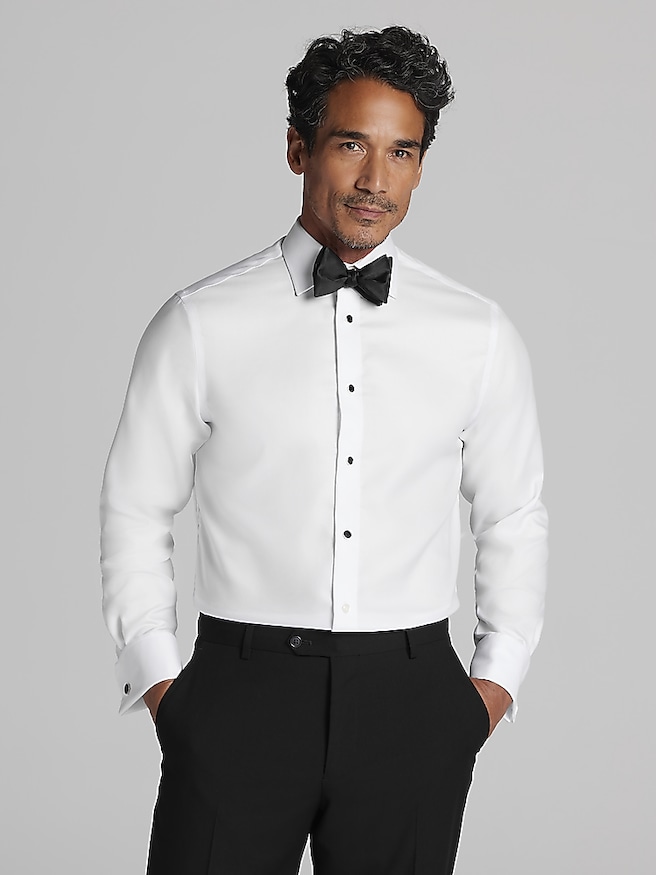
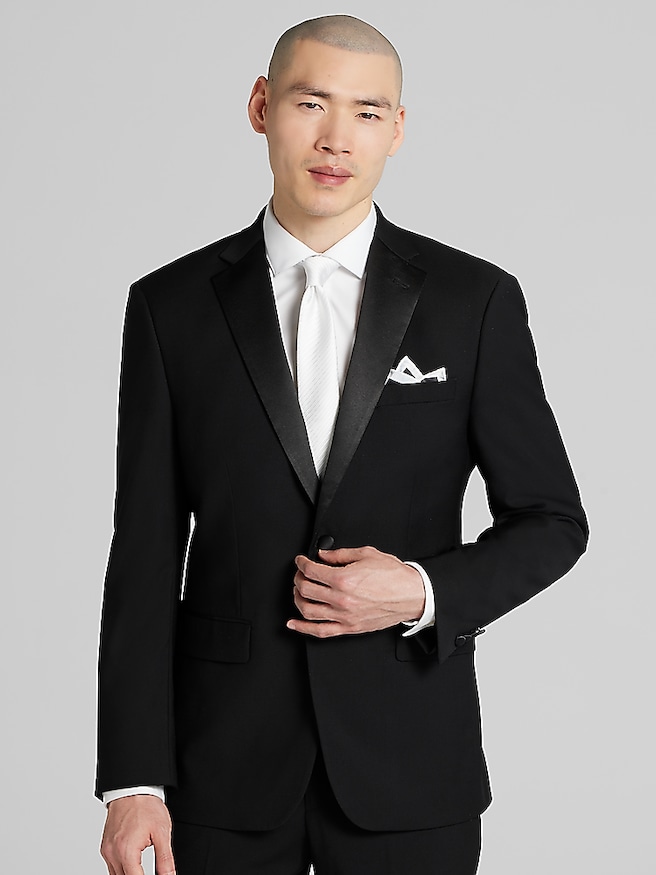
Black formalwear brings together dark tailoring, crisp shirting, and polished finishing details for occasions that call for a distinctly dressed-up look. The category includes black tuxedos, formal suits, trousers, and coordinating accessories, but the right combination depends on the invitation. Traditional black-tie attire centers on a tuxedo, usually distinguished by satin or grosgrain lapel facings, coordinating trousers, a formal white shirt, and a black bow tie. A black suit has a different role: its matching fabric lapels and more versatile construction make it appropriate for many formal weddings, ceremonies, and events where a tuxedo is not required. For black-tie-optional occasions, either a tuxedo or a dark suit with restrained accessories can fit the setting, depending on the host’s expectations. White tie is a separate, more exacting dress code that calls for specialized evening attire rather than a standard black suit or tuxedo. These distinctions give black formalwear its range without making every dark outfit interchangeable. A groom standing beneath ceremony lights, a guest arriving at a charity gala, and a graduate attending an awards banquet may all choose black tailoring, yet each occasion can call for a different level of formality. Black also provides a consistent visual foundation for coordinated wedding parties, allowing differences in lapel shape, shirt texture, or accessories to feel intentional rather than distracting. Its understated color puts greater emphasis on proportion and finish: a clean shoulder line, smooth trouser front, and neatly framed shirt collar become especially noticeable. In photographs, the contrast between dark tailoring and a light shirt helps define the silhouette, while subtle differences in fabric keep the outfit from looking flat. For someone building a formal wardrobe, black offers a familiar starting point that can support both traditional evening dress and less rigid formal settings when the garment type matches the occasion. The result is an outfit that feels deliberate without relying on bold color or elaborate decoration.
Fabric and construction shape how black formalwear looks and feels over the course of an event. Wool is valued in tailored clothing for its drape, resilience, and ability to manage moisture, making it a strong choice for a ceremony followed by dinner and several hours of dancing. Fine wool can create a smooth surface with a rich depth of color, while more textured weaves give black a softer appearance. Wool blends may introduce stretch or other performance characteristics, though comfort and recovery depend on the full fabric composition and the way the garment is made. A small amount of stretch can ease movement, but it does not replace enough room through the shoulders, seat, and thighs. Velvet offers a plush, light-catching surface for dress codes that allow an expressive dinner jacket, while satin and grosgrain provide the controlled contrast associated with tuxedo detailing. Because black fabrics can differ in undertone, sheen, and texture, a coordinated jacket and trouser pairing creates a more consistent appearance than unrelated pieces that only seem to match under one light. Fit matters just as much as fabric. Jacket shoulders should follow the body without extending beyond it or pulling inward, and the collar should sit close to the shirt rather than leaving a visible gap. A comfortable chest and waist allow the jacket to close cleanly without pronounced pulling around the button. Slim, tailored, and classic fits describe different proportions, not different levels of formality; the strongest choice is the one that creates a balanced outline while allowing natural movement. Trousers need enough room for sitting through a long dinner, with a waistband that stays in place without excessive tightening. Their finished length should work with the intended shoes, whether the preference is a slight break or a cleaner line at the ankle. Thoughtful alterations to sleeves, hems, and the waist can refine that balance, particularly when an outfit needs to look composed both standing for photographs and seated at a table.
Finishing details give black formalwear its character without taking attention away from the tailoring. For traditional black tie, a black bow tie and a formal white shirt establish the clearest foundation, with shirt studs or concealed buttons determined by the shirt’s construction. A cummerbund or a low-cut formal waistcoat can provide a finished waistline in a conventional tuxedo ensemble, while a double-breasted dinner jacket creates a different arrangement that generally does not need either. With a black suit, a restrained silk necktie and a neatly folded pocket square can create an appropriately formal impression without imitating every tuxedo convention. Polished black leather footwear supports the overall look, with patent leather offering a distinctly evening finish and well-maintained smooth leather suiting many formal combinations. Socks that stay up and cover the leg when seated preserve a continuous line beneath the trousers. Black trousers and accessories can also provide contrast within an outfit built around white formal wear, especially when the dress code accommodates a light dinner jacket. For gift giving, formal accessories can mark a graduation, wedding, or milestone celebration, particularly when they complement clothing the recipient already wears. Long-term appearance depends on care as much as initial selection. Following the garment’s care label, addressing spots promptly with an appropriate professional, and avoiding unnecessary cleaning can help preserve fabric and finishing details. Structured jackets benefit from broad, supportive hangers, while trousers stay neater when hung along their crease or folded carefully over a suitable bar. Allowing garments to air after wear before storing them helps moisture dissipate, and a breathable garment bag protects against dust without trapping it against the fabric. A clothing brush or fabric-appropriate lint tool can remove the small fibers that show readily on black. With careful storage, sound construction, and a fit that allows comfortable movement, black formalwear can remain a dependable part of a wardrobe across many meaningful occasions.