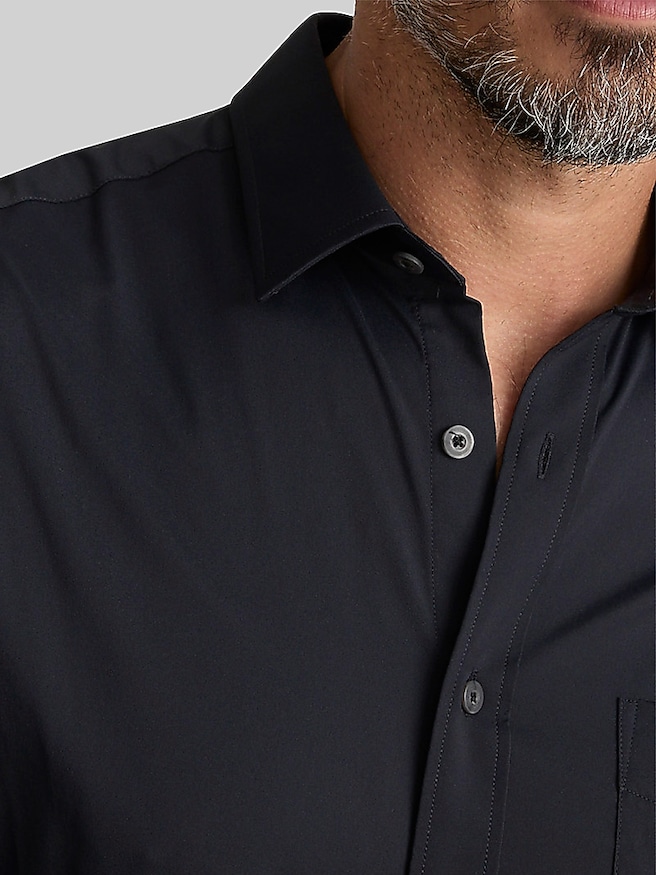
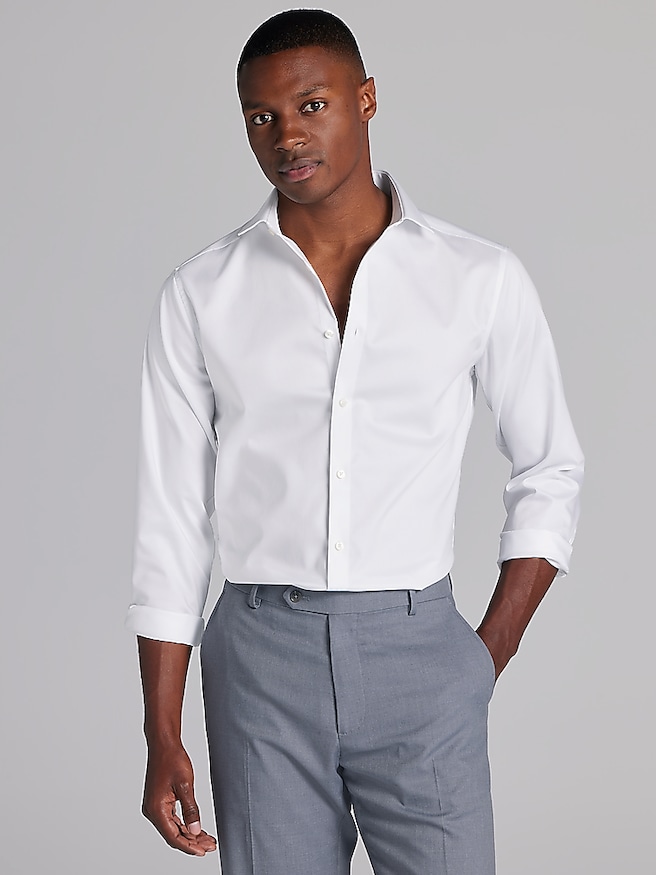
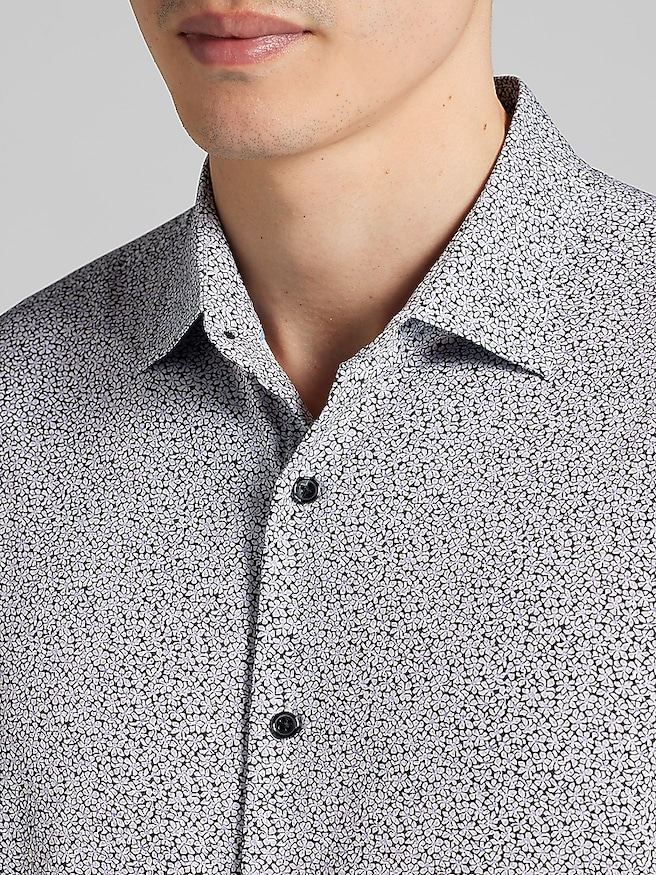
Men’s white long sleeve shirts span casual knit styles, textured button-downs, and tailored dress shirts, offering a clean foundation for outfits that range from relaxed to formal. The shared color makes them easy to coordinate, but fabric, collar shape, and construction give each style a distinct purpose. A cotton crewneck or henley has an easygoing feel with jeans, while an Oxford shirt adds structure without looking overly dressed up. Smooth woven shirts with crisp collars work naturally with tailored trousers, sport coats, and suits. For occasions that call for a polished appearance, men's white long sleeve dress shirts provide a neutral backdrop for neckwear and tailored layers. A white shirt with a navy suit and a textured tie looks appropriate for an interview or client presentation; worn open at the collar with gray trousers, it takes on a less formal character. The details matter just as much as the color. Button-down collar points create a relaxed, tidy appearance, while point and spread collars offer distinct ways to frame a tie. Barrel cuffs close with buttons for everyday convenience, whereas French cuffs accommodate cufflinks for dressier occasions. A plain front keeps the look streamlined, and a chest pocket adds a practical detail that can make a shirt feel less formal. White also highlights texture: the soft grain of Oxford cloth, the subtle diagonal lines of twill, and the smooth surface of poplin each bring a distinct character to the same basic outfit. For work, dinners, milestone celebrations, or everyday wear, a white long sleeve shirt offers versatility without requiring a complicated combination of colors. Its simplicity leaves room for a patterned tie, a richly textured jacket, or a favorite watch to stand out. The result can feel understated or expressive, depending on the pieces worn alongside it.
Fabric and fit determine how a white long sleeve shirt feels through a full day and how neatly it sits beneath other clothing. Cotton is valued for its breathable feel and familiar softness, although the weave and fabric weight influence its structure. Poplin generally has a smooth, relatively flat surface that suits a crisp appearance, while Oxford cloth has a more noticeable woven texture and a relaxed character. Twill’s diagonal weave can give a shirt a supple drape, with wrinkle visibility varying by construction and finish. Cotton blends may offer easier care or help a shirt maintain its shape, and fabrics containing stretch fibers can allow more give through the shoulders and elbows. Knit shirts have a naturally flexible structure that works well for casual outfits. Because white fabrics vary in opacity, a shirt’s coverage deserves attention, especially when it will be worn without a jacket. A discreet undershirt close to the wearer’s skin tone can be less noticeable beneath white fabric than a bright white undershirt. Fit is equally personal. Slim cuts generally sit closer to the torso, while classic or regular cuts typically provide more room; exact proportions vary, so measurements are more useful than a fit name alone. A comfortable shoulder seam sits near the edge of the shoulder, and a buttoned front should lie smoothly rather than pull into gaps across the chest or waist. Long sleeves should allow the arms to bend comfortably without drawing the cuffs too far up the wrists. When worn with a tailored jacket, a small amount of shirt cuff can show beneath the jacket sleeve. Collar comfort matters for anyone wearing a tie, and a collar that presses into the neck can become distracting over several hours. Shirt length also affects intended use: longer tails help a dress shirt stay tucked during meetings and seated events, while a shorter, balanced hem can look more natural worn untucked. Big and tall proportions can address additional needs in body length, sleeve length, and room through the torso without relying only on a larger standard size.
The lasting appeal of a white long sleeve shirt depends partly on how well its construction and care requirements match everyday habits. Secure buttons, even stitching, neatly finished seams, and well-shaped cuffs are useful details to consider in a garment that may be worn repeatedly. Areas such as the collar edge, cuffs, and underarms tend to receive the most contact, so routine care helps preserve both appearance and comfort. The care label should determine washing, drying, ironing, and any professional cleaning requirements, since cotton, blends, stretch fabrics, and special finishes do not all respond the same way. Washing white shirts with compatible light-colored garments helps reduce dye transfer, while prompt attention to collar buildup and small marks can prevent stains from becoming more difficult to remove. Bleach is not suitable for every fabric or finish, even when the garment is white. Excessive dryer heat can contribute to shrinkage or affect stretch fibers, and removing a washable shirt promptly after drying can reduce deep creases. Some shirts benefit from pressing at the temperature listed on the label, especially around the collar, placket, and cuffs; easy-care finishes may reduce that effort without eliminating it entirely. For someone who wears a tie most days, collar shape and a smooth front may take priority. For someone moving between a desk, a commute, and dinner plans, comfortable movement and a fabric that recovers neatly from sitting may matter more. A casual white knit can serve as a simple layer beneath an overshirt, while a woven button-down can stand on its own with chinos and leather shoes. As a gift for a graduate, a partner, or someone starting a new job, a white long sleeve shirt is most useful when its measurements, preferred fit, and care needs are known. Matching those practical details to the wearer makes a familiar wardrobe staple feel thoughtfully chosen rather than generic.