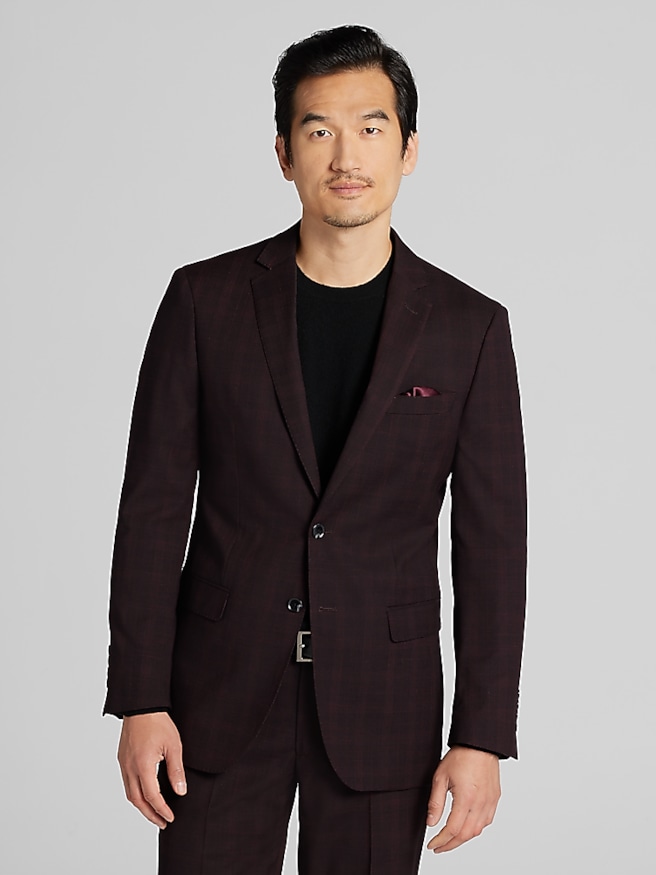
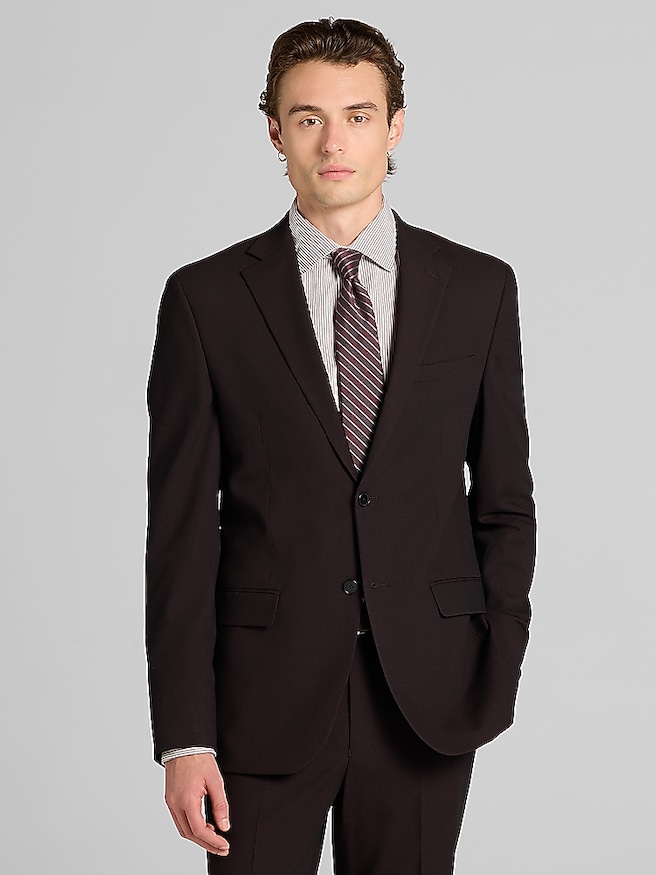
Purple formal wear for men spans tailored suits, tuxedo styling, dress shirts, and finishing accessories in shades ranging from pale lavender to deep plum. The color can be the centerpiece of an outfit or a small detail that ties everything together. An aubergine suit has a subdued richness that feels close to a dark neutral, while royal purple creates a more pronounced statement. Lavender and lilac bring a lighter contrast to charcoal, navy, and black, making them useful for shirts, ties, and pocket squares when a full purple outfit would feel too bold. These distinctions matter at weddings, proms, galas, awards ceremonies, and other celebrations where personal style shares the spotlight with an established dress code. A groom may favor a deep purple jacket that stands apart from the wedding party, while a guest may prefer a plum tie against a dark suit. For a coordinated wedding party, repeating one purple shade in smaller accessories can create a clear connection without requiring every outfit to match from head to toe. The invitation remains the best reference for formality: a purple suit can suit many festive dress codes, but it is not automatically a substitute for a tuxedo at a black-tie event. A colored dinner jacket is most appropriate when the host welcomes that interpretation of evening attire. The amount of purple also changes the overall impression. A dark jacket with matching trousers creates a continuous line, while a purple jacket with black formal trousers draws attention toward the face and lapels. Under indoor lighting, very dark plum may appear almost black until its color catches the light; brighter violet remains more noticeable across a room. Viewing shades beside the intended shirt and accessories helps reveal those differences, especially when several people will be photographed together.
Fabric and fit determine how purple formal wear looks and feels beyond the first impression. Wool and wool-blend suiting fabrics can offer a balance of structure, breathability, and recovery after sitting, making them practical for events that move from a ceremony to dinner and dancing. The weave affects the finish: a smooth surface gives purple a crisp, even appearance, while subtle texture adds depth without relying on a pattern. Velvet has a soft pile that reflects light differently as the wearer moves, creating particularly rich effects in plum and aubergine. It also needs thoughtful handling because pressure and friction can flatten the pile. Satin is often used for lapel facings and accessories, where its sheen provides contrast against a more matte fabric. Depending on the fiber and construction, synthetic blends may offer useful wrinkle resistance and durability, although shine, weight, and feel can vary considerably. Fabric composition and the care label provide more useful information than color alone. Fit is equally important because a distinctive shade naturally draws attention to the silhouette. Jacket shoulders should sit cleanly without extending noticeably beyond the body, and the collar should rest against the shirt rather than pulling away at the back. A smooth chest and a button that closes without pronounced pulling help preserve the intended shape. Slim fits follow the body closely, while more relaxed cuts provide additional room through the chest, seat, and thigh; neither should restrict ordinary movement. Sitting through a dinner, reaching forward for a handshake, and walking up stairs all call for comfortable ease. Trousers should hang cleanly through the leg, with a hem length suited to the cut and footwear. For anyone between standard proportions, alterations to sleeve length, trouser hems, or the waist can make the outfit look more settled without changing its character. Those details often matter more than choosing the narrowest possible silhouette.
Coordinating purple formal wear works best when color, texture, and formality support the same impression. A white dress shirt creates a clean separation beneath a purple jacket, particularly when the shade is dark or saturated. Pale blue can soften the contrast with a purple suit, while a lavender shirt can introduce the theme beneath charcoal or navy tailoring. A purple tie does not need an identical pocket square; a white square or a restrained pattern containing a related tone can look more natural than several perfectly matched pieces. When the jacket already has a strong texture or sheen, quieter accessories keep the outfit from becoming visually crowded. Black leather footwear is a dependable choice for many formal combinations, with highly polished or patent finishes reserved for settings that call for them. Metal details can remain simple: consistent finishes across cuff links, a watch, and other visible accents make the color feel deliberate rather than busy. For coordinated outfits that include another color family, Blue Formal Wear offers a related direction, with navy providing a restrained contrast to plum and lighter blue complementing lavender. Keeping purple garments looking sharp also depends on what happens after the event. A shaped hanger supports jacket shoulders, and trousers stored neatly along their intended crease are less likely to develop unwanted folds. Let garments air out before placing them in a breathable storage cover, and keep them away from prolonged direct sunlight that can affect color. Cleaning should follow the individual care label, especially for velvet, satin, structured tailoring, and pieces with contrasting trim. Stains deserve prompt attention without aggressive rubbing, which can spread the mark or damage the surface. Purple accessories can also make thoughtful gifts for a graduate, partner, or family member preparing for a milestone celebration, particularly when the recipient's preferred shade and usual dress code are known. A familiar color in a carefully chosen texture offers personality while remaining useful beyond a single occasion.