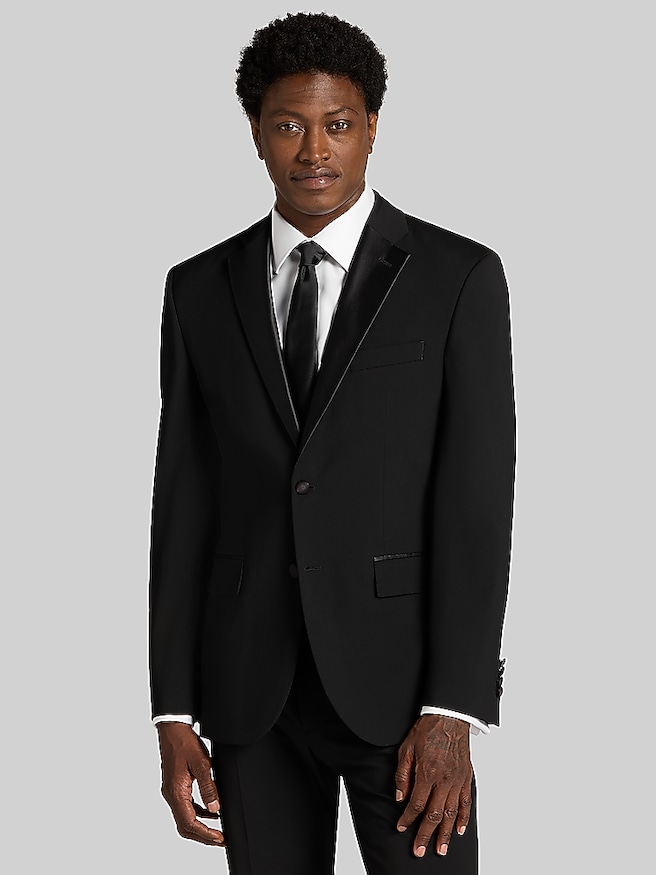
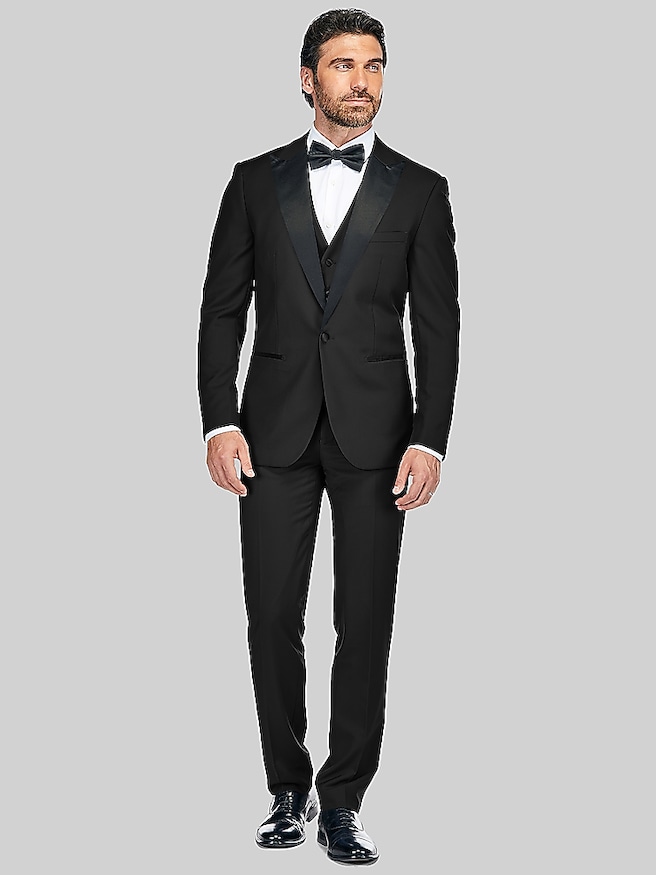
Satin lapels are smooth, lustrous fabric facings sewn onto the lapels of tuxedos and dinner jackets, creating a visible contrast with the body of the jacket. Their sheen catches the light along the chest and neckline, giving formalwear its distinctive evening character without requiring an elaborate pattern or a bright color. Satin describes a weave rather than a single fiber: the facing may be made from silk, polyester, or another suitable fiber blend. Its smooth surface reflects light more evenly than a visibly textured fabric, although the degree of shine depends on the material and finish. Against a matte wool or wool-blend jacket, that contrast can look especially crisp. Satin differs from grosgrain, another traditional formalwear facing, which has fine, closely spaced ribs and a more restrained luster. Neither finish is inherently more formal; each gives the jacket a different texture and visual personality. The shape beneath the facing matters just as much. A satin peak lapel has upward-pointing tips that create a defined, angular frame across the chest. A satin shawl collar follows a continuous rounded curve, producing a softer line often associated with classic dinner jackets. Notch lapels, recognizable by the small indentation where the collar meets the lapel, also appear on some tuxedo designs, though peak lapels and shawl collars have stronger traditional associations with evening dress. Lapel width changes the overall impression, too: a narrower facing creates a spare, streamlined look, while a broader one makes the satin a more prominent part of the outfit. These details suit occasions where the clothing should feel distinctly dressier than an everyday business suit, including black-tie weddings, formal receptions, benefit galas, and prom. Under the lighting of a ballroom or reception space, the facing adds definition even to an otherwise simple black ensemble. The effect comes from the relationship between shape, texture, and light, rather than from shine alone.
The appeal of a satin-lapel tuxedo depends on how the entire outfit works together. Satin-covered buttons and a satin stripe along the outer trouser seam are common coordinating details, although construction varies by design. When these accents share a similar finish, the result feels deliberate from the jacket front to the trouser leg. A jacket with satin lapels is not necessarily made from satin throughout; often, the facing is the luminous accent on a substantially more matte fabric. For a broader expression of that finish, Satin Suits offer a related direction, with the overall effect depending on how extensively satin is used. Fit gives either approach its polish. Jacket shoulders should sit cleanly without extending noticeably beyond the natural shoulder line, and the lapels should rest against the chest rather than bow outward. Pulling around the fastening point or a collar that lifts away from the neck can interrupt the smooth appearance that makes satin trim so effective. A comfortable fit also leaves room to sit through dinner, reach across a table, and move on the dance floor without the jacket feeling restrictive. Lapel width is best viewed alongside shoulder width, jacket proportions, and personal preference rather than as a rule tied to a particular body type. A white formal shirt provides a clear backdrop for black satin, while a neatly tied bow tie keeps the neckline balanced. For traditional black tie, a black bow tie in a compatible finish is a natural choice. A white pocket square adds separation at the chest without competing with the facing. Patent leather shoes deliver another polished surface, while well-maintained smooth leather shoes can create a slightly quieter effect when appropriate to the dress code. Accessories do not need identical levels of shine, but a limited mix of finishes helps the satin remain an intentional focal point.
Materials and construction influence how satin lapels look after repeated wear, making them worth considering alongside color and silhouette. Silk satin can have a rich, fluid luster, while polyester satin can provide a consistent finish and good resistance to wrinkling; actual performance depends on fabric quality and garment construction. The facing should lie evenly, with clean edges and no puckering where it joins the jacket. Because a smooth, reflective surface makes small irregularities easier to notice, careful handling helps preserve its appearance. Satin can snag against rough surfaces, sharp jewelry, or abrasive bag straps, and repeated rubbing may leave visible marks. A supportive jacket hanger helps maintain the shoulder shape between occasions, while a breathable garment bag protects the fabric from dust without trapping residual moisture. Care should follow the garment label, especially when the jacket combines different fibers or includes structured internal layers. Direct heat and heavy pressure can alter the sheen or leave impressions, so pressing a satin facing is best handled cautiously and, when needed, by a cleaner experienced with formalwear. Spills are another reason to avoid aggressive spot treatment: rubbing can spread a stain or disturb the surface. Allowing the jacket to air after wear and arranging appropriate cleaning when necessary supports long-term use without subjecting it to unnecessary treatment. For someone who attends formal events regularly, a well-fitting satin-lapel jacket can become a familiar part of an evening wardrobe, adaptable through restrained changes in shirts and accessories. For a groom, a prom attendee, or someone preparing for a first black-tie invitation, the same detail can help mark an important milestone. Formalwear can also make a thoughtful gift when measurements, preferred fit, and the occasion are understood, particularly if the recipient can take part in the fitting process. The lasting attraction is straightforward: satin lapels provide a recognizable formal finish, with enough variation in shape, fabric, and proportion to feel personal rather than uniform.