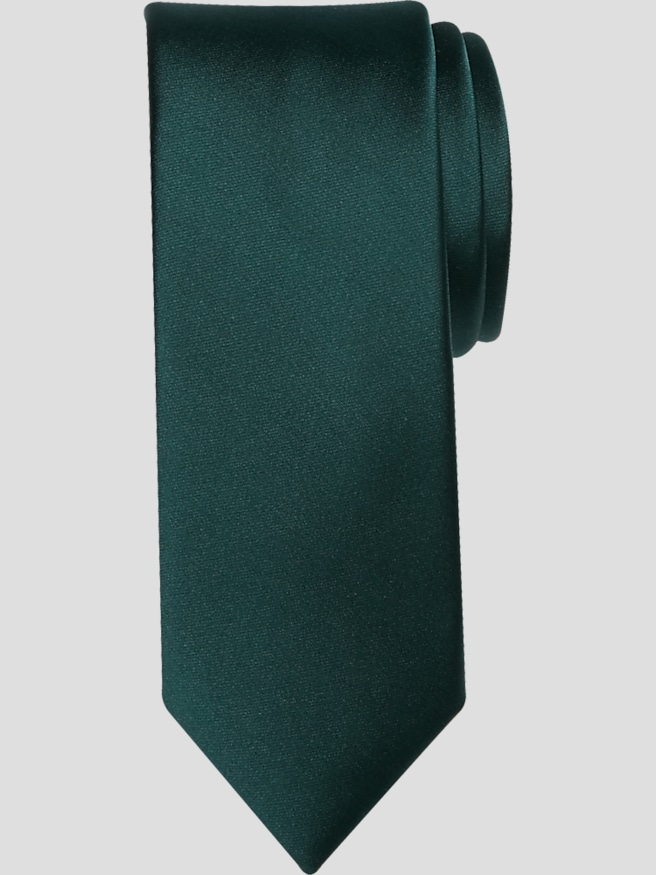
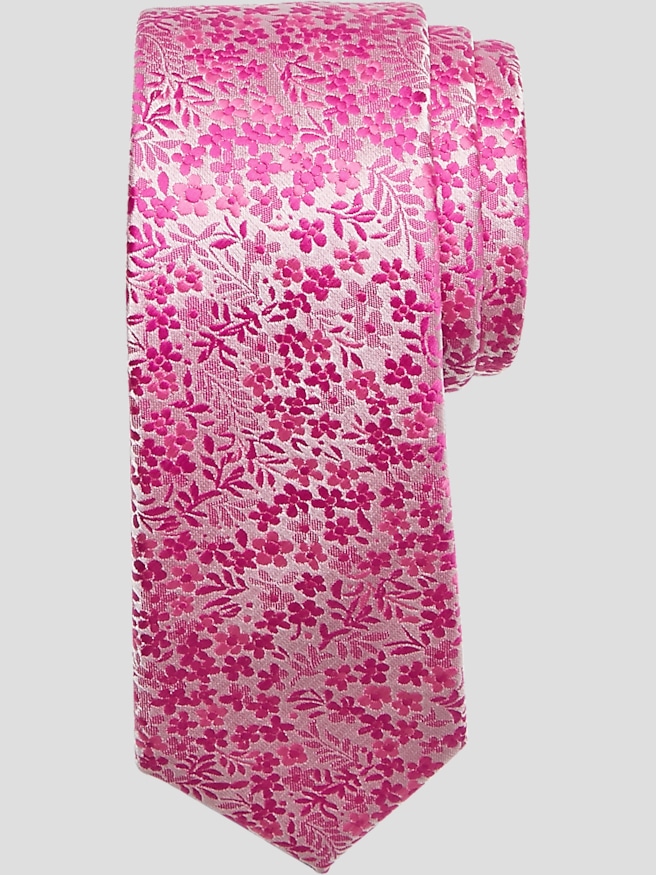
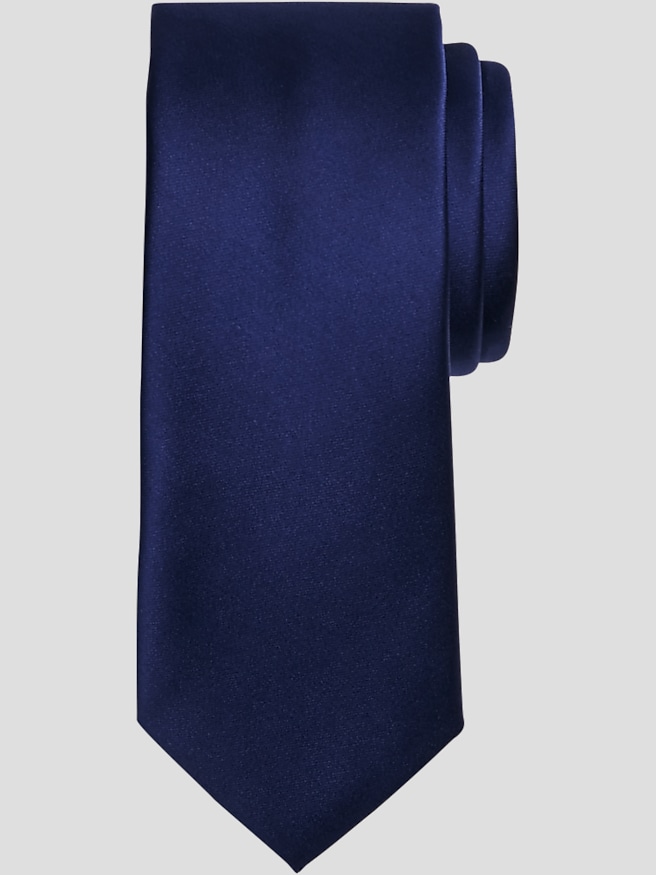
Red satin ties bring a clear focal point to tailored clothing, combining a rich color with a smooth surface that catches the light. Against a crisp white shirt and charcoal suit, a red tie creates a sharp, familiar contrast; with navy tailoring, the effect feels warm and confident without losing its polish. The finish is part of what makes satin distinctive. Rather than describing a single fiber, satin refers to a weave that places longer stretches of yarn across the face of the fabric, producing its characteristic luster. Depending on its composition and construction, a satin tie can feel fluid and lightweight or slightly fuller, with enough body to form a substantial knot. Red also covers a broad range of tones, from bright scarlet and clear cherry to deeper crimson and wine shades. A vivid red stands out in a wedding portrait or at an evening reception, while a darker shade can feel more restrained for a business dinner or a dressed-up gathering. Lighting matters, too: the same tie may look softly luminous in daylight and more reflective beneath indoor lighting. That interplay makes a largely solid design visually interesting without relying on a busy pattern. During the cooler months, satin provides a smooth counterpoint to flannel suits, textured wool jackets, and other fabrics with a matte surface. For a coordinated outfit, a white pocket square keeps the emphasis on the tie, while a subtly patterned square can pick up a small trace of red without repeating the tie exactly. The result works especially well when the shirt and jacket give the color room to stand on its own. A pale blue shirt offers another useful foundation, softening the contrast while preserving the definition between the tie and the rest of the outfit. Fine stripes can also work, particularly when their scale stays quiet beside the satin finish.
The way a red satin tie sits against the shirt is as important as its color. Width generally looks most balanced when it relates to the jacket lapels and the wearer’s overall proportions. A narrower blade complements slimmer lapels, while a broader tie can give a fuller-cut jacket a more consistent sense of scale. Length deserves equal attention: once tied, the tip should generally reach the waistband or the middle of the belt buckle, rather than stopping high on the shirt or extending far below it. Taller wearers and anyone who favors a larger knot may need more length to achieve that balance. Collar shape also influences the finished appearance. A four-in-hand creates a relatively compact, slightly asymmetrical knot that suits many point collars, while a half-Windsor provides a more symmetrical shape with moderate fullness. A wider spread collar can accommodate a larger knot, although thick fabric and substantial interlining may already supply plenty of volume. With satin, a small dimple just below the knot can break up the smooth surface and give the tie a more deliberate finish. Gentle shaping usually works better than pulling hard, which can compress the fabric and leave stubborn creases. The fiber content contributes to both handling and everyday practicality. Silk satin often has a supple feel and a nuanced sheen, while polyester satin can provide a smooth appearance with good resistance to some everyday wear. Neither fiber makes a tie immune to snags, spills, or damage from heat, and construction plays a meaningful role in how neatly it hangs. Interlining helps support the blade and knot; balanced stitching allows the tie to move without looking rigid. For a closer look at ties organized by fiber rather than finish, red silk ties provide a related point of comparison, since silk can be woven into satin as well as other textures. The distinction is useful when the goal is a particular combination of shine, softness, drape, and structure rather than color alone.
Red satin ties suit occasions that call for a noticeable but controlled touch of color, from wedding celebrations and anniversary dinners to presentations, awards events, and festive evening gatherings. For a wedding party, coordinating the shade under similar lighting helps create consistency, particularly when shirts or suits have slightly varied textures. A necktie can work well with a suit for many dressy occasions, though an invitation specifying black tie traditionally calls for a bow tie with a tuxedo. At a professional event, deeper red satin paired with understated tailoring can keep the appearance composed, while brighter shades make a stronger statement at social celebrations. These ties can also make thoughtful gifts for someone building a tailored wardrobe, marking a graduation, starting a new role, or preparing for an important occasion. Familiarity with the recipient’s usual suit colors, preferred tie width, and collar styles makes the choice more personal and more likely to become part of a regular rotation. Ongoing care helps preserve the finish that gives satin its appeal. After wearing, reverse the steps used to tie the knot instead of dragging the narrow end through it, then let the fabric relax before putting it away. Hanging a tie on a smooth rack or loosely rolling it can limit creasing; tight folds and crowded storage can leave marks across the blade. Because the satin surface can catch on rough edges, keeping it away from exposed fasteners and abrasive accessories helps protect its appearance. A spill deserves prompt, gentle attention: blot rather than rub, avoid adding heat, and follow the care label before attempting any treatment. Professional cleaning may be appropriate, especially for silk or a stubborn stain. Direct ironing can alter the sheen or flatten the tie’s shape, so pressing and steaming should follow the fabric’s care directions. With thoughtful handling, a red satin tie can retain its smooth drape and polished character through repeated occasions, ready to bring a familiar suit into sharper focus.