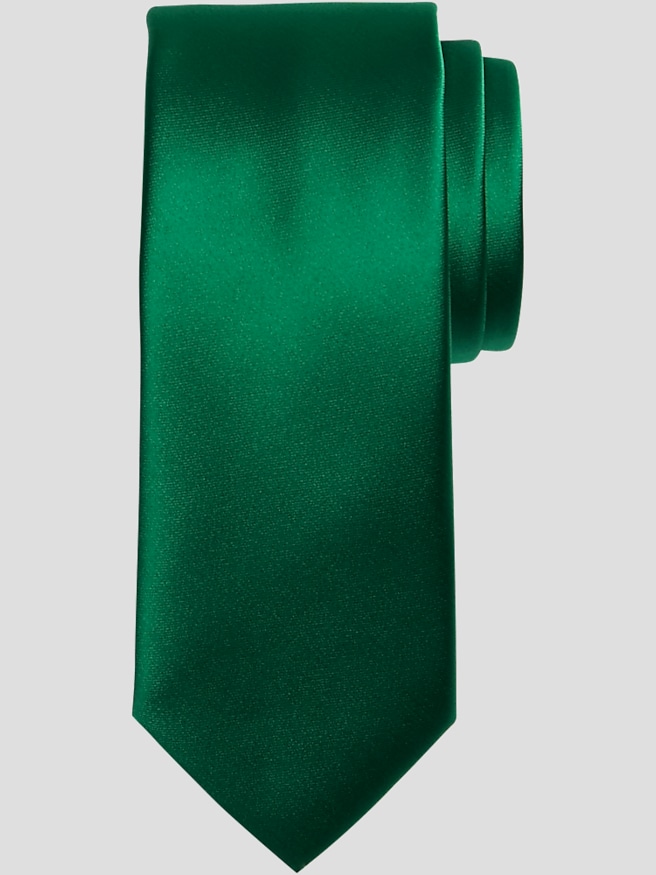
Green satin ties combine rich color with a smooth, light-reflecting surface, making them a polished choice for suits, dress shirts, wedding attire, and business outfits. Satin describes the weave rather than the fiber, so a satin tie may be made from silk, polyester, or a blend. Its characteristic sheen comes from the way yarns cross on the fabric’s face, creating a sleek finish that stands out against a matte shirt or a softly textured jacket. Silk can offer a supple feel and fluid drape, while polyester can offer resilience and shape retention, depending on the fabric and construction. Fiber content is only part of the picture: smooth seams, neatly finished edges, and a tie that hangs without twisting also contribute to its appearance. Green spans a broad color range, from pale sage and muted olive to jewel-toned emerald and deep forest green. Each shade creates a distinct impression. Subdued olive sits comfortably with a navy suit in a professional setting, while emerald brings a stronger accent to charcoal tailoring for a wedding or an evening celebration. Sage pairs naturally with light gray or tan, especially when the rest of the outfit stays simple. A white shirt gives almost any green shade a clear backdrop, and pale blue offers a softer contrast without making the combination feel busy. Because satin reflects light, the same green can appear brighter under direct illumination and deeper in shadow. Looking at the fabric beside the intended shirt and jacket helps reveal how the colors work together. Within the broader category of Men's Satin Ties, green offers a distinctive alternative to familiar neutrals without requiring an elaborate outfit. The strongest combinations often let the tie supply the main color, with the shirt, jacket, and smaller accessories supporting it rather than competing for attention.
Proportion matters as much as shade when choosing a green satin necktie. Tie width generally looks most balanced when it relates to the jacket’s lapels and the wearer’s frame: a narrow tie creates a streamlined line with slim lapels, while a broader tie feels more at home with fuller tailoring. Length deserves equal attention. Once tied, the tip should generally reach the waistband or the middle of the belt buckle, rather than stopping well above it or extending far below. Taller wearers, longer torsos, and larger knots can require additional length, so height alone does not tell the whole story. The shirt collar also helps determine which knot looks right. A four-in-hand produces a relatively compact, slightly asymmetrical knot that works well with many point collars. A half Windsor creates a more symmetrical shape, while a full Windsor uses more fabric and needs enough collar space to avoid looking crowded. Satin’s smooth surface makes careful knotting worthwhile: draw the fabric through gently, straighten the blade, and adjust the knot without repeatedly pulling hard on the narrow end. A small dimple beneath the knot can give the front some depth, but the fabric should fall naturally rather than look pinched. For an office presentation, a dark green tie with a white shirt and navy suit can feel composed without becoming overly decorative. For a wedding party, coordinating the green shade across attire helps create a cohesive look, although satin and matte fabrics may photograph differently even when their color names match. A pocket square does not need to duplicate the tie; white linen or a restrained pattern containing a small green accent can provide a more relaxed finish. A green satin long tie can also dress up a simple suit for a graduation, anniversary dinner, or awards event. The invitation’s dress code still takes priority, particularly when black tie calls for a bow tie rather than a standard necktie.
Careful handling helps a green satin tie maintain its smooth face and clean drape through repeated wear. Satin’s exposed surface yarns can catch on rough edges, so take care around hook-and-loop closures, unfinished wood, sharp jewelry, and crowded accessory drawers. After wearing, undo the knot by reversing the tying steps instead of pulling the narrow end through a tightened knot. Leaving a tie knotted can set creases and place unnecessary stress on the same small area of fabric. Give it space between wears, then store it loosely rolled or on a smooth tie rack, away from direct sunlight and anything that could snag the surface. The care label should guide cleaning, since silk, polyester, blends, linings, and internal construction do not all respond the same way to moisture or heat. If a spill occurs, gently blot with a clean, dry cloth rather than rubbing, which can spread the mark or disturb the finish. Avoid applying water, stain treatments, or an iron before checking the recommended care method. Professional cleaning may be appropriate, especially for delicate fabrics or stubborn marks; pointing out the stain helps the cleaner assess treatment. Good construction and sensible care both support durability, but even a well-made tie benefits from rotation rather than daily wear. As a gift, a green satin tie is especially thoughtful for someone who regularly wears navy, gray, or brown tailoring, since those wardrobe foundations offer several easy pairings. A favorite green shade, an upcoming celebration, or a school color can give the choice personal meaning without making it useful for only one occasion. Consider the recipient’s usual tie width, preferred knot, shirt collars, and length needs alongside color. A deep, understated green may suit someone with a restrained wardrobe, while a brighter emerald can appeal to someone who enjoys a more noticeable accent. The most useful choice feels connected to the wearer’s style and works with clothing already in regular rotation.