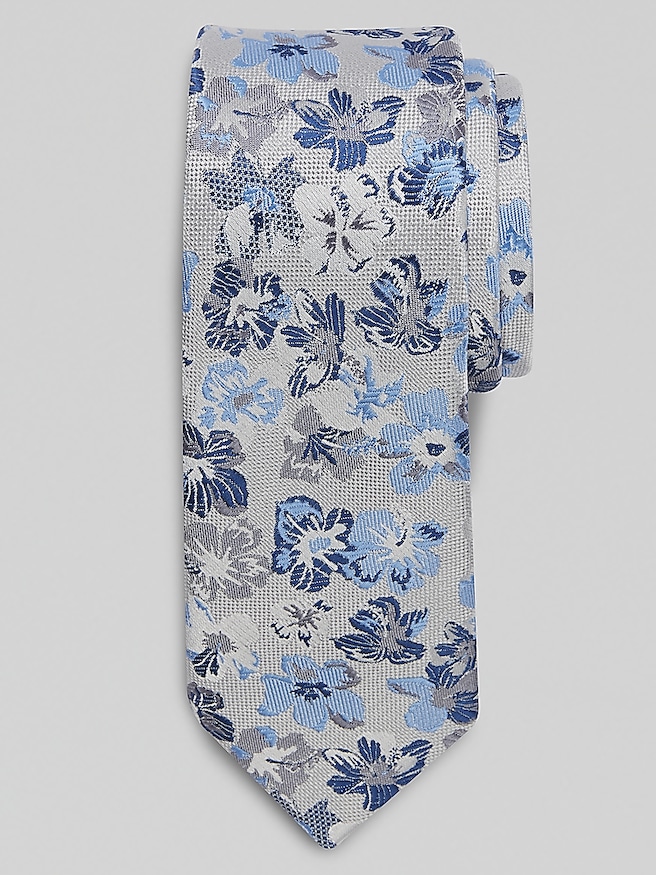
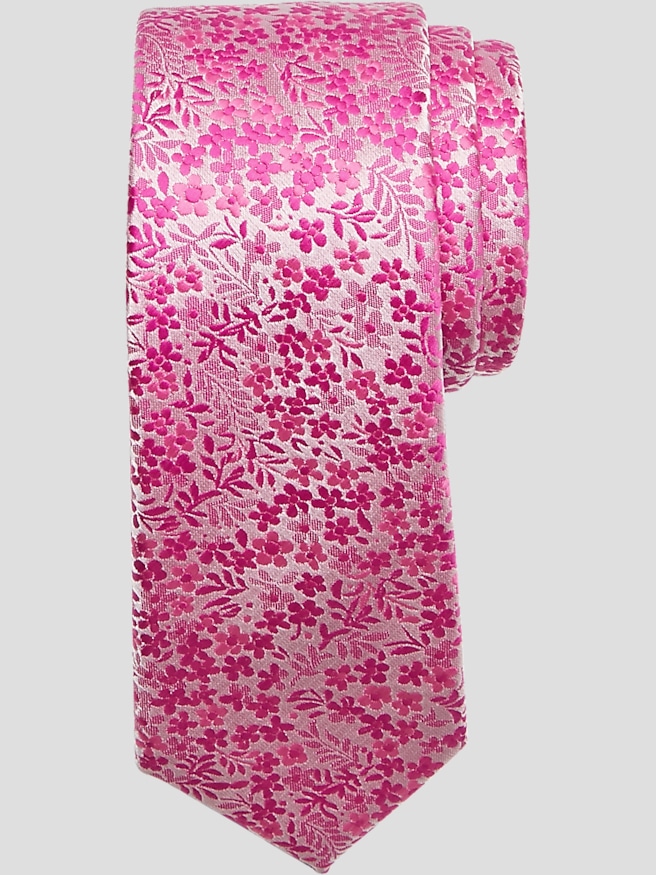
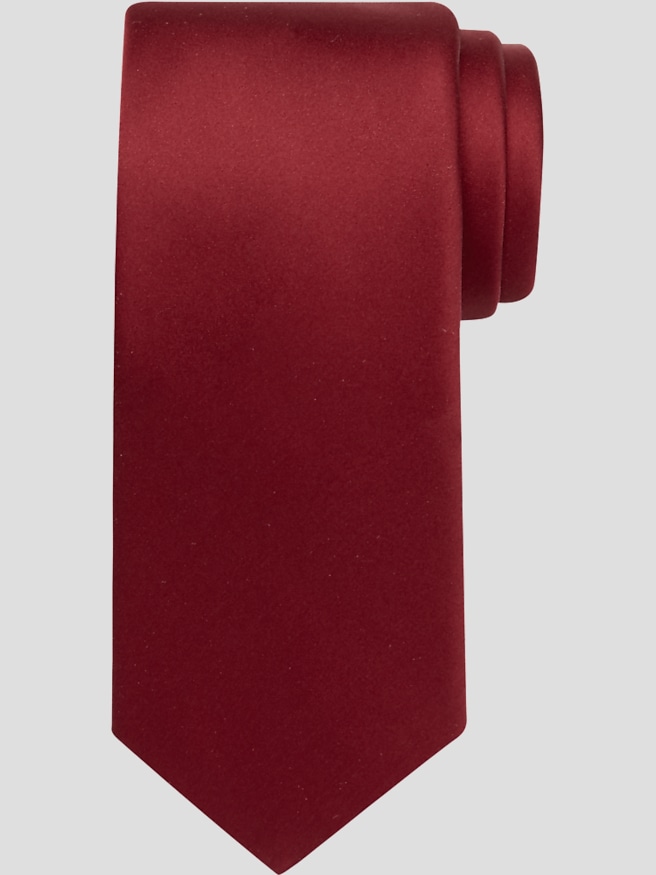
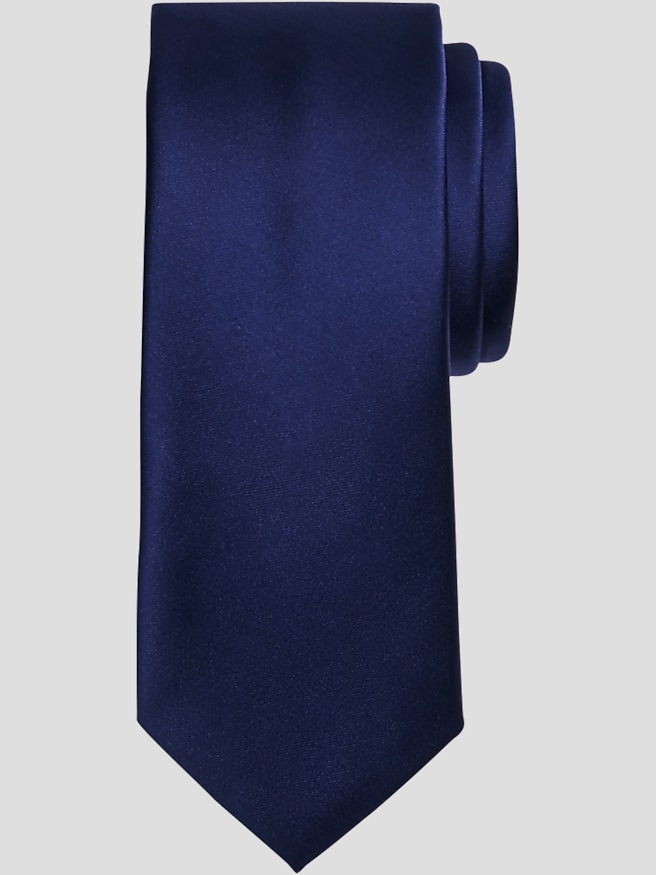
Men’s satin ties bring a polished finish to formal and dress-casual wardrobes with their smooth texture and subtle sheen. Unlike matte cotton or heavily textured wool, satin catches the light as you move, giving a suit a refined sense of occasion without requiring an overly elaborate outfit. That makes a satin tie a natural choice for weddings, proms, formal dinners, holiday celebrations, milestone parties and black-tie-inspired events, as well as business settings where a little extra distinction feels appropriate. A well-chosen tie can transform a familiar navy or charcoal suit: under warm reception lighting, the fabric may show a soft glow, while in daylight it reads as clean and sophisticated. Satin ties are also useful when coordinating a wedding party or family group because their consistent finish photographs beautifully and can complement a range of suit colors. For a classic formal look, pair one with a crisp white shirt and a dark suit or tuxedo. If the occasion is less traditional, a satin tie can add dimension to a pale blue, gray or subtly patterned shirt, provided the rest of the outfit remains balanced. Color is an important consideration. Deep, saturated shades tend to feel formal and dramatic, while lighter tones create an airy finish suited to daytime ceremonies and warmer-weather gatherings. A green satin tie, for example, can bring a natural, distinctive accent to navy, gray, tan and brown tailoring; explore the selection of Green Satin Ties when you want color that feels memorable without overwhelming the outfit. When matching a tie to a shirt or pocket square, aim for coordination rather than an exact duplicate. Repeating a color family while varying the texture or shade usually looks more intentional than wearing three identical accessories.
The tie’s width and length should work with both your proportions and the lapels of your jacket. Common widths range from approximately 2 inches for a super-skinny style to 2.5 inches for a skinny style, around 3 inches for a modern profile, and 3.25 to 4 inches for a traditional silhouette. Narrower ties create a streamlined appearance and often suit slim-cut jackets, shorter torsos or contemporary eveningwear, while a traditional-width tie offers a balanced, timeless look with standard or broader lapels. The most reliable guideline is visual proportion: the widest point of the tie should be reasonably close to the width of the jacket lapel. Length matters just as much. Many ties measure about 58 inches, while traditional options may run from 58 to 63 inches, and the right choice depends on your height, neck size and preferred knot. After tying, the tip of the blade should reach the middle of your waistband or belt buckle, not stop high on the torso or hang well below it. A four-in-hand knot gives satin a relaxed, slightly asymmetrical finish and works well for many shirt collars. A half-Windsor creates more structure and symmetry, particularly with a spread collar, while a full Windsor is best reserved for occasions that call for a substantial knot and a wide collar. Because satin has a naturally smooth surface, it can slide more easily than a textured tie, so a properly adjusted knot and a discreet tie bar can help keep everything in place. The tie bar should generally span about half to three-quarters of the tie’s width and attach to the shirt placket beneath it. For formal photographs, check the finished look from several angles; satin reflects flash and overhead light, so a neat knot, centered blade and wrinkle-free front will make a noticeable difference.
Satin ties can make thoughtful gifts for a groom, graduate, father, brother, partner or colleague, especially when the recipient has upcoming ceremonies or formal events on the calendar. They are practical additions to a wardrobe because one well-selected color can serve at weddings, evening receptions, professional celebrations and seasonal gatherings during the cooler months. If you are purchasing a tie as a gift and do not know the recipient’s exact suit collection, versatile colors such as navy, burgundy, silver, charcoal or deep green are often easier to wear than highly bright or unusual shades. Consider the person’s usual style as well: someone who favors fitted tailoring may appreciate a narrower width, while a wearer of classic suits may prefer a traditional silhouette. For coordinated groups, ordering ties in the same finish can create a unified appearance while allowing each person to wear a comfortable width or knot. Fabric is another purchase consideration. Woven silk satin offers a rich drape, dimensional color and a luxurious hand, while polyester satin provides a generally accessible alternative that is well suited to large wedding parties, occasional wear and easy wardrobe coordination. Whichever material you choose, satin benefits from careful handling. Untie the knot after each wear rather than pulling the narrow end through, and hang or roll the tie loosely so permanent creases do not form. Keep it away from rough surfaces, sharp jewelry and damp storage areas. Many higher-end satin ties require professional dry cleaning; follow the care label instead of assuming that home washing or ironing is safe, since heat and moisture can flatten the sheen or leave marks. With the right width, length, color and care routine, men’s satin ties offer an easy way to give formal dressing a composed, luminous finish while remaining useful long after one special occasion.