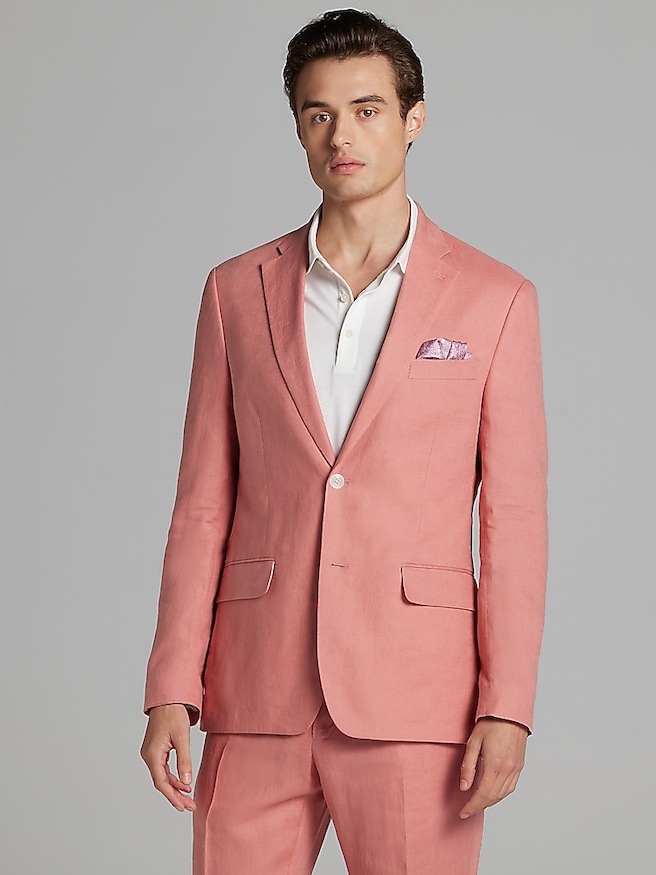
Red formal wear brings distinctive color to occasion dressing, from deep burgundy tailoring with a quiet richness to vivid scarlet that stands out across a ballroom. For men attending weddings, proms, galas, and upscale evening celebrations, red offers an expressive alternative to traditional black, navy, or gray. Its effect depends on the shade, fabric, and construction: a matte wine-colored suit feels restrained, while a red velvet dinner jacket catches the light with greater depth and texture. Darker reds often sit comfortably alongside the subdued colors associated with formal evening clothing, making them especially appealing during the cooler months. Brighter reds create a more pronounced focal point and work best when the surrounding pieces stay simple. A crisp white shirt provides clean contrast, and black footwear grounds the look without competing for attention. Red formal attire can also take a supporting role through a tie, pocket square, or waistcoat, adding color while keeping the overall outfit understated. The occasion’s dress code still matters, since a red suit does not automatically meet traditional black-tie requirements. Creative black-tie events may allow more expressive evening jackets, while stricter invitations call for conventional tuxedo styling. At a wedding, the couple’s requested attire and color palette help establish how prominent red should be. A groom might choose a full red ensemble as the visual centerpiece, while attendants echo the shade in smaller accents. For celebrations built around that look, a Red Wedding Suit connects distinctive color with the structure and polish of wedding tailoring. Burgundy can complement ivory flowers and dark greenery, while a clearer red creates sharper contrast against black and white. In photographs, those choices influence the mood as much as the clothing itself. An outfit that looks balanced in daylight and under warm reception lighting tends to feel more cohesive throughout the celebration, from the ceremony entrance to the last dance.
Fabric gives red formal wear much of its character, affecting everything from the way the color appears to how comfortable the clothing feels after several hours. Wool and wool-blend suiting can provide a clean drape, with natural wool fibers offering breathability and some resilience against everyday creasing. Fabric weight and construction matter as much as fiber content, particularly in a crowded reception room where a heavily lined jacket may feel warmer than expected. Lightweight constructions can be comfortable indoors even during the cooler months, with an overcoat supplying warmth between destinations. Velvet has a soft pile that creates subtle shifts between light and dark, giving burgundy and ruby tones a dimensional finish. Its plush surface feels especially suited to evening settings, though it needs careful handling to avoid flattening the pile. Satin details introduce a smoother reflection, often defining lapels or other formal accents against a less reflective base fabric. A restrained contrast between textures can give red eveningwear depth without relying on extra embellishment. Fit determines whether those materials fall smoothly. Jacket shoulders should follow the natural shoulder line, the collar should rest neatly against the shirt, and the front should close without pronounced pulling. Across the back, enough room to reach forward helps a tailored jacket remain comfortable through greetings, dinner, and dancing. Slim, modern, and classic fit labels can describe useful starting points, but their proportions vary; the actual balance of the garment matters more than the name. Trousers should sit securely at the waist and hang cleanly through the seat and thigh, with a hem length that works with the intended shoes. Someone spending much of the evening seated may appreciate a little more ease through the waist and upper leg. Someone moving between a ceremony, photographs, and a reception benefits from comfortable arm movement and a jacket length that stays balanced in motion. Thoughtful alterations refine those details without making the outfit feel restrictive or overly tight.
The lasting appeal of red formal clothing depends on both thoughtful styling and consistent care. A deep red suit can feel celebratory at a wedding and equally appropriate at a dressy anniversary dinner when the invitation allows colorful tailoring. A velvet evening jacket has a more distinct after-dark character, especially with dark trousers and a simple shirt. Keeping accessories measured lets the fabric and color do the work: a quiet pocket square, polished shoes, and a well-proportioned tie often create a stronger impression than several competing accents. Matching every red element exactly is not always necessary, but closely related shades should look intentional rather than almost identical. Texture can provide separation when colors are similar, such as a subtly woven tie against smooth suiting. For coordinated groups, viewing fabrics together under the same light helps prevent one red from appearing unexpectedly orange or purple beside another. Red formal accessories can also make thoughtful gifts for a graduate preparing for a celebration, a partner who enjoys occasion dressing, or someone with a calendar of formal events. Smaller accessories require less precise sizing than tailored clothing, though personal style and the intended dress code remain important. Between occasions, care starts with the garment label rather than a single rule for all formal fabrics. Structured jackets, velvet, and decorative finishes may need professional attention, and pressing methods should suit the material. Direct heat or heavy pressure can damage delicate surfaces, so an unfamiliar stain or flattened velvet pile is better assessed by a qualified cleaner. A broad, supportive hanger helps preserve jacket shape, while trousers benefit from hanging neatly without hard, accidental folds. Clothing should be dry and aired before being placed in a breathable garment bag, away from prolonged sunlight that may fade rich color. Avoiding overfilled pockets helps maintain smooth lines and reduces strain on seams. With a comfortable fit, suitable construction, and appropriate care, red formal wear can remain a distinctive part of an occasion wardrobe well beyond a single memorable evening.