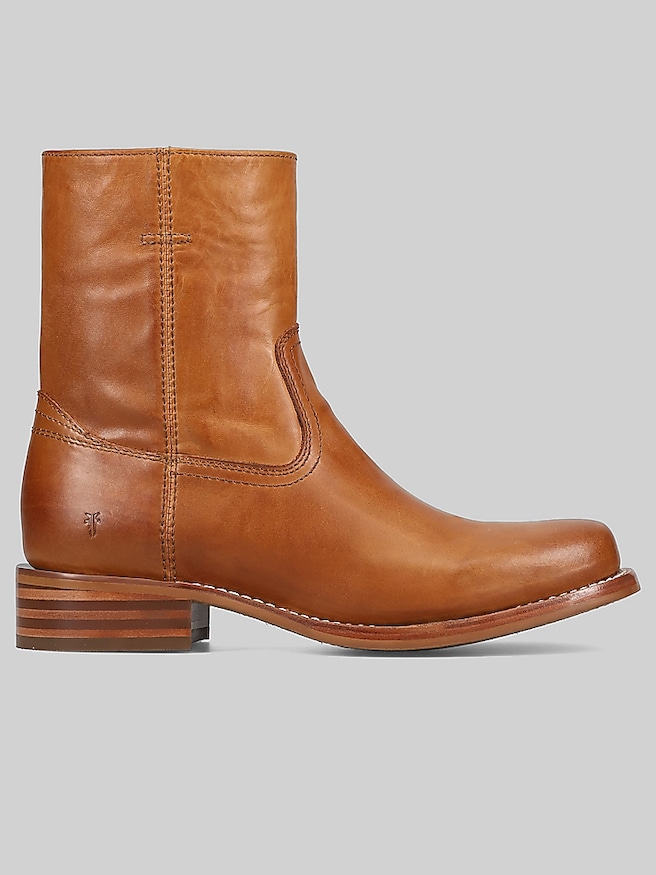
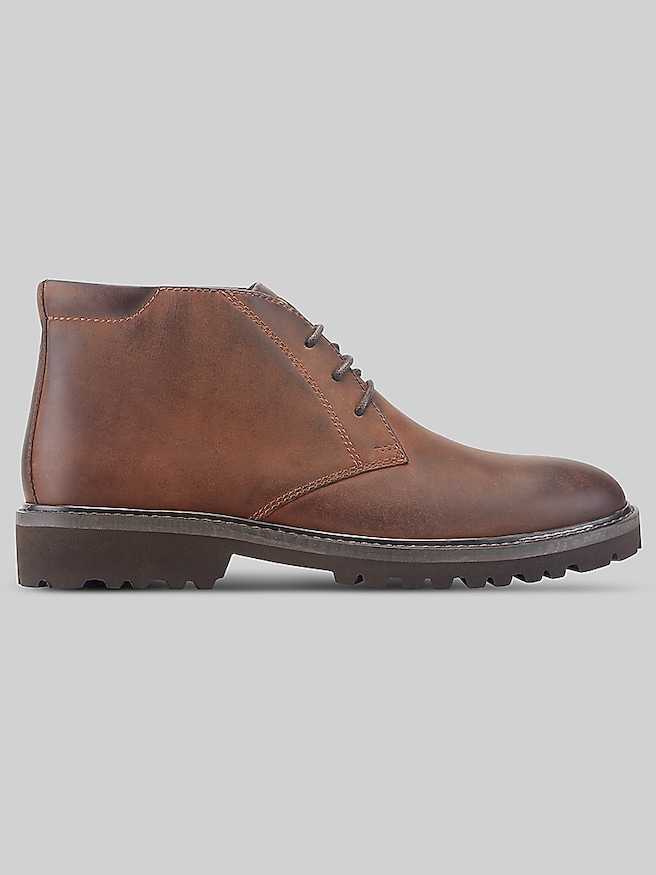
Leather ankle boots bring a grounded, finished look to a wardrobe without the height or bulk of a taller boot. Their defining shape sits around the ankle, giving trousers a clean stopping point and adding a little substance beneath denim, chinos, or wool dress pants. That balance makes them useful for days that move from a morning commute to an office meeting and then dinner out. A smooth black pair with a restrained toe shape can look sharp beneath charcoal trousers, while brown leather adds warmth alongside navy, olive, and textured gray fabrics. The effect depends as much on shape as color: a slim sole and close-fitting shaft tend to feel dressier, while a broader toe and more pronounced tread lean casual. Chelsea silhouettes keep the upper uncluttered with elastic side panels, lace-up designs allow more adjustment across the foot, and zip closures offer a streamlined appearance with easy access. Each brings its own character without requiring an entirely separate wardrobe. For business-casual settings, leather ankle boots work naturally with a tucked-in shirt, an unstructured jacket, and trousers that fall neatly over the boot opening. On less formal days, straight-leg jeans and a substantial knit give the leather room to stand out. The hem matters here. Fabric that piles heavily around the ankle can hide the boot’s shape, while an overly narrow opening may catch on the shaft instead of settling smoothly. A slight break or a clean cuff usually creates a more deliberate finish. During the cooler months, the ankle coverage also pairs comfortably with heavier socks and layered clothing, though warmth and weather protection depend on the lining and construction. These are boots for everyday polish rather than a substitute for technical outdoor footwear. A walk between the train station and the office calls for a different balance of traction and refinement than a muddy trail, and the most useful choice reflects where the day actually takes its wearer.
The character of leather ankle boots starts with the upper, but comfort and longevity depend on everything beneath it, too. Full-grain leather retains its natural surface and may show subtle markings that become part of its appearance over time. Top-grain leather has been refined for a more uniform finish, while other leather treatments can create anything from a soft matte surface to a pronounced shine. Those descriptions offer helpful context, but no single label tells the whole story; leather thickness, stitching, lining, and finishing all contribute to how a boot feels and wears. Smooth leather often suits a more polished wardrobe and can be relatively straightforward to wipe clean, depending on its finish. For a softer, napped texture, suede ankle boots offer another direction, particularly alongside corduroy, brushed cotton, and knitwear. Underfoot, rubber soles can add flexibility and grip, although traction varies with tread design and the surface being crossed. Leather soles have a traditional dress-shoe appearance but need extra consideration on wet pavement. Welted construction may allow resoling when the rest of the boot remains sound, while cemented construction can provide a lighter feel; repair options depend on the individual design and a cobbler’s assessment. Fit deserves just as much attention as the materials. The forefoot should feel supported without being squeezed, and the toes need room to move without sliding forward with every step. A small amount of heel movement may occur in a new pull-on boot, but repeated rubbing or a heel that lifts excessively suggests the shape or size is not right. Leather can soften with wear, yet break-in should not be expected to fix cramped toes or painful pressure. Trying boots with the socks intended for everyday use gives a more realistic sense of fit, especially when thicker socks will be part of a cooler-weather routine. Anyone who uses orthotics should also account for their depth and whether the footbed can be removed.
Regular care helps leather ankle boots maintain their shape and finish through repeated wear. After a day on city sidewalks, a soft brush or cloth can remove surface grit before it settles into seams or scratches the leather. For suitable smooth finishes, occasional conditioning helps replenish moisture, but the correct treatment depends on the leather and the maker’s care directions. Too much conditioner can leave residue or alter the color, so a small test in an inconspicuous area is worthwhile. Polish can restore depth and cover minor scuffs on compatible smooth leather, while suede and specialty finishes require their own tools and treatments. Weather protection also deserves a measured approach. A protective treatment may improve resistance to light moisture, but ordinary leather boots should not be assumed waterproof. If they get wet, blot away excess water and let them dry at room temperature, away from radiators, hair dryers, and other direct heat that can stiffen or damage the leather. Lightly filling the boots with clean, unprinted paper can help absorb moisture while preserving their shape. Once dry, appropriately sized shoe trees can support the uppers between wears. Rotating footwear gives linings time to air out, which is especially useful after a long commute or a full day indoors. In areas where sidewalks are treated during cold weather, removing salt residue promptly with a leather-appropriate cleaner can help prevent stubborn marks. Durability is also easier to preserve when small repairs happen early: a worn heel, loose stitch, or separating edge is worth a cobbler’s attention before the damage spreads. For someone building a practical wardrobe, leather ankle boots can bridge the space between casual sneakers and traditional dress shoes, offering enough structure for work and enough ease for a weekend meal or an evening gathering. They can also make a thoughtful gift for a partner, father, brother, or recent graduate, particularly when the recipient’s size, width, and usual trouser styles are known. A person who walks several blocks each day may value cushioning and a dependable rubber sole, while someone dressing mostly for indoor events may favor a sleeker profile. Matching those everyday habits is what turns a handsome pair of boots into footwear that earns repeated wear.