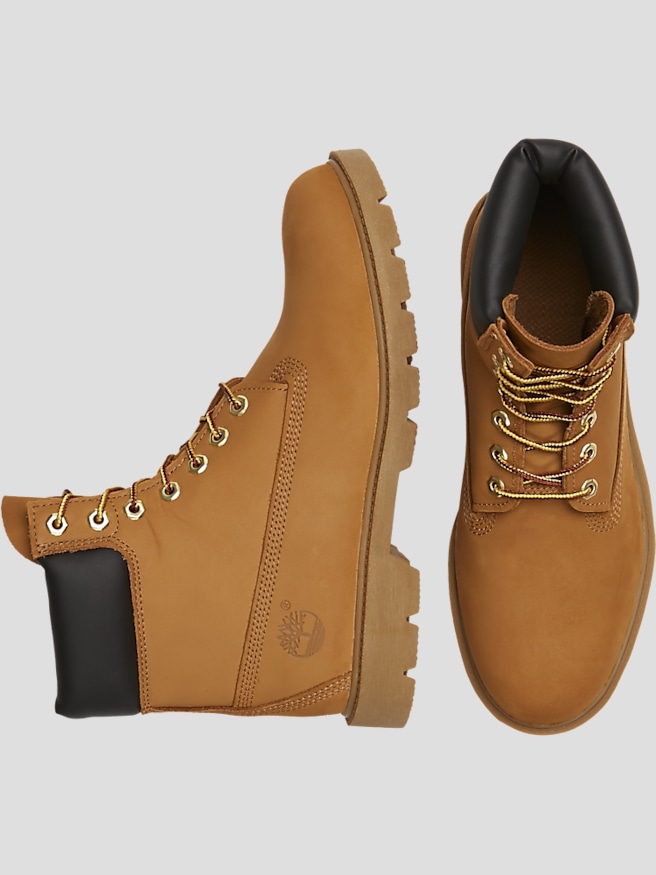
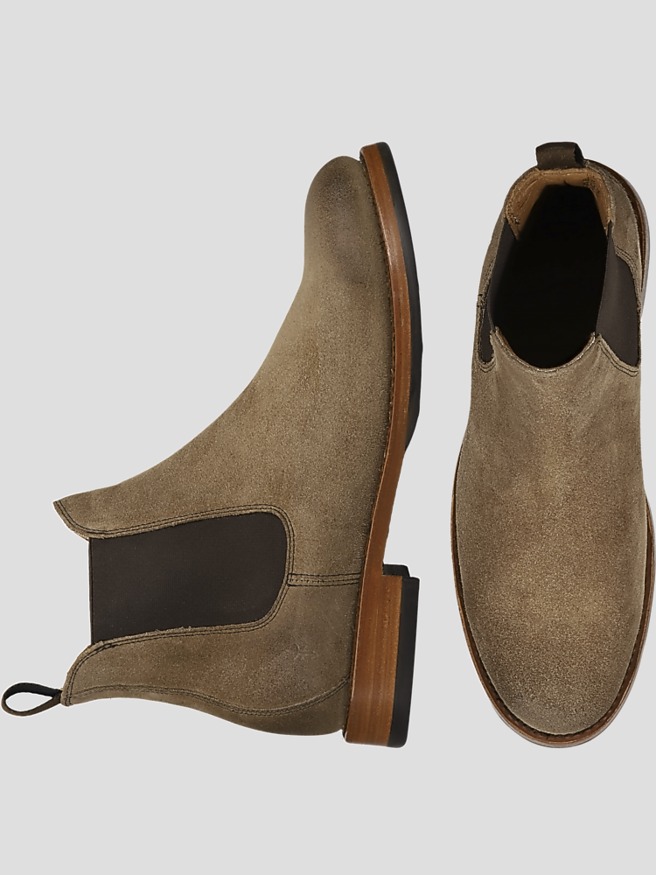
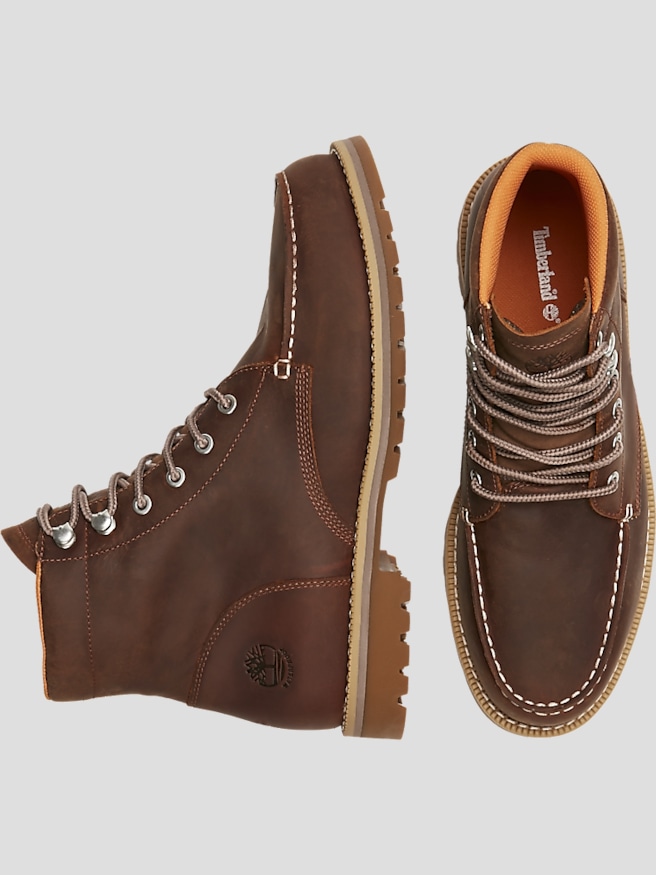
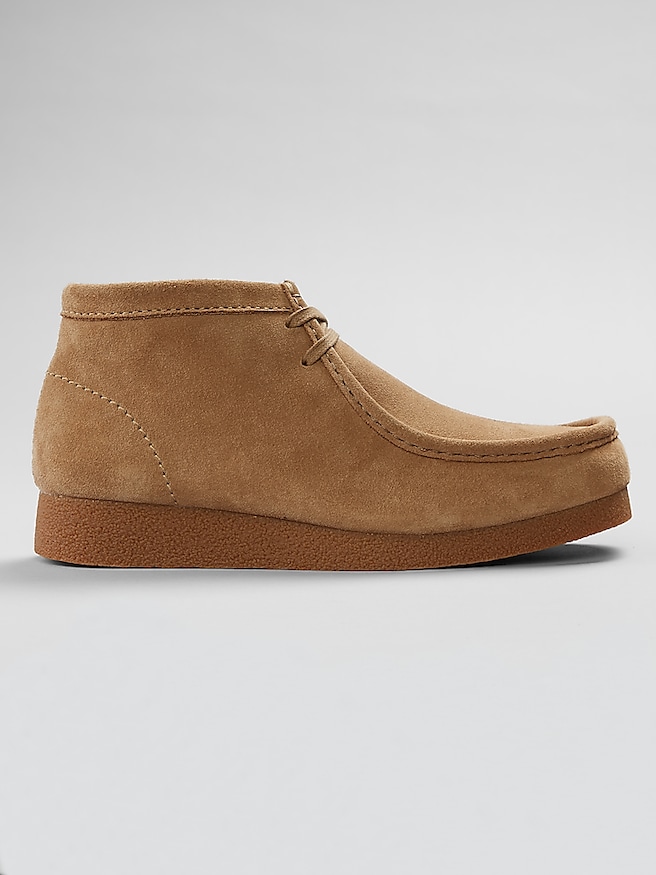
Suede ankle boots bring a soft, textured finish to footwear that sits at or just above the ankle, offering more coverage than a dress shoe without the height of a taller boot. Their defining feature is the nap: fine, raised fibers that give suede its velvety feel and create subtle shifts in color as the surface catches the light. Suede is typically made from the flesh side of a hide or a split layer of leather, rather than the smooth outer surface used for many polished shoes. That distinction gives these boots a relaxed character, even when the shape is slim enough to complement tailored clothing. Construction and silhouette make a meaningful difference in how a pair looks and feels. A Chelsea shape uses elastic side panels for a close, pull-on fit, while a chukka typically has an open lace-up front with a small number of eyelets. Other ankle-height designs use additional lacing or a zipper, changing both the appearance and the way the boot holds the foot. Rounded toes look easygoing with denim and chinos; softly tapered toes create a cleaner line beneath dress trousers. A broad, substantial sole adds visual weight, while a slimmer sole keeps the profile understated. Brown, tan, gray, and black each offer distinct styling possibilities, with the suede texture softening even a deep, uniform color. These boots suit men who want an alternative to sneakers for dinner, a polished option for a casual office, or footwear that bridges relaxed and tailored outfits. Dark denim with a straight or gently tapered leg lets the ankle shape remain visible without bunching fabric around the opening. Chinos and an unstructured jacket offer a similarly natural pairing. With a casual suit, a streamlined suede boot can work when the setting allows some flexibility, though highly formal dress codes generally call for more traditional dress footwear. The appeal lies in that balance: enough structure to look intentional, with a surface that feels less formal than polished leather.
Fit matters as much as appearance because the ankle opening, instep, and heel all influence how securely a suede boot wears. A good fit leaves room for the toes to move without letting the foot slide forward, and the widest part of the foot should align comfortably with the widest part of the boot. Suede may soften with wear, but a painfully tight toe box or persistent pressure across the instep should not be dismissed as something that will automatically resolve. Pull-on designs need an opening that admits the foot without excessive force while still holding the heel securely once the boot is on. A little initial heel movement can occur in some constructions, but pronounced lifting or rubbing suggests that the size or shape is not right. Lace-up designs allow more adjustment across the top of the foot, which can be useful when balancing a snug heel with a roomier forefoot. Trying boots with the socks intended for everyday wear gives a more useful sense of fit than relying on size alone. For anyone who uses an orthotic, interior depth and a removable footbed may be important considerations, since an added insert takes up space and can change where the heel sits. The materials beneath and inside the foot also affect the experience. Leather linings can absorb some moisture from normal wear, while textile linings vary in feel and breathability according to their construction. Cushioning can soften the initial step, but lasting comfort also depends on shape, support, flexibility, and the amount of time spent standing or walking. Rubber outsoles often provide a cushioned, practical feel, although grip depends on the compound and tread rather than the material name alone. Leather soles offer a more traditional profile and feel firmer underfoot. For a commute that includes several blocks on foot, flexibility and a secure heel may matter more than a particularly sleek silhouette. For seated office work followed by dinner, a lighter profile may be the more appealing balance. Neither appearance nor softness alone tells the full story of comfort.
The character and durability of suede ankle boots depend on both their construction and the attention given to the surface. An even nap, tidy seams, secure sole attachment, and reinforcement around stress points are useful details to examine. Welted or stitchdown construction may offer repair possibilities, but resoling depends on the particular design and the condition of the upper; the construction method alone is not a guarantee. Suede naturally develops variations where it bends or brushes against clothing, and gentle maintenance helps keep those changes looking consistent rather than neglected. A brush made for suede can lift flattened fibers and remove loose surface dirt once the material is dry. Light marks may respond to a suede eraser, used carefully without aggressive scrubbing. Ordinary smooth-leather polish is not appropriate for preserving a suede finish because it can darken the surface and flatten the nap. Protective treatments should be labeled suitable for suede and tested on a discreet area first, since some formulas alter the color or feel. Such treatments may improve resistance to incidental moisture and staining, but they do not automatically make a boot waterproof. If the material becomes damp, letting it dry naturally away from direct heat helps reduce the risk of stiffness or damage. Shoe trees can support the shape between wears, and breathable storage keeps the surface from being compressed against other footwear. Rotating pairs also gives the interior time to dry after use. For a comparison of surface texture and maintenance, Leather Ankle Boots provide a useful point of reference: suede is itself leather, but its raised nap requires different care from a smooth finish. As a gift, suede ankle boots are most thoughtfully chosen with the recipient’s usual size, preferred width, and everyday clothing in mind. Someone who wears tailored trousers may appreciate a neat ankle opening and restrained sole, while a frequent denim wearer may prefer a rounded toe and more substantial base. Matching those practical details to personal style makes the boots easier to incorporate into an established wardrobe, whether the occasion is a workday, a dinner reservation, or an informal celebration.