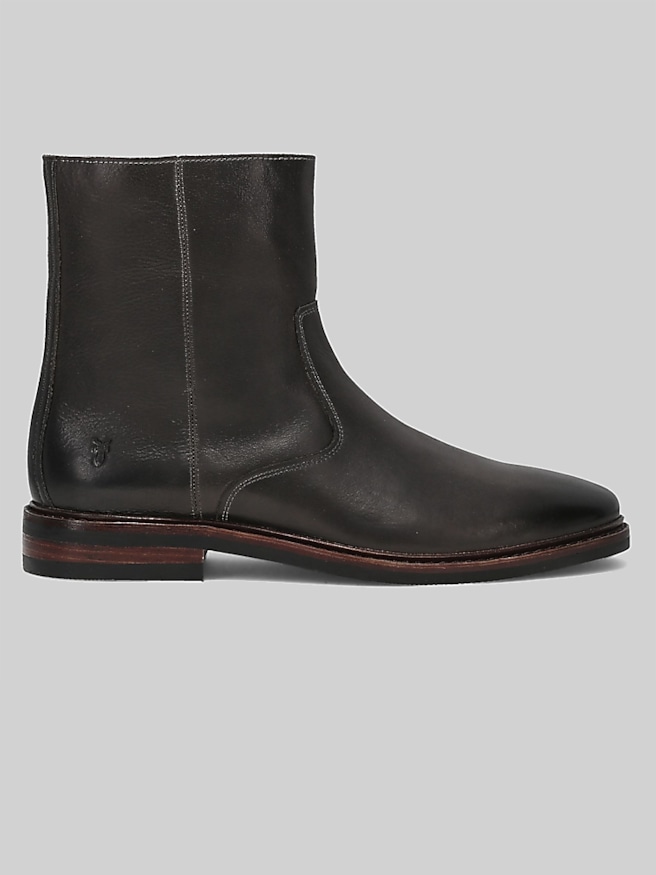
Men’s leather ankle boots bring the coverage and substance of a boot to a shape that works comfortably beneath full-length trousers. Their defining feature is a shaft that reaches approximately to the ankle or just above it, giving them a more substantial profile than low-cut dress shoes without the height of taller boots. Within that shape, the details determine how polished or casual a pair feels. Chelsea boots use elastic side panels for a streamlined, pull-on design; lace-up boots allow adjustments across the instep; and side-zip boots offer an uncluttered front with a convenient opening. Chukka-style boots typically have a lower ankle profile and fewer pairs of eyelets, making them a relaxed option with chinos or denim. For wardrobes that move between tailored clothing and casual staples, leather ankle boots provide a useful middle ground. A smooth black pair with a restrained toe shape and slim sole can complement charcoal trousers and a sport coat, while brown leather with visible grain brings depth to dark jeans and an oxford shirt. Rounded toes and thicker soles generally read as more casual; tapered shapes, discreet stitching, and closely trimmed soles lean dressier. Brogue perforations add visual interest, although the overall shape and sole still influence how formal the boot appears. Trouser proportions matter, too. A narrow opening should fall over the shaft rather than catch on its edge, while a wider leg can accommodate a more substantial boot. A slight break at the hem keeps the transition neat without hiding the footwear beneath excess fabric. These boots suit office settings where the dress code allows them, dinners, social gatherings, and everyday outfits that call for something more structured than sneakers. They can also complement a suit in less formal settings, though ankle boots are not a universal substitute for traditional formal footwear. The strongest pairing usually comes from matching the boot’s visual weight and finish to the clothing around it.
Leather quality affects texture, flexibility, and how ankle boots develop character with wear, but no single material description tells the whole story. Full-grain leather retains the hide’s natural grain surface and can develop a distinctive patina as creases and tonal variations emerge. Top-grain leather has been refined at the surface for a more uniform appearance, with performance depending on the hide, finishing process, and overall construction. Suede is also leather, recognized by its soft nap rather than a smooth face, and its texture gives ankle boots a more relaxed appearance. Smooth finishes generally wipe clean more easily, while suede needs tools and care suited to its fibers. Neither a full-grain label nor a polished surface makes a boot waterproof. Thickness, tanning, lining, seams, and any protective treatment all contribute to how the finished footwear performs. Inside the boot, a smooth lining and well-finished seams can reduce friction, while cushioning under the heel and forefoot may make extended standing more comfortable. A cushioned footbed does not replace a proper fit, and a thick sole is not automatically supportive. Outsole material deserves attention alongside the upper: leather soles offer a traditional look and can feel firm initially, while rubber soles vary widely in flexibility, weight, and grip. A pronounced tread looks substantial, but traction depends on the rubber compound and surface as well as the pattern. Construction also influences longevity and repair options. Goodyear-welted boots are often candidates for resoling, provided the upper and supporting structure remain sound. Blake-stitched construction can produce a sleeker, flexible profile and may also allow resoling by an appropriately equipped repair shop. Cemented construction bonds the sole to the upper and can offer a lighter feel, though sole replacement is generally less straightforward. Even stitching, secure sole attachment, and clean interior finishing are useful signs of careful workmanship. For someone walking between meetings or spending much of the day on their feet, the balance of weight, flexibility, cushioning, and fit often matters more than any single construction term.
A well-fitting leather ankle boot feels secure through the heel and midfoot without squeezing the toes or pressing sharply across the instep. The toes need room to move, and the widest part of the foot should align with the widest part of the boot rather than being pushed forward into a narrow toe. Trying boots with the socks intended for regular wear gives a more realistic sense of volume; thicker socks can noticeably change the fit around the forefoot and ankle. Orthotics also require sufficient interior space, particularly when the original footbed cannot be removed. Lace-up designs offer the most direct adjustment, while Chelsea and side-zip styles depend more heavily on the shape of the boot matching the foot. Slight heel movement can occur in some new pull-on boots, but persistent slipping, rubbing, or the need to grip with the toes suggests a poor match. Leather may soften and accommodate the foot with wear, yet a break-in period should not be expected to correct pinching, inadequate length, or concentrated pressure. Comfort and durability also depend on what happens between wears. Brushing away dust and wiping smooth leather with a soft cloth helps prevent buildup around creases and seams. A compatible conditioner used sparingly can help maintain suppleness, while an appropriate cream or polish refreshes smooth leather when its finish allows. Suede calls for a dedicated brush and products labeled for that material rather than ordinary leather polish. Any treatment should first be tested in an inconspicuous area and used according to the footwear maker’s care instructions. Allowing boots to air out between wears, keeping them away from direct heat, and using properly sized shoe trees helps preserve their shape. Heel wear, loose stitching, or a separating sole edge deserves attention before a small repair becomes more involved. As a gift for a partner, parent, adult son, or friend, leather ankle boots are most personal when their shape and finish reflect the recipient’s everyday wardrobe. Knowing the recipient’s usual footwear size, width, and preferred closure is more useful than guessing from appearance alone. A thoughtfully chosen pair combines a familiar fit with enough versatility to become part of a regular rotation.