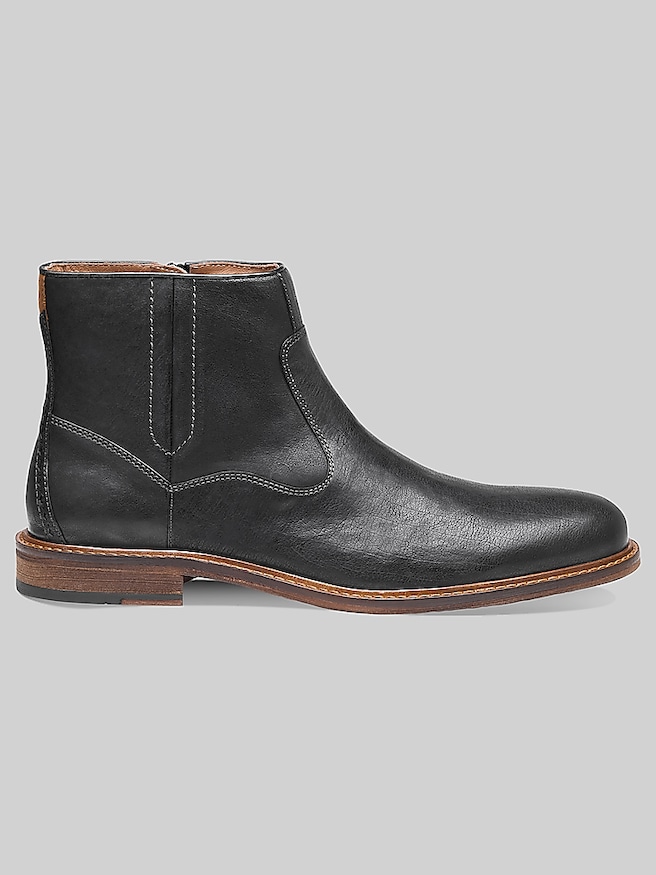
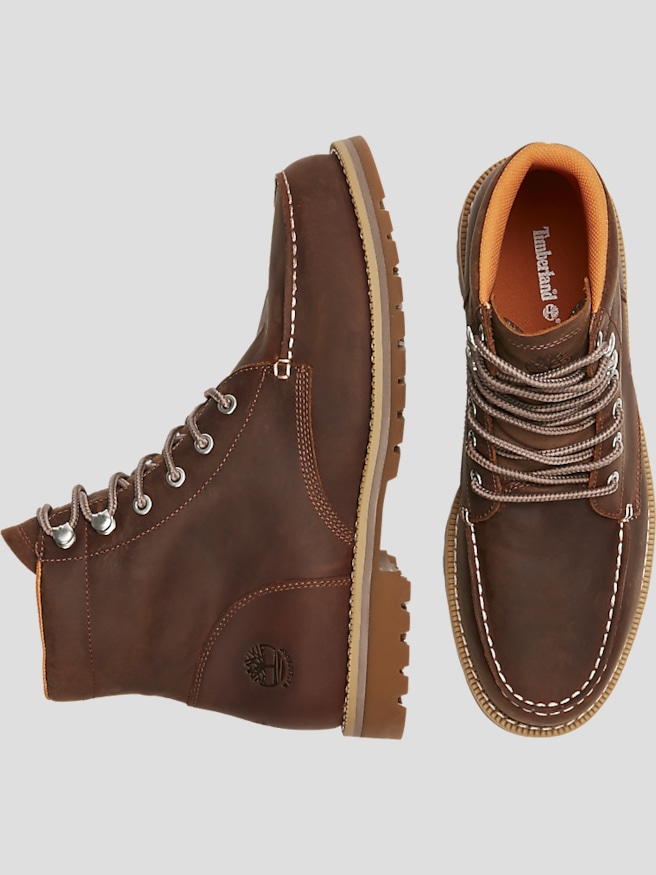
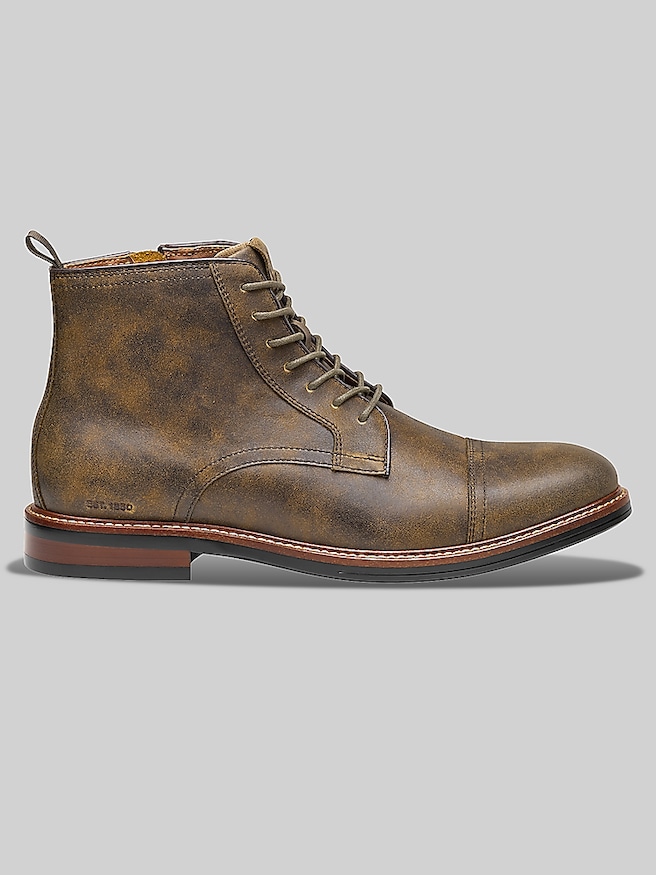
Leather boots bring structure, texture, and a distinctive finish to men’s everyday clothing, with silhouettes that range from streamlined dress boots to substantial casual lace-ups. Their appeal comes partly from versatility: a smooth leather pair can complement tailored trousers and a sport coat, while a more textured finish feels natural with dark denim, chinos, and an untucked button-down. The shape of the toe, height of the shaft, and thickness of the sole all influence how polished or relaxed a boot looks. A gently tapered toe and restrained stitching tend to suit business-casual outfits; a rounded toe, pronounced seams, and a substantial outsole create a more rugged impression. Chelsea boots have elastic side panels and a clean profile that works particularly well beneath straight or subtly tapered pants. Lace-up boots provide more adjustment across the instep and can have either a refined or utilitarian appearance, depending on their construction. For a compact silhouette, leather ankle boots frame the foot without extending far up the leg, making them easy to pair with many everyday trouser shapes. Pants should fall comfortably around the boot rather than bunch heavily above it or catch on the shaft. Color also changes the effect: black leather creates a crisp, understated foundation, while shades of brown add depth alongside navy, gray, olive, and denim. Coordinating a leather belt with the general color and formality of the boots helps an outfit feel intentional without requiring an exact match. For someone moving between a desk, an appointment, and dinner, a sleek boot can bridge those settings without looking overly formal. More substantial designs suit relaxed outfits and days with plenty of walking, provided their weight and support feel comfortable. Leather boots are not interchangeable with every type of dress shoe, however; the occasion’s dress code still matters, particularly when formal evening attire is expected. The most useful style is one that fits naturally into the clothing and activities already part of a person’s routine.
Leather quality and construction help determine how boots feel, how they age, and how much attention they need over time. Full-grain leather retains the hide’s natural grain surface, including subtle variations that give each pair character. With appropriate care, it can develop a patina: a gradual deepening of color and surface character where the leather bends, moves, and receives regular handling. Top-grain leather has had its surface refined, often through sanding or buffing, to produce a more uniform appearance. Both can be durable choices, but thickness, tanning, finishing, and overall construction matter as much as the leather category alone. A supple upper may feel comfortable sooner, while firmer leather can offer more structure and require a gradual adjustment period. Neither softness nor stiffness by itself proves quality. Smooth leather emphasizes clean lines and generally responds well to suitable leather-care products. Suede has a soft, napped surface that creates a more relaxed look and calls for its own brushes and cleaners rather than conventional leather polish. Inside the boot, linings, footbeds, and seams affect comfort just as directly as the exterior. A neatly finished interior reduces potential rubbing, while cushioning can soften the feel underfoot without replacing a supportive fit. Outsoles also deserve attention. Leather soles typically create a slimmer, dressier profile; rubber soles vary widely in flexibility, traction, and thickness, with some designed to remain visually understated. A heavier tread may feel appropriate for casual wear but can look bulky beneath narrow dress trousers. Welted construction connects the upper and sole assembly through a welt and may allow worn soles to be replaced, depending on the design and a repair specialist’s assessment. Other stitched or cemented methods can produce comfortable, durable boots, although repair options vary. Visible stitching alone does not establish that a boot can be resoled. For frequent wear, sturdy stitching, secure sole attachment, and a stable heel are practical considerations. Boots chosen for everyday style should not be assumed to provide occupational safety protection; workplace footwear needs to meet the requirements of the task.
A comfortable leather boot should hold the heel and midfoot securely while leaving enough room for the toes to move without pressing against the front or sides. Fit depends on the shape of the last—the form used to build the boot—as well as the labeled size, so a familiar sneaker size is only a starting point. There is no universal rule that leather boots require sizing down. Foot width, instep height, sock thickness, and the boot’s toe shape can all change the fit. Trying boots with the socks intended for regular wear gives a more useful sense of their volume, and walking on a clean surface helps reveal pressure across the instep or rubbing near the ankle. Leather may soften and conform with use, but a break-in period should not be expected to correct cramped toes, sharp pressure, or an unsuitable shape. Secure lacing can fine-tune a lace-up boot, whereas a pull-on style relies more heavily on the relationship between the foot, instep, and opening. Comfortable movement matters more than an impressively snug first impression. Once the fit is right, consistent care helps preserve the leather and the boot’s structure. Dust and surface dirt are best removed before they accumulate around seams and creases, using a soft brush or cloth appropriate to the finish. Smooth leather may benefit from occasional conditioning with a compatible product, following the maker’s directions and testing an inconspicuous area first. Too much conditioner can change the appearance or leave residue, so more is not necessarily better. Suede needs separate treatment to maintain its nap. Boots that become damp should dry naturally away from direct heat, which can damage leather and adhesives. Allowing pairs to rest between wears gives absorbed moisture time to dissipate, while appropriately sized shoe trees can help maintain shape. Attention to worn heel edges, loose stitching, or separating soles can make professional repairs more straightforward. As a gift, leather boots are most personal when the recipient’s size, preferred silhouette, and everyday wardrobe are known. A well-chosen pair can become a familiar part of getting dressed, valued for its comfort and character as much as its appearance.