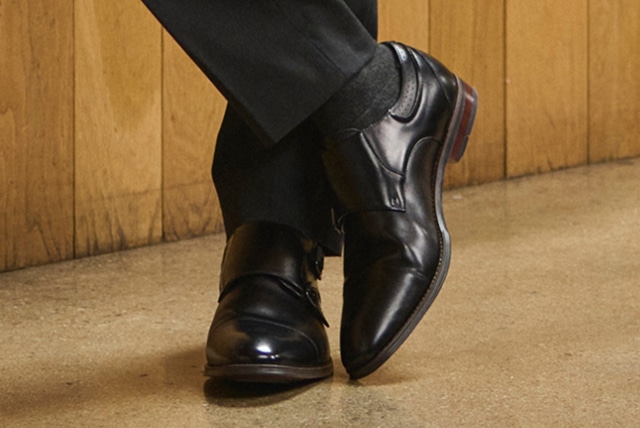
Leather-look boots bring the smooth finish, subtle grain, and substantial shape associated with leather footwear to styles often made with synthetic uppers. The term describes an appearance rather than a single material: many designs use a textile base with a polyurethane or other synthetic coating that resembles polished, pebbled, or lightly textured leather. Faux leather typically refers to a nonleather material, while a vegan designation should be confirmed in the product details because linings, adhesives, and other components also matter. That distinction makes material descriptions more useful than appearance alone when choosing footwear to match personal preferences. For men building a wardrobe around chinos, dark denim, and tailored separates, leather-look boots offer a grounded finishing touch without requiring an elaborate outfit. A clean ankle-height silhouette can sit neatly beneath a trouser hem, while a lace-up shape with a more pronounced sole gives heavier fabrics a balanced foundation. Chelsea-inspired styles emphasize an uninterrupted upper and easy pull-on construction; lace-up designs allow more adjustment across the instep. Western-inspired shapes add character through a shaped toe, angled heel, or decorative stitching, although the overall effect depends as much on the finish as the silhouette. Black tends to create a crisp line with charcoal trousers and dark jeans, while brown tones complement olive, navy, tan, and the textured fabrics common during the cooler months. A restrained sheen feels more polished; a matte or grained surface generally reads as more relaxed. Shoppers comparing the leather-look aesthetic with footwear described specifically as leather can also explore Leather Ankle Boots, checking each material description rather than assuming similar finishes mean identical construction. Across these styles, the appeal is the combination of a defined shape and everyday versatility: footwear substantial enough to anchor a layered outfit, yet streamlined enough for a casual office, an evening out, or a family gathering.
Comfort and proportion have as much influence on everyday wear as color or texture. Leather-look boots should feel secure at the heel and supportive through the midfoot without squeezing the toes or pressing sharply against the ankle. Synthetic uppers may soften with wear, but they should not be expected to stretch into the correct size or mold to the foot in the same way as some genuine leathers. A comfortable fit from the start is especially important for someone who spends time standing on a train platform, walking between buildings, or moving around an office. The socks worn with the boots affect that fit: a thicker pair can take up meaningful space across the instep and toe box, while a thin dress sock may leave extra movement at the heel. Lace-up construction offers room to fine-tune tension, whereas pull-on styles depend more heavily on the shape of the opening, elastic panels, and last. Cushioning underfoot can soften the feel of hard floors, but interior space, arch shape, and sole flexibility all contribute to comfort. A removable footbed may be helpful for someone who uses an insert, provided the boot has enough depth to accommodate it. Outside, a low-profile sole creates a tidy transition into tailored trousers, while deeper tread lends visual weight to denim and casual pants. Tread alone does not establish slip resistance, and a leather-like surface does not make a boot waterproof; performance claims should come from the stated construction and specifications. For ordinary cooler-weather outfits, trouser length also changes the result. A hem that rests lightly over the boot keeps the line clean, while excess fabric bunching around the ankle can hide the shape and feel cumbersome. Slimmer shafts generally work well beneath narrower pant openings, and fuller cuts can balance a broader toe or thicker sole. These relationships make leather-look boots useful across a range of personal styles, from understated office dressing to casual weekend layers, without suggesting that every pair belongs in every setting.
Durability in leather-look boots depends on the quality of the upper, the way the sole is attached, the strength of the seams, and how the footwear is worn and maintained. A synthetic surface can be straightforward to wipe down, but repeated friction, deep creasing, and prolonged exposure to heat may contribute to peeling or cracking over time. Scuffed coatings also may not respond to polishing or restoration in the same way as genuine leather. For that reason, care should follow the material instructions rather than a routine intended for leather footwear. Many smooth synthetic uppers can be cleaned with a soft, slightly damp cloth; a small amount of mild soap may be appropriate when the care label permits it. Testing an inconspicuous area first helps protect the color and finish. Heavy soaking, abrasive scrubbing, harsh solvents, and direct heat can damage coatings or affect construction, so boots are best allowed to dry naturally away from a radiator or heating vent. Leather conditioners, waxes, and waterproofing treatments are not automatically suitable for synthetic materials. Textured or suede-look finishes may need a separate cleaning method, making the stated care directions especially important. Letting the interior air out between wears, loosening laces before removal, and using a shoehorn where helpful can reduce unnecessary strain. Stored clean and dry with the shafts supported, boots are less likely to develop collapsed folds from being pushed beneath other footwear. Their intended use matters just as much: a fashion boot suited to dinner, a commute, or a casual workplace is not necessarily built for a long trail walk, sustained wet weather, or protective work duties. As a gift, leather-look boots can suit someone who enjoys polished casual clothing or prefers nonleather uppers, particularly when size, width, and material preferences are already known. A familiar silhouette and a color that complements the recipient’s usual pants make the choice more personal and practical. The strongest match combines the desired finish with comfortable proportions, appropriate construction, and a care routine that fits everyday life.