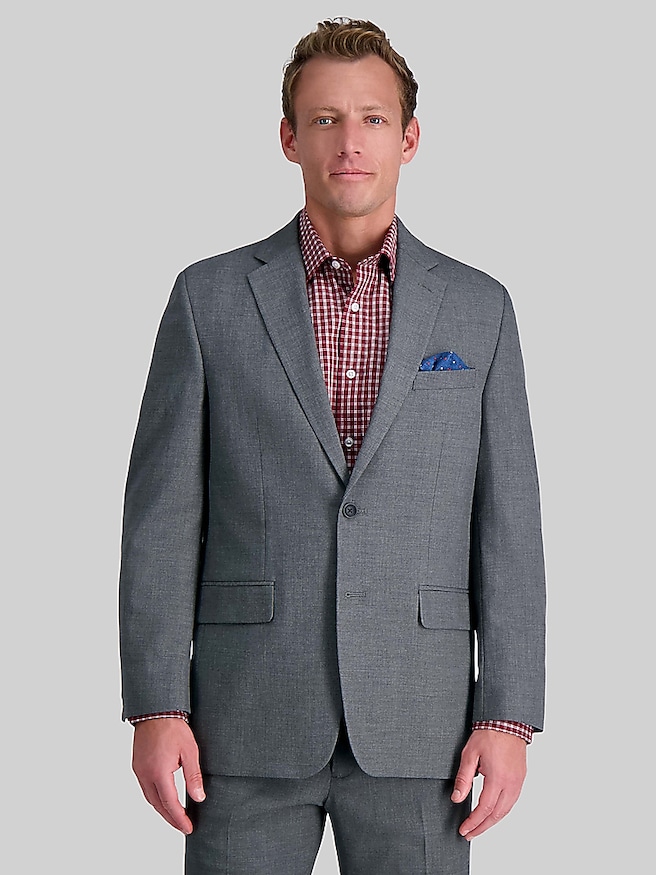
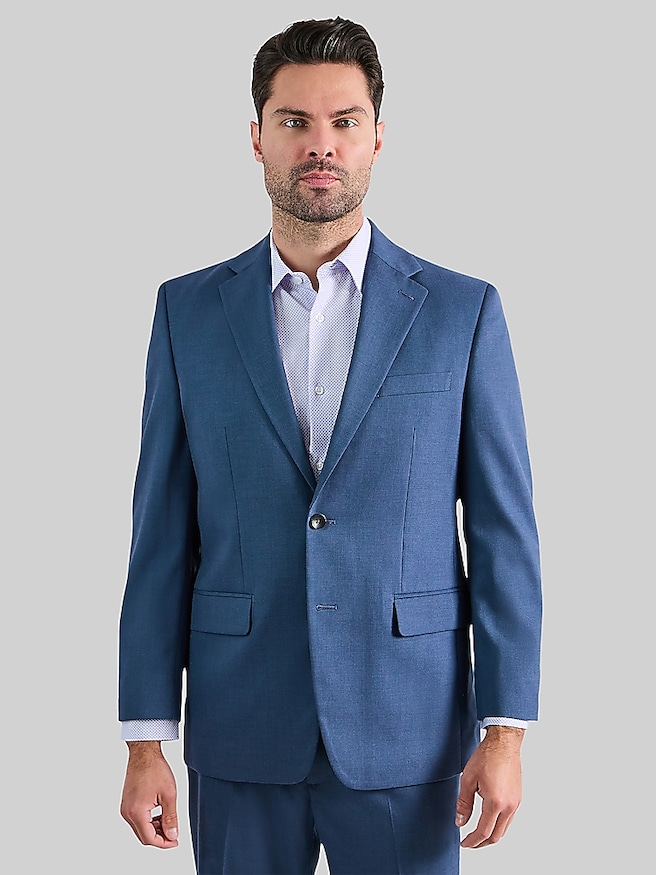
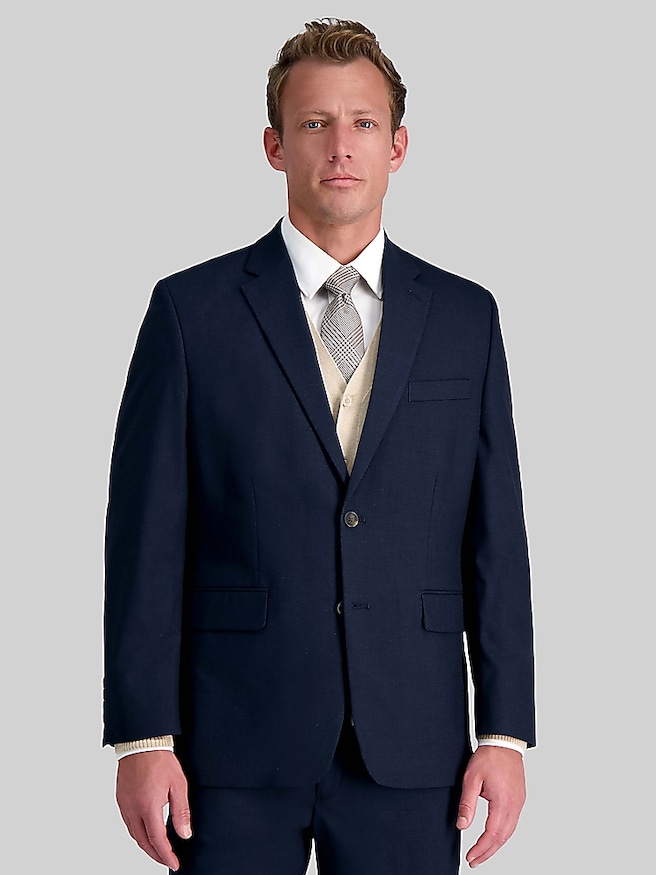
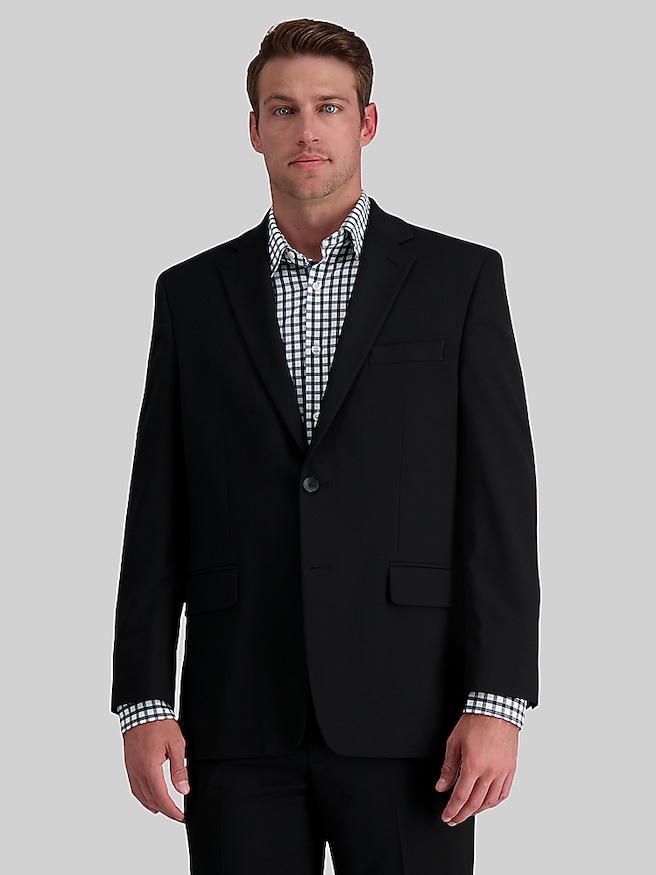
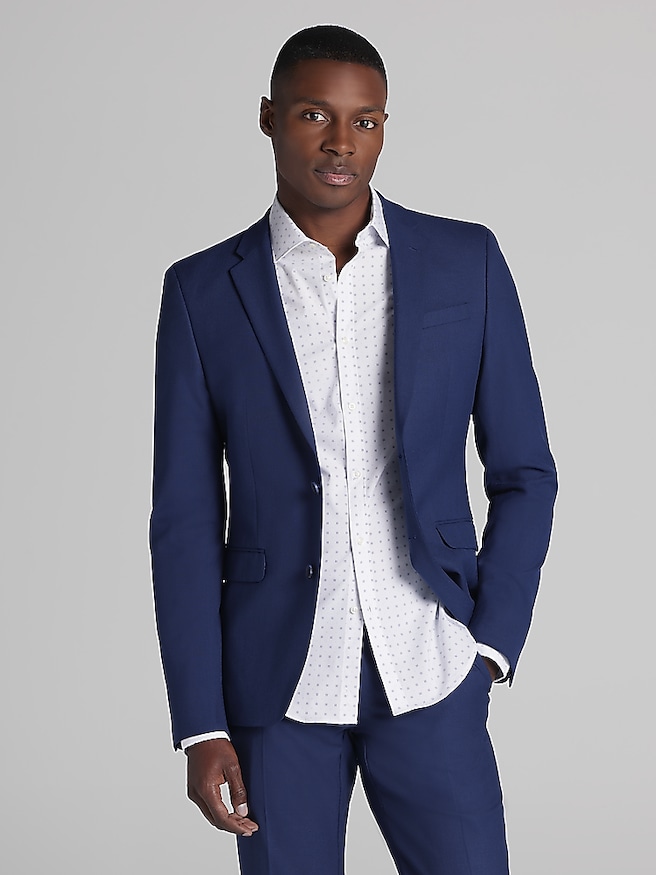
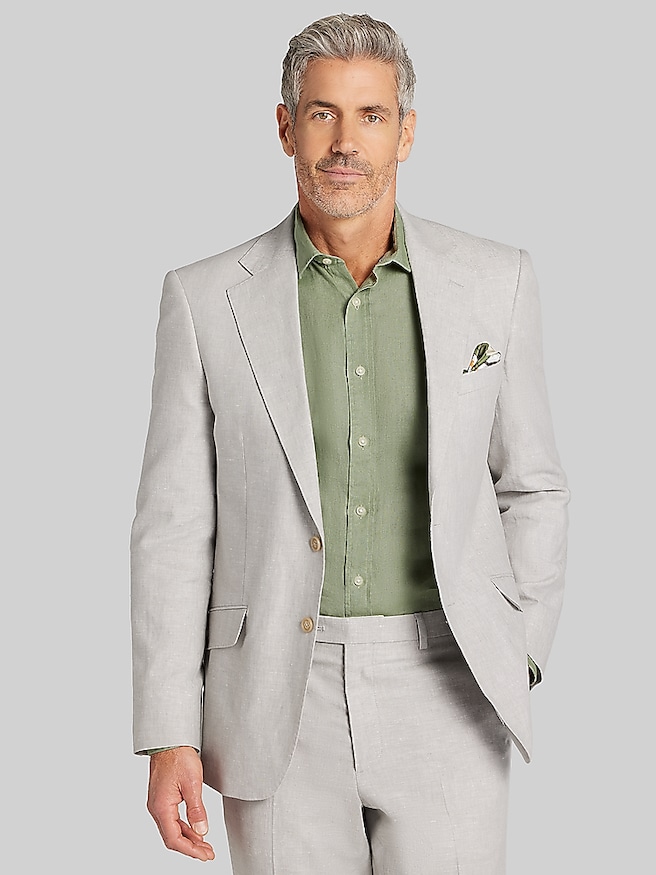
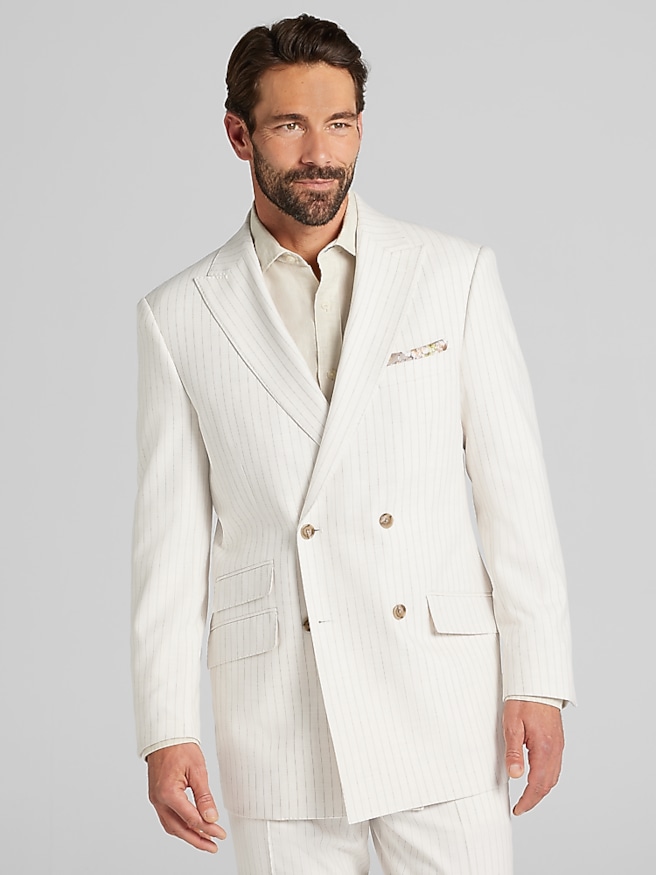
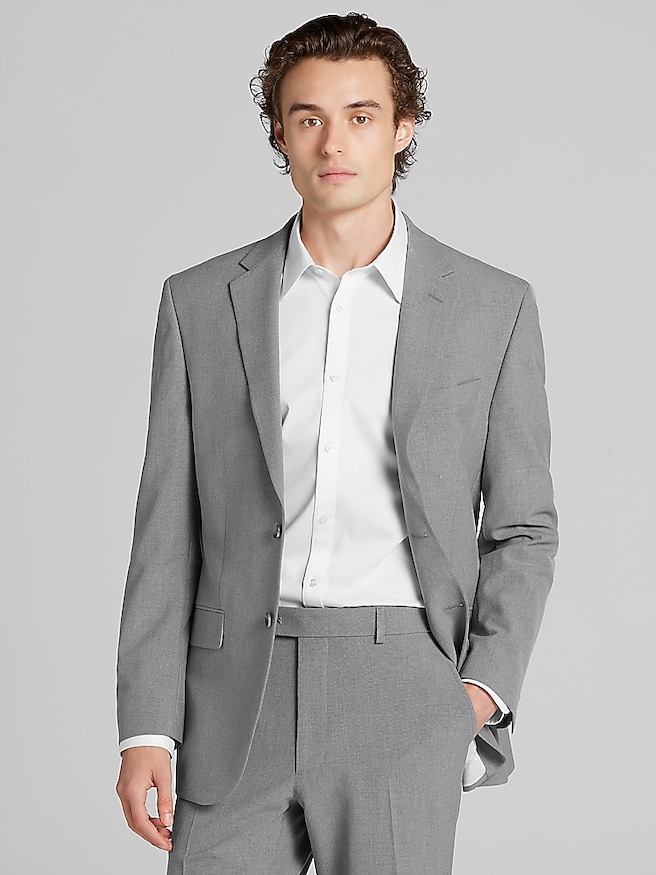
The lapel is one of the first details that gives a suit its character. Framing the shirt and tie, it draws the eye toward the face and helps establish whether the overall look feels understated, assertive, or formal. Lapel suits span a broad range of occasions, from an ordinary workday with an important presentation to a wedding ceremony or an evening celebration. A notch lapel, recognized by the small opening where the collar meets the lapel, has a familiar, versatile appearance that works comfortably in professional and social settings. A peak lapel points upward toward the shoulder, adding a sharper line that can lend presence to a single-breasted jacket or emphasize the structure of a double-breasted silhouette. A shawl collar replaces those angles with a continuous curve and is most closely associated with tuxedos and evening attire. Each shape changes the impression of the jacket without having to rely on a bold color or pattern. Width matters, too: a narrower lapel creates a leaner visual line, while a broader lapel gives the chest more emphasis. Neither is automatically more flattering; the strongest effect usually comes from balancing the lapel with shoulder width, jacket proportions, and the scale of the shirt collar and tie. A moderately sized notch lapel can feel at home across many settings, while a substantial peak lapel may suit someone who enjoys a more pronounced silhouette. For occasions calling for a conventional matching jacket and trousers rather than formal evening dress, Lounge Suits offer a closely related expression of everyday tailoring. The appeal of a well-proportioned lapel suit is its ability to look purposeful without appearing overworked. In a charcoal suit at a client meeting or a deep navy suit at a reception, the lapel provides a clear frame for the rest of the outfit. Its shape also remains visible in photographs, where balanced proportions often make a stronger impression than elaborate accessories.
Fabric and construction determine how that shape holds up through a full day of wear. Wool is a traditional suiting choice because it can drape cleanly, breathe comfortably, and recover from light creasing with time between wears. Its performance varies with the weave, weight, and finish: a smooth worsted wool often looks crisp and businesslike, while a softly textured flannel brings visual depth and warmth during the cooler months. Wool blends can combine the character of wool with other qualities, such as added flexibility or resistance to wrinkling, though the fiber composition and care label deserve close attention. Linen and cotton create a more relaxed impression and tend to show creases more readily, which can be part of their appeal in less formal settings. For frequent use, a resilient fabric with a stable weave may be more practical than an exceptionally delicate cloth. Inside the jacket, canvas, interfacing, and lining help support the chest and influence how the lapel rolls. A clean, natural roll allows the lapel to curve toward the fastening point rather than looking sharply flattened. Fit is equally important. The jacket collar should sit close to the shirt collar without a conspicuous gap, and the lapels should rest against the chest rather than bow outward. Pulling around the button, pronounced folds across the upper back, or a shoulder seam extending well beyond the natural shoulder can signal a mismatch in size or cut. A slim silhouette should still leave room to sit, reach for a handshake, and move through a busy room. A roomier cut should look intentional rather than loose through every area. Jacket length, sleeve length, trouser rise, and the break above the shoe all contribute to the finished proportions. At a fitting, the dress shirt and shoes intended for the outfit provide useful reference points, especially when checking sleeve exposure and trouser length. Shoulder fit deserves particular attention because it is generally more involved to alter than a hem or sleeve. The goal is a suit that retains its line when standing and remains comfortable when the day includes long stretches at a desk or dinner table.
How a lapel suit is styled depends as much on the setting as on personal taste. For an interview or a conservative office, a solid or subtly patterned suit with a crisp shirt and a restrained tie keeps the emphasis on a neat, composed appearance. A tie whose width feels proportionate to the lapel usually creates a more cohesive result than a very narrow tie set against an especially broad jacket front. Wedding guests can bring in texture through a woven tie or a pocket square without competing with the dress code, while a groom or wedding-party member may prefer a more structured silhouette for a coordinated look in group photographs. An open-collar shirt can soften the impression for a dinner or reception when a tie is not expected. During the cooler months, a fine-gauge knit can also sit neatly beneath a suit jacket in relaxed settings, provided it does not crowd the chest or push the lapels outward. Outerwear should have enough room to cover the jacket without crushing the shoulders. Small choices such as these help preserve the suit’s shape throughout the occasion. Care afterward is just as important to its long-term appearance. A broad, shaped hanger supports the jacket shoulders, while trousers benefit from careful hanging that maintains their crease. Emptying pockets prevents unnecessary strain, and a gentle brushing can lift surface dust before it settles into the cloth. Allowing the suit to air out between wears helps it recover, particularly after a crowded event or a full day of travel. Follow the garment’s care instructions, address spills promptly, and seek professional cleaning when needed rather than treating every wear as a reason to clean. Pressing should preserve the lapel’s intended roll, not force it flat; excessive heat or pressure can leave shine on some fabrics. With thoughtful fit, appropriate styling, and consistent care, a lapel suit can become a dependable part of a wardrobe, ready for both routine responsibilities and occasions that call for a little more polish.