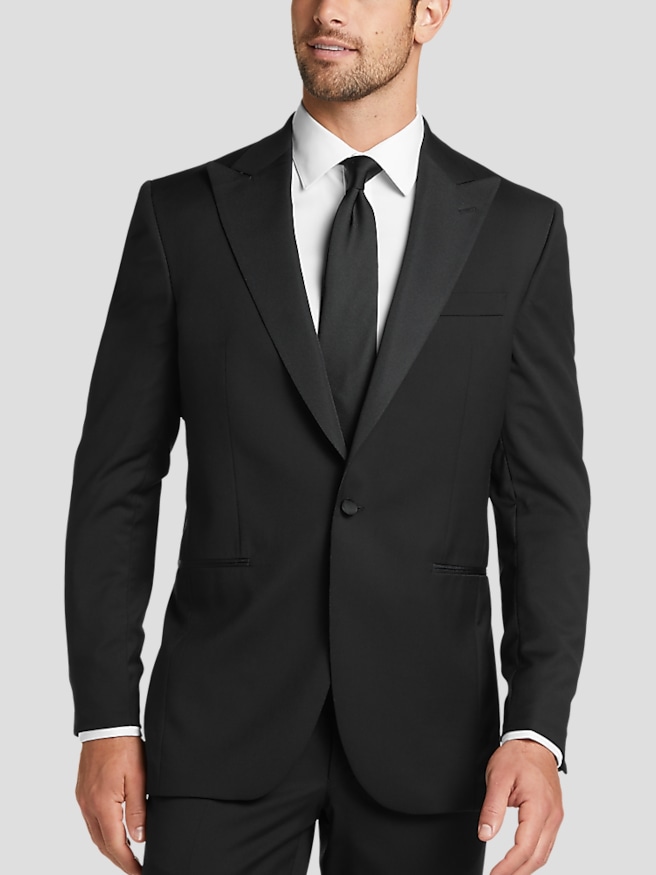
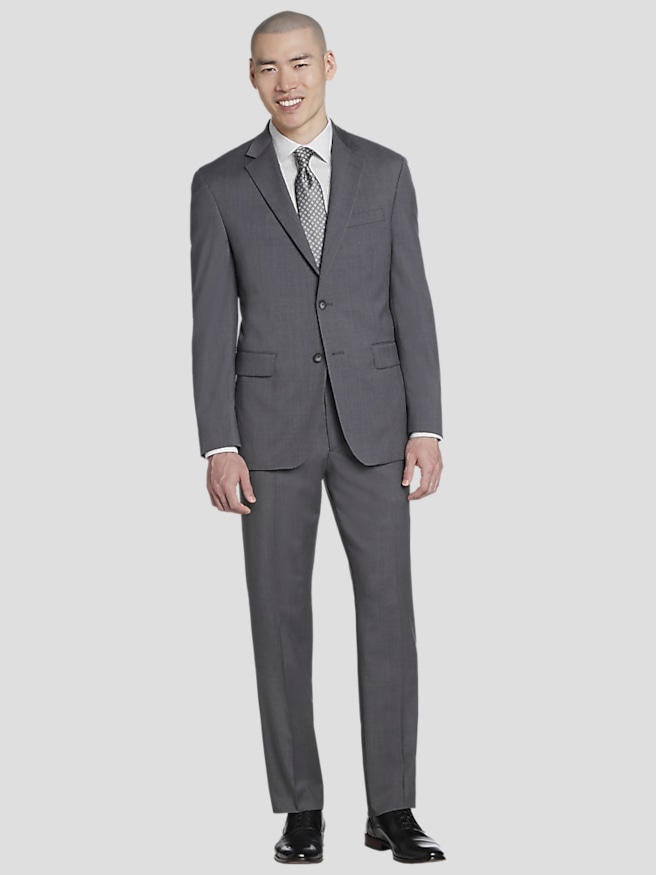
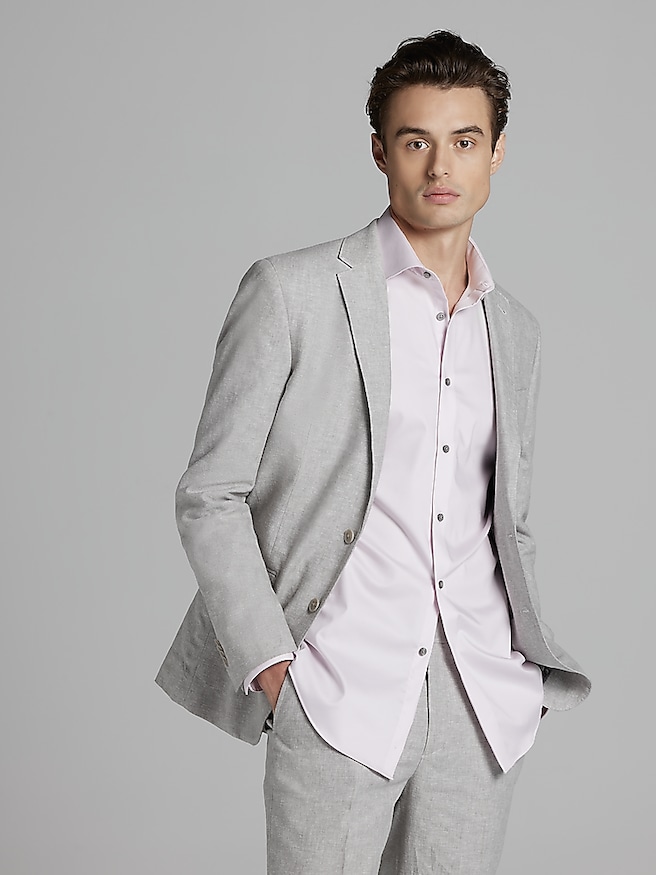
Peaked lapel suits feature jacket lapels with pointed tips that angle upward and outward toward the shoulders, creating a sharp, structured silhouette. Compared with the stepped opening of a notch lapel, a peak lapel has a more pronounced shape that draws attention to the chest and frames the face. That upward line can give the upper body a broader appearance and add a sense of height to the jacket, although the overall effect depends on the suit’s proportions and fit. Peak lapels have a long association with formal tailoring, especially double-breasted jackets, but they also bring distinction to single-breasted suits. On a single-breasted jacket, the pointed lapels add emphasis without the overlapping front of a double-breasted design; on a double-breasted jacket, they complement the wider chest and balanced button arrangement. Both styles can look polished at weddings, milestone celebrations, awards dinners, and professional events where a more dressed-up appearance feels appropriate. A groom might choose peaked lapels to create a clear focal point in wedding photographs, while a guest might prefer a restrained solid fabric that keeps the look elegant without competing with the wedding party. In business settings, the same detail can lend presence to a presentation, client meeting, or leadership event, particularly when paired with understated accessories. The dress code still matters: peaked lapels do not automatically make a suit suitable for black tie. A traditional black-tie invitation generally calls for a tuxedo or dinner jacket with the appropriate formal details, rather than an ordinary suit, regardless of lapel shape. Peak lapels are common in that category, too, which helps explain their dressier reputation. For anyone comparing jacket details, Lapel Suits provides a broader point of reference for how lapel shapes contribute to a suit’s character. The defining appeal of a peaked lapel suit is the combination of a recognizable tailoring detail and a complete, coordinated look that feels deliberate from the first handshake to the final photograph.
Fabric and fit determine whether that strong outline feels comfortable and natural. Wool is a traditional suiting material because it can drape cleanly, hold a pressed shape, and offer resilience through repeated wear. Wool blends can combine those qualities with other fibers, while fabrics containing stretch may allow additional ease through the shoulders, seat, and knees. Fiber content alone does not tell the whole story: weave, fabric weight, lining, and jacket construction also influence how a suit moves and holds its shape. A smooth worsted fabric gives peaked lapels a crisp outline, while a subtly textured weave adds depth without requiring a bold pattern. Cotton and linen bring their own surface character, but their tendency to crease creates a more relaxed impression that may not suit every formal occasion. For frequent use, a fabric with a balanced weight and resilient weave can be more practical than an exceptionally delicate cloth. Good fit begins with the jacket’s shoulders, which should sit cleanly without extending conspicuously beyond the natural shoulder or pulling inward. The collar should rest against the shirt collar, and the lapels should lie smoothly against the chest rather than bowing away from it. When the jacket is fastened, strong diagonal pulling around the button usually signals that the body needs more room. A peaked lapel should look intentional, not squeezed into place by a tight jacket. Lapel width also works best in relation to shoulder width, chest size, and the jacket’s overall cut; there is no single measurement that flatters every build. Narrower lapels can support a streamlined silhouette, while broader lapels give a fuller jacket visual balance. Slim, tailored, and classic fits describe distinct approaches to room and shape, not levels of formality. The most useful choice leaves enough ease to sit through a ceremony, reach across a conference table, and move comfortably without losing the jacket’s clean line. Trouser fit completes that balance, with a comfortable waistband, a smooth seat, and a hem that meets the shoes without excessive bunching. A small amount of visible shirt cuff can give the jacket sleeve a neat finish.
The rest of the outfit can support the lapels rather than compete with them. Solid navy, charcoal, and black each create a distinct impression, with navy and charcoal adapting easily to many professional and celebratory settings and black often carrying a more formal tone. A fine stripe or subtle check can add personality, but a prominent lapel and an assertive pattern together make a stronger statement than either detail alone. A crisp dress shirt provides a clean background, while a tie with a width that looks balanced against the lapels helps keep the proportions cohesive. For a wedding or formal dinner, a pocket square can add contrast without duplicating the tie’s fabric exactly. Polished dress shoes, coordinated leather accessories when appropriate, and trousers finished to the intended shoe height make the whole outfit feel considered. A vest can add another layer of formality and keep the look composed when the jacket comes off, provided the waist and trouser rise meet neatly. These details are useful for men dressing for a graduation, an important career milestone, or a family celebration, as well as for someone building a wardrobe around recurring occasions. A suit can also be a meaningful gift for a graduate or a loved one preparing for a significant event, especially when the choice accounts for personal style, measurements, and any tailoring needed. Long-term care protects both the fabric and the peaked lapels’ distinctive shape. A broad, supportive hanger helps maintain the shoulders, while space in the closet prevents the jacket from being crushed. Gentle brushing can remove surface dust, and airing the suit after wear allows moisture to dissipate before storage. Cleaning should follow the garment’s care label rather than an automatic schedule; unnecessary dry cleaning can place avoidable stress on fabric over time. Between cleanings, careful pressing can restore a trouser crease or smooth wrinkles, but excessive heat and pressure may leave shine or flatten the lapel’s natural roll. Professional attention is worthwhile for stubborn marks or shaping concerns. With suitable care and a comfortable fit, a peaked lapel suit can remain a dependable choice for occasions that deserve a polished appearance.