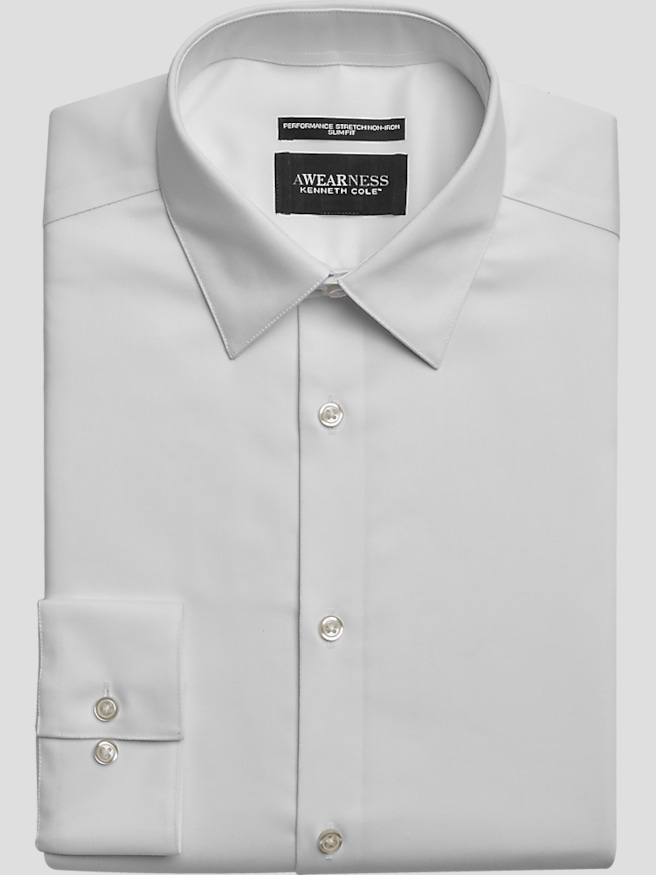
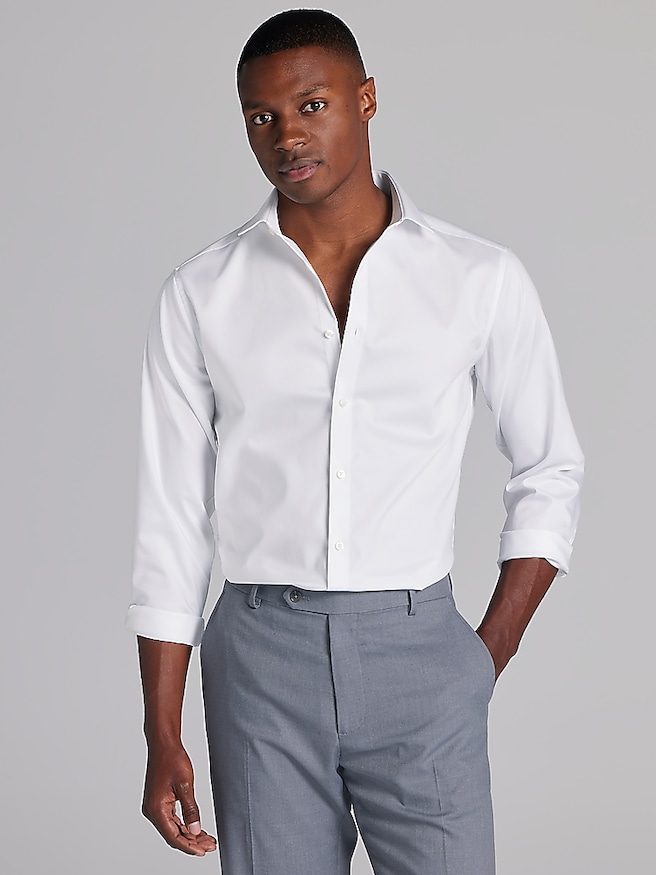
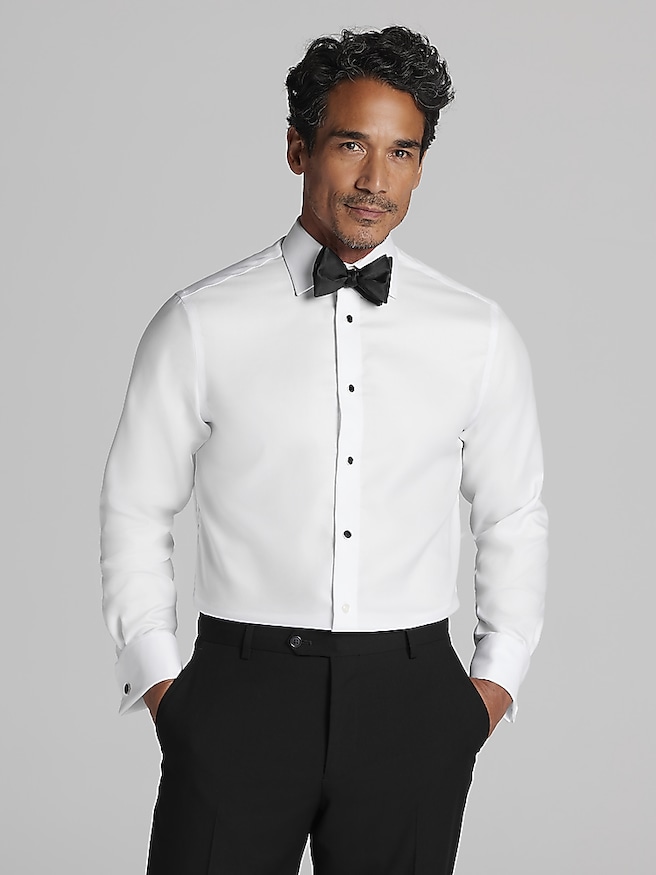
Ivory shirts are off-white shirts with a soft, warm undertone, often described as creamy rather than bright white. That subtle distinction gives them a character of their own: polished enough to sit beneath a tailored jacket, yet less visually sharp than a brilliant white shirt against dark fabric. Men’s ivory shirts can bring depth to a neutral wardrobe without introducing a strong color or pattern. Against navy, ivory creates a balanced contrast; beside brown, tan, or olive, it emphasizes the earthy tones already present. With charcoal trousers, it offers a quiet variation on a familiar dress combination. The shade itself can vary, from a barely tinted off-white to a richer cream, so the relationship between the shirt and the rest of an outfit matters more than the color name alone. A burgundy tie can pick up ivory’s warmth, while a textured navy tie adds definition without making the combination feel busy. For anyone comparing warm off-white with a cleaner, brighter neutral, Cotton White Shirts offer a useful point of reference. Ivory is especially effective when the goal is a finished appearance with a little softness: a client lunch, an anniversary dinner, or a wedding celebration where the dress code allows it. A smooth ivory dress shirt with dark trousers and polished leather shoes feels composed without relying on an elaborate outfit. A more textured version worn with dark denim takes the same color in a relaxed direction. Small details influence that impression, including the shape of the collar, the visibility of the buttons, and whether the hem is designed to stay tucked. Rather than serving only as a substitute for white, ivory works as a distinct neutral that connects tailored clothing, everyday trousers, and understated accessories. Its appeal lies in that balance of familiarity and subtle difference, especially for someone who prefers restrained color but still wants an outfit to feel considered.
Fabric and construction determine how an ivory shirt looks and feels just as much as its shade. Cotton is valued for its breathable feel and absorbency, although its smoothness, weight, and tendency to wrinkle depend on the weave and finish. A fine poplin can create a clean surface beneath a suit jacket, while twill has a subtle diagonal texture that gives the cloth more visual depth. Oxford cloth has a more noticeable woven texture and often lends itself to less formal combinations. Linen brings natural irregularity and a relaxed appearance, with creasing that is part of its character rather than a flaw. Cotton blends may incorporate fibers chosen for stretch, wrinkle resistance, or easier upkeep, but those qualities should be confirmed in the garment details rather than assumed from the fiber category. Because ivory is a pale color, fabric density also affects coverage. A thin, loosely woven shirt may reveal an undershirt more readily than a denser fabric; an undershirt close to the wearer’s skin tone generally creates less contrast beneath light cloth. Fit shapes the rest of the experience. A shoulder seam should sit near the point where the shoulder meets the arm, and the chest should allow comfortable movement without pulling the button placket open. Slim fits usually reduce excess fabric through the torso, while more generous cuts leave additional room through the chest and waist. Neither silhouette needs to feel restrictive or look oversized. For someone seated through meetings or a long dinner, ease across the abdomen and upper back can matter as much as the standing appearance. Collar size is particularly important when wearing a tie: it should close comfortably without pressing into the neck. Sleeves should reach the wrist without spilling over the hand, and cuffs should leave practical room for a watch when needed. A longer shirttail helps maintain a neat tuck, while a shorter hem designed for untucked wear gives casual outfits a more intentional finish. These details make the difference between a shirt that merely looks polished on a hanger and one that remains comfortable throughout an occasion.
The intended use of an ivory shirt helps determine which details deserve the most attention. For an office wardrobe, a restrained collar, smooth fabric, and uncomplicated cuffs keep the shirt adaptable across several suits and trousers. A point collar offers a familiar outline, while a spread collar leaves more space for a fuller tie knot. Button-down collars generally introduce a more relaxed note, particularly with textured trousers or an unstructured jacket. French cuffs create room for cuff links and a dressier presentation, though the overall outfit should still follow the occasion’s expectations. Wedding parties can use ivory to complement a warm neutral palette, but coordinating shades in person is worthwhile because two fabrics described as ivory may look noticeably different side by side. Viewing them together under the event’s lighting, when practical, can help prevent an unintended mismatch. For formal dress codes that specify a white shirt, ivory should not automatically be treated as interchangeable. Beyond special occasions, an open collar beneath a fine-gauge sweater or a neatly tucked shirt with chinos gives the color a straightforward everyday role. An ivory shirt can also be a thoughtful gift for someone building a professional wardrobe or refreshing familiar dress combinations, especially when the recipient’s collar size, sleeve length, and preferred fit are known. Long-term appearance depends on appropriate care. The sewn-in care label should determine washing, drying, and ironing methods, since fiber blends, finishes, and construction can require different treatment. Prompt attention to collar marks and spills helps keep a pale shirt looking clean, while separating it from dark garments reduces the risk of dye transfer. Bleach should never be assumed appropriate for ivory, as it may alter the intended shade. Excessive dryer heat can contribute to shrinkage or wear, and ironing temperatures should suit the fabric. Secure buttons, even stitching, and well-finished seams are useful construction details to examine. With suitable care and a comfortable fit, an ivory shirt can become a dependable part of a wardrobe, bringing a warm, understated finish to both tailored and relaxed clothing.