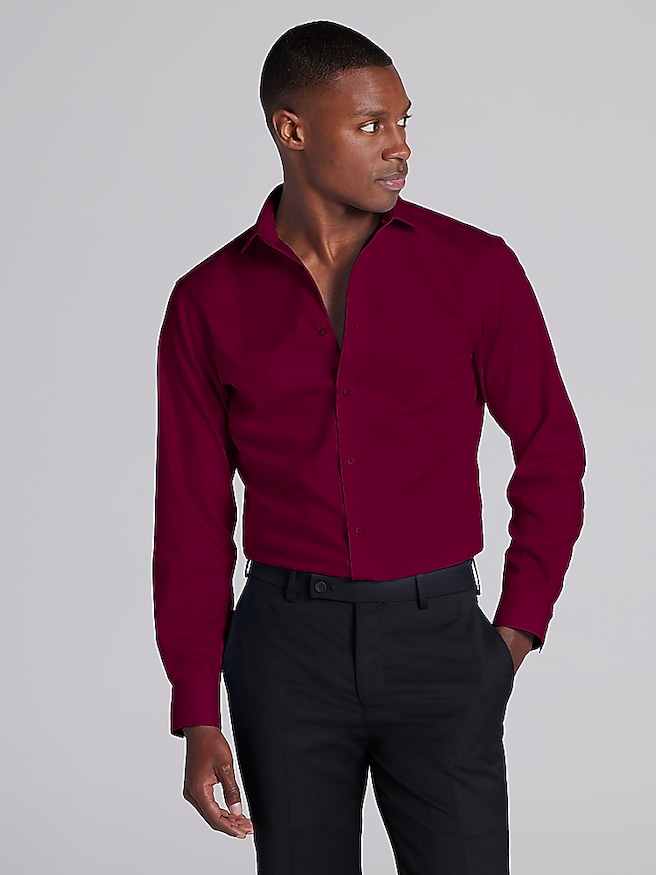
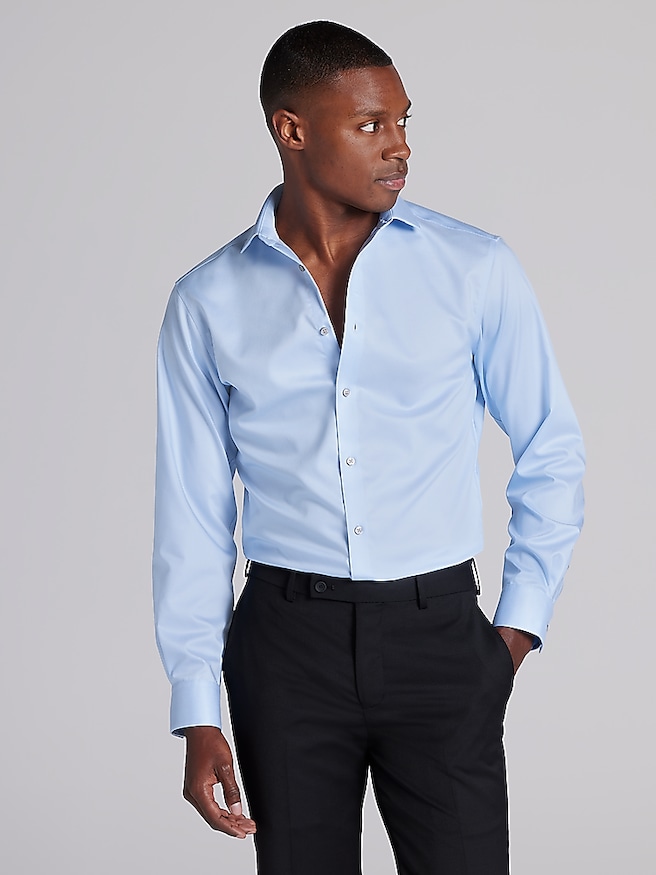
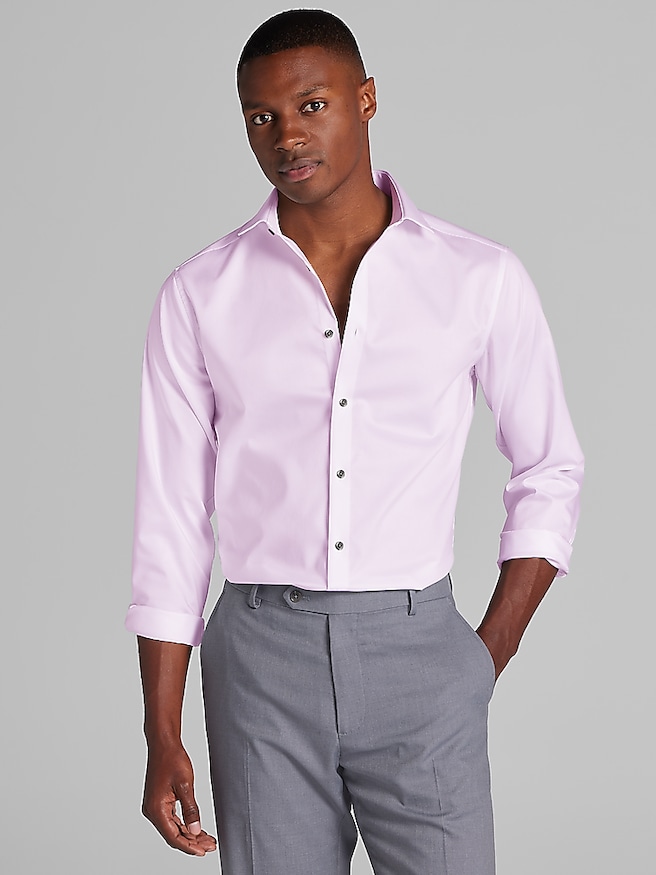
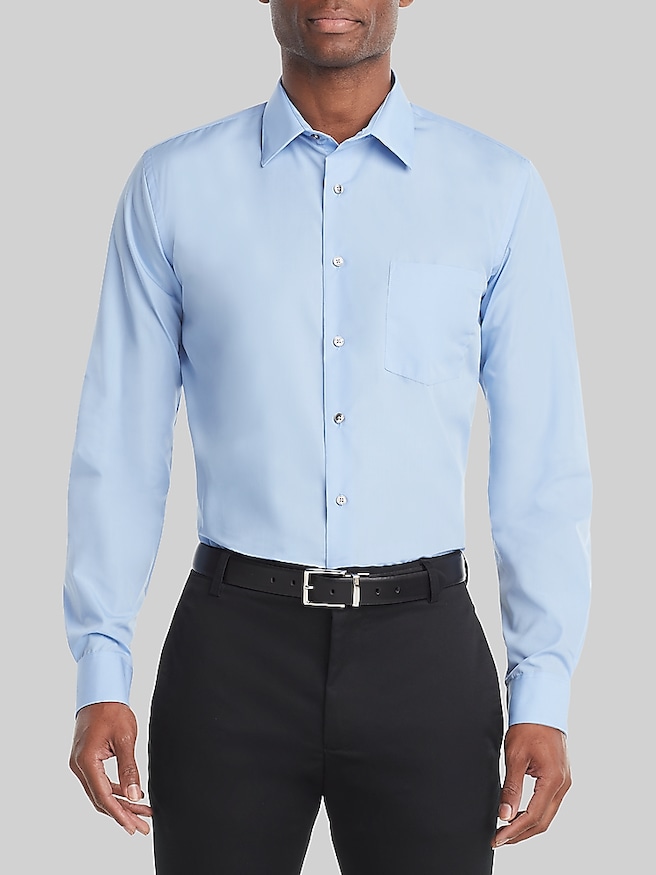
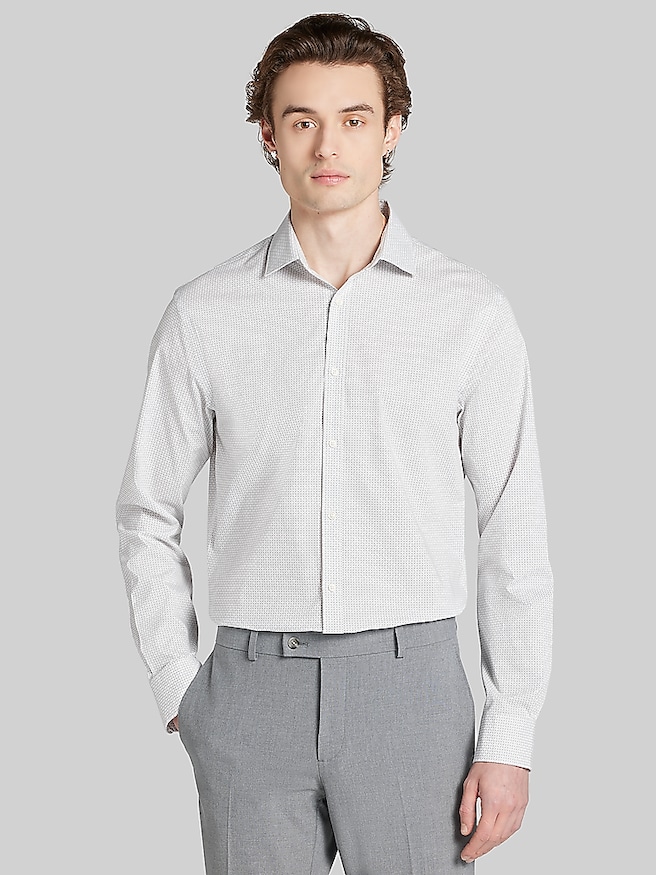
Plain shirts bring a clean, uncluttered look to an outfit, letting color, fabric, and fit do the work that a print or graphic might otherwise do. Their appeal goes beyond simplicity: a solid shirt can soften the look of tailored trousers, give dark jeans a sharper finish, or provide a quiet foundation beneath a jacket with a noticeable weave. The category spans casual tees, polos, button-downs, and dress shirts, each with its own balance of ease and structure. A smooth crewneck works naturally with denim and sneakers, while a solid button-down with a crisp collar feels at home with pressed pants and leather shoes. For an office presentation, an interview, or a dinner reservation, a plain shirt keeps the overall appearance focused without looking overly elaborate. White and light blue offer familiar starting points for dressier combinations, while navy, charcoal, olive, and earth tones add depth without introducing a pattern. For another versatile neutral, Grey Shirts offer a subtle alternative to white or black and pair easily with both blue denim and tailored separates. Color also affects contrast: a pale shirt stands apart from a dark jacket, while similar shades across the shirt and pants create a more continuous line. Plain does not have to mean flat or featureless. An Oxford weave, fine rib, or lightly textured knit can add dimension while preserving the understated character of a solid color. Details such as a chest pocket, a button-down collar, or a neat banded sleeve opening help distinguish a relaxed everyday shirt from one intended for a more polished setting. Because there is no busy design to draw attention elsewhere, the placement of a shoulder seam, the shape of a collar, and the way the fabric hangs become especially noticeable. Those small details give a plain shirt its personality and help it look intentional, whether worn alone or as part of a layered outfit.
Fabric and fit shape how a plain shirt feels throughout the day, from sitting through meetings to reaching across a table or carrying a bag on the commute. Cotton is a familiar choice for its softness and breathability, though the construction makes a meaningful difference: a cotton jersey tee has a flexible drape, while a woven cotton shirt usually holds a more defined shape. Oxford cloth has a visible basket-like texture and a substantial hand; poplin tends to look smoother and cleaner beneath tailoring. Linen brings natural texture and a relaxed appearance, with creasing that is part of the fabric’s character rather than necessarily a sign of poor care. Cotton blends can balance comfort with easier upkeep, while fabrics containing elastane may provide extra give through the shoulders, chest, or arms. Performance features vary by garment, so stretch, moisture management, and wrinkle resistance are best understood through the fabric description and care label rather than assumed from appearance. Weight matters, too. A lighter fabric may drape close to the body or show an undershirt, while a denser knit or weave can provide more coverage and a firmer outline. Fit should leave enough room for ordinary movement without creating excessive folds at the waist or pulling across the chest. A shoulder seam near the natural edge of the shoulder generally creates a neat line, and buttons should lie comfortably when the wearer sits down. Slim cuts tend to follow the torso more closely, while classic or relaxed cuts allow additional room; the best match depends on build, comfort preferences, and whether the shirt will be tucked in. Length deserves equal attention. A straight hem often suits an untucked casual look, while longer, curved shirttails help a woven shirt stay tucked during a full day. Collar height, neckline depth, and sleeve length also influence proportion, especially when the shirt is worn without a jacket. A plain shirt that fits comfortably through these areas can look finished with very little added styling.
Good construction helps a frequently worn plain shirt keep its shape and appearance. Even stitching, neatly finished seams, and securely attached buttons are useful details, particularly in areas that receive repeated movement, such as the underarms, cuffs, and side seams. On knit shirts, a neckline that lies flat and recovers after gentle stretching contributes to a tidy appearance; on woven shirts, a collar that sits cleanly and cuffs that close comfortably can make everyday wear feel more considered. Durability also depends on care. The garment label provides the right starting point because fiber blends, dyes, and finishes respond differently to washing and drying. Separating colors, treating marks promptly with a fabric-appropriate method, and avoiding unnecessary heat can help preserve the look of a solid shirt, where fading or discoloration may be easier to notice than on a print. Some shirts benefit from hanging while slightly damp to reduce deep creases, while knits may hold their shape better when dried flat if the label recommends it. Ironing or steaming, when permitted, can restore the smooth surface that makes a plain dress shirt look crisp beneath a jacket. These practical considerations matter for anyone building a dependable rotation for work, travel, dinners, or everyday errands. A plain shirt can also be a thoughtful gift for someone starting a new job, updating a professional wardrobe, or simply drawn to understated clothing. Knowing the recipient’s usual size, preferred fit, and most-worn colors makes that choice more personal than selecting a color alone. Someone who spends the day at a desk may value comfortable stretch and a collar that sits neatly on video calls, while someone who prefers casual dressing may reach more often for a soft knit with an easy hem. Across these uses, the strength of a plain shirt is its ability to feel familiar without fading into the background: clean lines, a pleasing texture, and a comfortable fit give it a lasting place in everyday dressing.