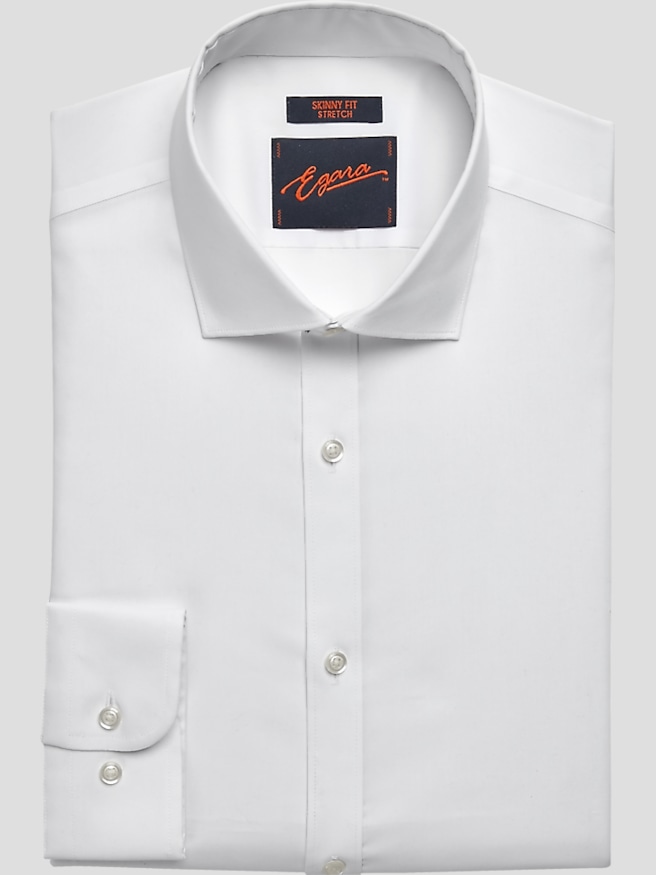
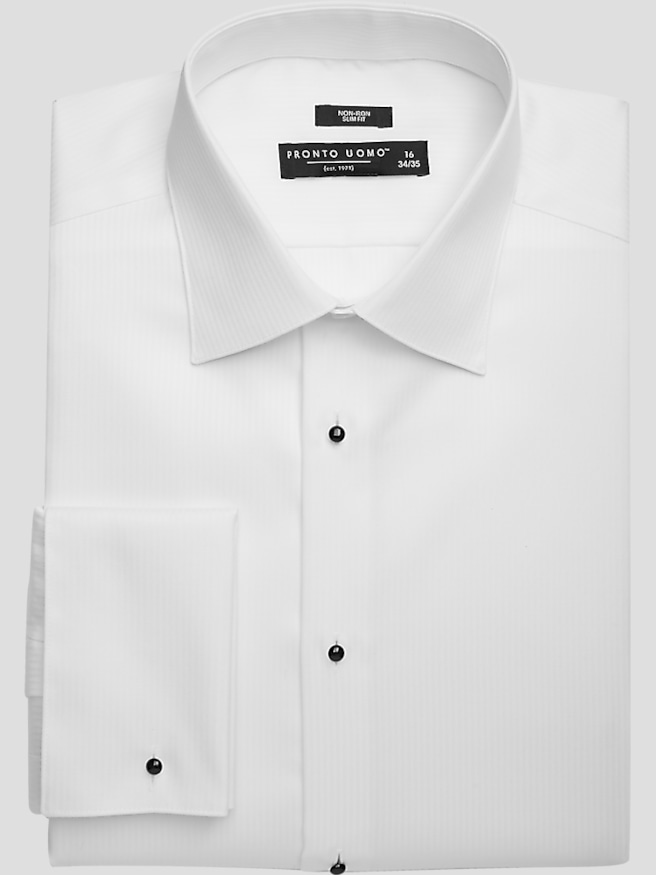
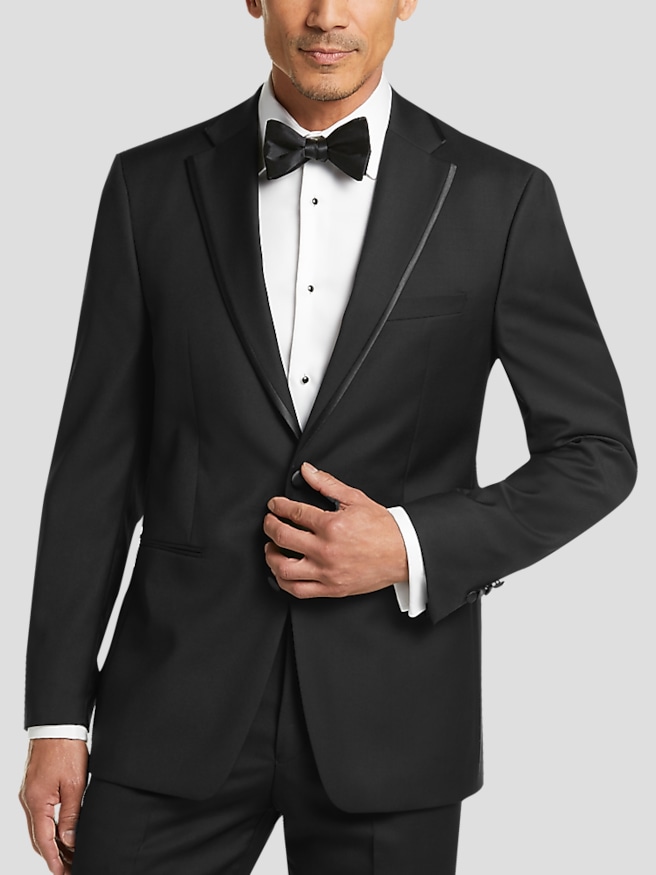
White tuxedo shirts provide the crisp foundation of formal evening dress, pairing a bright, clean shirt front with the dark lines of a tuxedo jacket and bow tie. Their defining details often include a pleated or textured bib, a front designed for shirt studs, and cuffs that accommodate cufflinks, although construction varies. These details distinguish a tuxedo shirt from an everyday dress shirt without making every formal look identical. A finely pleated front brings subtle depth beneath an open jacket, while a piqué bib has a small, raised texture that creates a more structured appearance. A smooth front with a covered placket conceals the buttons for an uninterrupted line. Each approach changes what shows between the lapels, making the shirt an important part of the overall outfit rather than simply a white layer underneath it. Fabric also affects how that white surface looks and feels. Cotton broadcloth typically has a smooth finish that works well with sleek formal tailoring. Cotton twill has a fine diagonal weave and may feel more substantial, depending on its weight and construction. Piqué adds texture, often concentrated at the bib rather than extending across the entire shirt. Cotton-rich blends can balance softness with easier maintenance, while wrinkle-resistant finishes may help the fabric maintain a neater appearance through a long event. No single fiber or weave guarantees opacity, so fabric density matters when considering how much an undershirt might show. A close-to-skin-tone undershirt with a discreet neckline can be less noticeable beneath white fabric than a bright white crewneck. For a groom standing beneath ceremony lighting, a musician onstage, or a guest seated through an awards dinner, these small fabric details can make a meaningful difference. The most suitable white tuxedo shirt supports the formality of the occasion while feeling comfortable enough for the full schedule, from the first photograph to the final conversation.
Collar shape, cuff construction, and fit give white tuxedo shirts much of their individual character. A turndown collar, including spread and point variations, frames a bow tie while covering most of its neckband. It creates a familiar, balanced profile that works naturally with many black-tie ensembles. A wing collar has small folded points and leaves more of the bow tie band visible, producing a distinctive ceremonial look. Wing collars are associated with traditional formal dress, but they are not automatically the best choice for every tuxedo or dress code. The proportions of the collar, bow tie, and jacket lapels all contribute to a cohesive result. French cuffs fold back and fasten with cufflinks, adding a finishing detail at the wrist. Some formal shirts use convertible cuffs that can work with either buttons or cufflinks, so cuff construction deserves attention alongside the collar. The same distinction applies to the shirt front: some designs accommodate removable studs, while others use conventional buttons or a concealed button closure. Studs and cufflinks in coordinating metal tones can create a consistent appearance without needing to match every accessory exactly. Beneath those visible details, fit determines whether the shirt remains polished once the wearer starts moving. The collar should close comfortably without pressing into the neck, and the shoulders should sit close to their natural position. A slim fit follows the torso more closely, while a classic fit generally allows more room through the chest and waist; those labels can vary by maker. Neither should pull across the front when seated or create heavy folds beneath the jacket. Sleeves need enough length for a small amount of cuff to remain visible beyond the jacket sleeve, without extending over the hand. Adequate body length helps keep the shirt tucked during dancing, reaching, or standing for photographs. A well-proportioned shirt stays visually quiet, allowing the tuxedo’s shape and the wearer’s expression to take the lead.
White tuxedo shirts suit weddings, galas, formal dinners, performances, and other occasions where a tuxedo is appropriate. For a wedding party, consistency can come from coordinating collar shapes, front treatments, and cuff styles while allowing each person a comfortable fit. A groom may prefer a textured bib and understated cufflinks, while another wearer may favor the clean appearance of a covered placket. The White Tux Shirt For Wedding collection connects this formal foundation with wedding attire, where the shirt’s proportions and finish become especially noticeable in close-up photographs. Beyond weddings, a white formal shirt can be a thoughtful gift for someone who regularly attends black-tie functions, performs in a formal ensemble, or is preparing for a milestone celebration. Accurate neck and sleeve measurements, along with a clear understanding of cuff and collar preferences, make such a gift more personal and useful. Long-term wear depends partly on construction and partly on care. Secure stitching, neatly finished seams, and well-reinforced cuff and collar edges contribute to a shirt that holds its shape through repeated use. The care label remains the best reference for washing, pressing, and professional cleaning, particularly when a shirt combines textured panels, special finishes, or removable accessories. Studs and cufflinks should be removed before cleaning, and stains benefit from prompt attention using a treatment suited to the fabric. Excessive heat or an unsuitable bleaching product can damage fibers or affect the white finish. Pressing at the recommended temperature helps restore a smooth front and defined collar without flattening intentional texture. Complete drying before storage and a supportive hanger help preserve the shirt between events. Keeping it away from dampness and prolonged direct sunlight also protects its appearance. With appropriate care and a fit that accommodates real movement, a white tuxedo shirt can remain a dependable part of a formal wardrobe, ready to complement a carefully tied bow tie, polished shoes, and a well-fitted jacket.