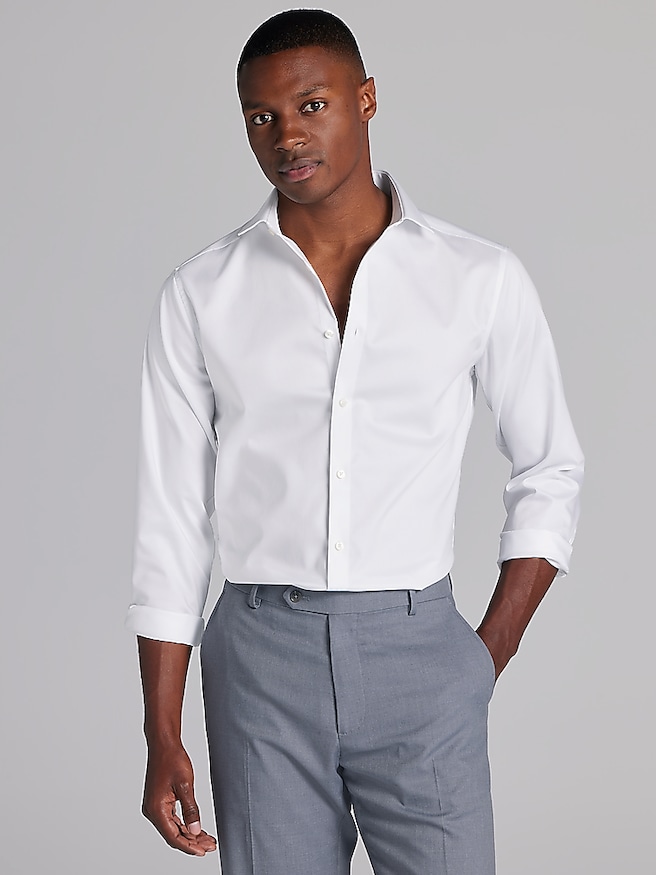
Cotton formal wear brings the familiar feel of a natural fiber to clothing designed for polished occasions, with dress shirts serving as a foundation for suits, tuxedos, and tailored separates. Cotton is absorbent, breathable, and comfortable against the skin, while its appearance depends on the yarn, weave, fabric weight, and finishing. Fine poplin and broadcloth typically have a smooth surface that looks clean beneath a jacket, making them useful for wedding attire, business-formal dressing, and other occasions that call for a crisp shirt. Cotton twill has a subtle diagonal texture and often a softer drape, while pinpoint and other finely textured weaves offer visual depth without a pronounced pattern. A 100% cotton fabric emphasizes the fiber’s natural feel, but it can develop creases through sitting, bending, and everyday movement. Cotton blends may include synthetic fibers for easier maintenance or a small amount of stretch for flexibility; the fiber label helps distinguish those qualities from the appearance alone. Neither cotton content nor a smooth finish automatically makes a garment appropriate for every formal dress code. A white cotton dress shirt with a structured collar can complement a business suit, while black-tie attire generally calls for a shirt whose front, collar, and cuffs are designed to work with a tuxedo. Pleated fronts and piqué bibs provide traditional texture, and some formal shirt fronts accommodate studs rather than ordinary visible buttons. Cotton suits and tailored separates can also create a refined outfit, though their suitability depends on the event’s expectations and the complete ensemble. Their generally less lustrous appearance should not be confused with the finish of traditional evening clothing. The distinction matters at an awards dinner, a wedding ceremony, or a professional reception: cotton contributes comfort and character, but the garment’s construction and styling establish its level of formality. For men who prefer understated clothing, a clean white shirt offers a quiet backdrop for a dark jacket, a carefully tied necktie, and neatly finished accessories.
The fit of cotton formal wear shapes both its appearance and the way it feels over several hours. A dress shirt needs enough room across the upper back and chest for reaching, sitting, and greeting guests without pulling its buttons into a strained line. At the shoulders, the sleeve attachment should sit close to the natural shoulder rather than dropping far down the arm or drawing inward. A collar should close comfortably with a tie in place, and the fabric should lie neatly beneath the jacket collar without bunching. Slim cuts follow the torso more closely, while roomier cuts allow additional ease; neither looks more formal simply because of its name. The strongest choice is the shape that stays smooth when tucked in and allows comfortable movement. Shirt length matters here, especially during a ceremony followed by dinner and dancing, when a short hem can repeatedly work loose from the waistband. Sleeves should reach the wrist without gathering heavily, leaving a modest edge of cuff visible beyond a properly fitted jacket sleeve. Barrel cuffs offer a straightforward button closure, while French cuffs fold back and fasten with cuff links for a more dressed-up finish. Collar shape also affects proportion: a wider spread makes space for a fuller tie knot, while a point collar creates a narrower frame. Beneath a light-colored cotton shirt, a low-contrast undershirt can reduce visible outlines and keep attention on the outfit rather than the layers underneath. Tailored cotton trousers require similar attention to balance, with a waistband that stays in position, a seat that lies smoothly, and enough ease through the thigh for sitting comfortably. A clean hem gives the lower half a deliberate finish instead of allowing excess fabric to collect above the shoes. Together, these details support an outfit that feels appropriate at a client presentation, graduation celebration, or seated reception. They also make cotton formal clothing useful beyond a single event, since well-proportioned pieces can move between professional and social settings without depending on conspicuous decoration.
Care and construction help determine how cotton formal wear holds its shape and appearance over repeated use. Closely woven fabric, even stitching, secure buttons, and neatly finished seams are useful signs of attention to detail, though fabric thickness alone does not establish quality. Collar and cuff construction are particularly important because these areas receive frequent handling and are prominent when a jacket is worn. Smooth cotton can show wrinkles, and an easy-care or wrinkle-resistant finish may reduce maintenance without eliminating the need for occasional pressing. Care labels remain the best reference because a washable cotton shirt and a structured cotton jacket can require very different treatment. Interlinings, linings, trims, and blended fibers may limit washing or ironing methods even when cotton is the main material. Excessive heat can contribute to shrinkage or affect a garment’s finish, so the recommended washing, drying, and pressing settings matter. For washable shirts, prompt attention to collar and cuff marks helps prevent buildup, while pressing at an appropriate setting restores definition to the collar, front, and sleeves. A slight amount of moisture can make ordinary cotton easier to press when the label permits it; embellished fronts and specialty finishes may need a different approach. Proper storage also protects the work put into the garment. Supportive hangers help shirts and jackets retain their shape, and a little space between garments reduces crowding and fresh creases. These practical qualities make cotton dress clothing a thoughtful gift for a graduate beginning a professional wardrobe, a partner preparing for an important celebration, or a father who appreciates dependable tailoring. Accurate neck and sleeve measurements are especially helpful for shirt gifts, along with an understanding of the recipient’s preferred fit and usual dress code. For a broader view of the fabric beyond formal occasions, Cotton Clothing For Men connects this refined foundation with other ways to wear cotton. Within formal dressing, the lasting appeal is straightforward: comfortable fabric, considered proportions, and details that look composed from the first greeting through the final photograph.