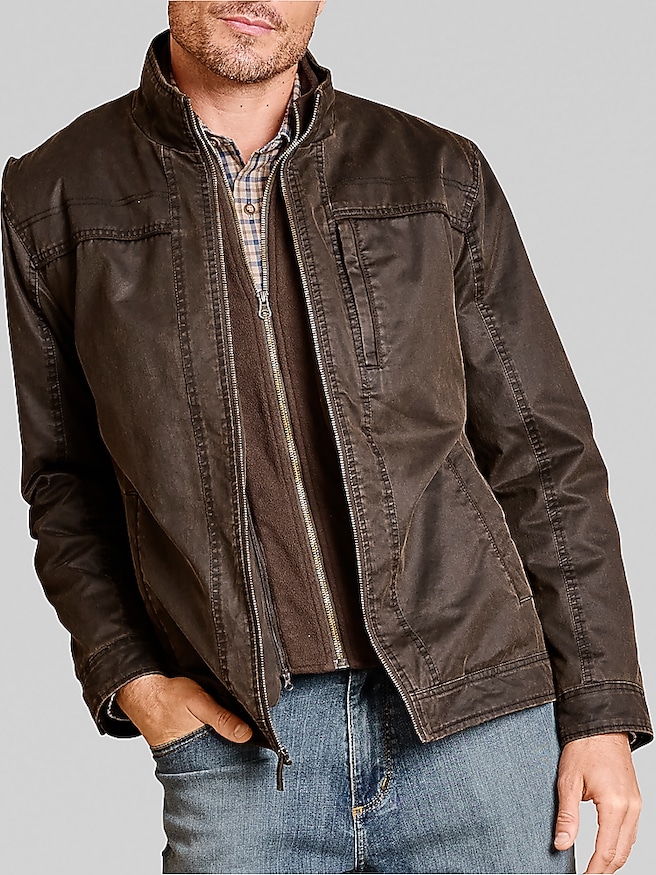
Cotton outerwear includes jackets and coats made with cotton shells or cotton-rich fabrics, valued for their breathable feel, familiar texture, and everyday durability. The character of a cotton jacket depends on more than the fiber alone: weave, fabric weight, lining, and finishing all influence how it feels and wears. Cotton twill has a subtle diagonal texture and can balance a smooth appearance with a substantial hand. Canvas tends to feel firmer and more utilitarian, while denim offers a recognizable texture that gradually develops individual wear patterns. Corduroy adds raised ribs and a softer, textured appearance that pairs naturally with other understated fabrics. A tightly woven shell may feel crisp and structured; a washed cotton fabric often has a more relaxed drape from the beginning. Neither finish is inherently better, but each creates a distinct impression over the same shirt and trousers. Cotton-rich blends can introduce stretch, reduce wrinkling, or change drying characteristics, depending on the other fibers and the fabric construction. A garment described as cotton outerwear may also have a lining, pocketing, or trim made from another material, so the shell composition does not necessarily describe the entire piece. Unlined construction keeps the interior simple and reduces bulk, while a smooth lining can help sleeves move more easily over another layer. Insulation, when present, is a separate consideration from the weight of the cotton shell. Cotton absorbs moisture and is not inherently waterproof; waxed or otherwise treated fabrics have distinct performance and care requirements. Breathability also varies with the weave, lining, and finish rather than following automatically from a cotton label. These distinctions explain why two cotton jackets can have very different textures, shapes, and intended uses, even when their fiber content looks similar. They also make cotton a versatile outerwear material, capable of looking clean and tailored, broken-in and casual, or sturdy and workwear-inspired without losing its recognizable fabric character.
For everyday dressing, men's cotton jackets offer an easy connection between casual clothing and more polished separates. A streamlined silhouette can sit neatly over a button-down shirt and chinos for an informal office, while a roomier utility shape works naturally with a knit shirt and jeans. Shorter jackets tend to emphasize the waist and leave more of the trousers visible; longer shapes provide additional coverage and create a different balance through the hips. The most comfortable fit allows the arms to reach forward without pulling sharply across the back or lifting the entire jacket. Shoulder seams should sit appropriately for the intended cut, recognizing that relaxed designs may deliberately extend beyond the shoulder. Sleeves need enough room for the layers worn underneath, but excess fabric around the forearms can make a structured jacket look less precise. Trying the jacket fastened is particularly useful because an open front can disguise tightness through the chest or waist. Sitting down, reaching toward a steering wheel, and slipping hands into the pockets reveal details that standing still may miss. Collar shape, pocket placement, and closure style also affect how cotton outerwear fits into a routine. A simple collar frames a collared shirt cleanly, while a more substantial collar contributes to a rugged appearance. Zippers create a continuous front line, and buttons allow the opening to be adjusted at several points. Interior pockets can keep small essentials separate from keys, while secure exterior pockets are practical for commuting and travel. Overfilled pockets, however, can distort the front of a jacket and add strain at their corners. Muted colors such as navy, olive, tan, and charcoal coordinate readily with denim and neutral trousers, while the fabric’s texture supplies interest without requiring a strong pattern. Cotton outerwear suits men who want a dependable layer for a commute, a casual dinner, a weekend drive, or everyday errands, with the shape and finish determining how relaxed or refined the overall outfit feels.
Lasting satisfaction with cotton outerwear comes from matching the fabric and construction to the way the garment will be worn, then caring for that particular combination. Dense fabric alone does not guarantee durability: secure seams, reinforced stress points, firmly attached buttons, and smoothly operating closures all contribute to repeated everyday use. Pocket corners, cuffs, and elbows receive frequent friction, so those areas often show the first signs of wear. On some casual cotton fabrics, gentle fading and softened edges become part of the appeal; on a cleaner, more tailored style, preserving an even surface may matter more. Care labels are essential because an unlined, washable cotton jacket and a structured or coated cotton coat may require entirely different treatment. Machine washing is appropriate only when the label permits it, and excessive heat can contribute to shrinkage or alter the fit. Prompt attention to a small mark can reduce the need to clean the whole garment, provided the cleaning method is suitable for the fabric and finish. Waxed cotton needs particular attention, since ordinary laundering or unsuitable cleaning agents can compromise its coating. Manufacturer instructions should govern cleaning and any reproofing treatment. A sturdy hanger helps support the shoulders between wears, while empty pockets allow the front to hang without unnecessary weight. Outerwear should be clean and thoroughly dry before extended storage. For travel, tightly compressing a structured jacket may create creases that are harder to release than those in a relaxed, washed fabric; packing with the garment’s shape in mind helps preserve its appearance. Cotton outerwear can also make a thoughtful gift for a partner, father, brother, or friend whose clothing preferences are familiar. An existing jacket can provide useful clues about sleeve length, overall proportions, favored colors, and preferred pocket arrangements, although sizing still varies by cut. The strongest choice reflects the recipient’s actual habits: a clean silhouette for someone who dresses simply, extra room for someone who layers, or a substantial textured fabric for someone drawn to practical, casual clothing.