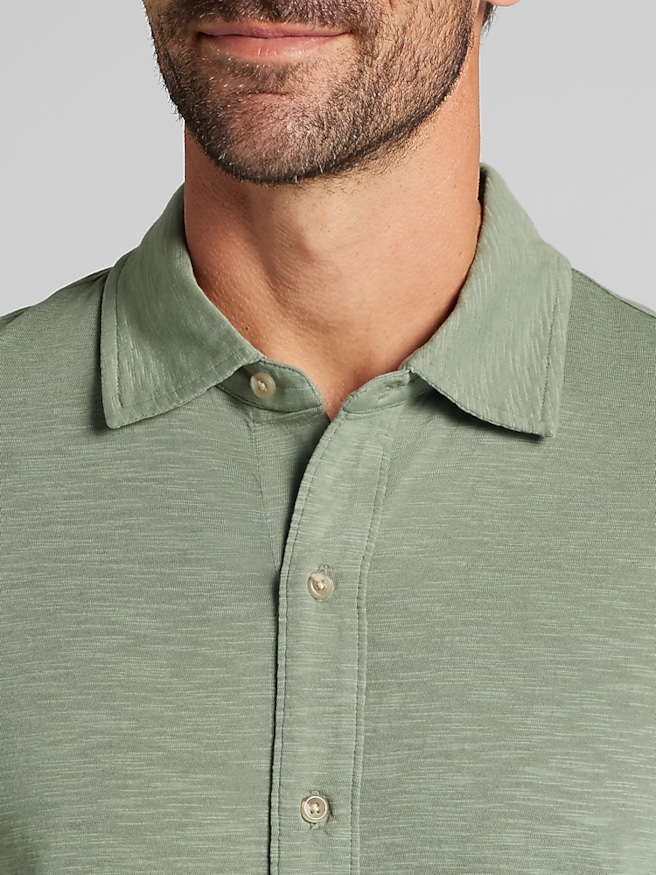
Cotton business casual shirts combine the breathable feel of cotton with the neat appearance expected in a professional setting. They sit comfortably between a formal dress shirt and a casual weekend button-up, making them useful for offices where a tie is optional but a polished presentation still matters. Cotton fibers absorb moisture and allow air to move through the fabric, although the weight and weave influence how a shirt feels against the skin. A 100% cotton shirt offers a natural hand and can soften with repeated washing; a cotton blend may add stretch, improve shape retention, or help reduce wrinkling, depending on its fiber content and construction. Neither option is automatically better for every workday. Someone who spends hours at a desk may appreciate a little stretch across the shoulders, while someone who prefers a traditional woven feel may favor all-cotton fabric. Weave makes a noticeable difference, too. Oxford cloth has a textured basket weave that gives a shirt substance without making it look overly formal. Pinpoint oxford uses finer yarns for a smoother appearance, while poplin typically has a flatter surface that looks clean beneath a jacket. Twill is recognizable by its subtle diagonal pattern and often has a soft drape. Fabric weight, yarn quality, and finishing all affect the result, so weave names alone do not tell the whole story. Solid white and light blue create familiar foundations for office clothing, while fine stripes, small checks, and restrained textures add interest without dominating an outfit. The strongest business casual choices look considered rather than stiff: a collar that sits neatly, fabric that moves comfortably, and a pattern that works with the rest of the outfit. Non-iron and wrinkle-resistant treatments can simplify upkeep, but they describe fabric finishes rather than guarantees that a shirt will remain perfectly smooth through a commute, a long meeting, and an afternoon at a desk.
Fit gives cotton business casual shirts much of their finished appearance. A trim fit generally follows the torso more closely, while regular and classic cuts typically leave additional room through the chest and waist, though fit names vary by maker. The useful distinction is how the shirt behaves in motion. Shoulder seams should sit near the shoulder edge, the button placket should lie flat, and the back should allow enough room to reach forward without pulling sharply. Sitting down, crossing the arms, or reaching for a laptop can reveal tension that is not obvious while standing still. Extra fabric should not balloon above the waistband, but a close fit should not create gaps between buttons. Sleeve length matters just as much: with the arms relaxed, cuffs generally sit around the wrist, with enough room to accommodate a watch without sliding far over the hand. A collar worn open should frame the neckline cleanly rather than collapse or spread awkwardly beneath a jacket. Button-down collars help keep the points in place and bring an easygoing character to office outfits; point and moderate spread collars can look slightly dressier. The same attention to collar shape, sleeve length, and fabric texture applies to Mens Cotton Dress Shirts, which can also suit a business casual outfit when worn without a tie. Hem shape and length help determine whether a shirt looks best tucked or untucked. Longer tails are intended to stay inside trousers, while shorter hems may be designed for wearing out. An untucked shirt should still look proportional, not like a tucked-in style that has come loose. Adjustable cuffs, a smooth inner collar, and well-positioned buttons are small details that become more noticeable over a full workday. For someone moving between desk work and face-to-face meetings, that balance of room and structure can matter more than the name printed on a fit label.
A dependable cotton shirt can anchor several outfits without making each one look identical. A pale blue oxford with navy chinos has a relaxed office character, while a white pinpoint shirt with gray trousers reads a little sharper. A small check can bring depth to solid pants, and a fine stripe can add definition beneath a plain blazer. When the shirt has a noticeable pattern, keeping the trousers and jacket quieter helps the outfit feel cohesive. Leather shoes and a coordinating belt can reinforce the polished side of business casual; understated footwear may also work where the workplace dress code allows it. These shirts suit daily office wear, client lunches, networking events, and presentations where looking prepared matters without requiring a full suit. They can also make a thoughtful gift for someone starting a job, building a work wardrobe, or returning to an office routine, especially when the recipient’s measurements and preferred fit are known. Lasting usefulness depends on care as well as styling. The care label should determine washing, drying, and ironing methods because cotton fabrics, blends, and finishes can have distinct requirements. For machine-washable shirts, using the recommended water temperature and avoiding excessive dryer heat can help limit shrinkage and unnecessary wear. Promptly removing a shirt after drying, straightening the placket, and hanging it on a supportive hanger can reduce creasing. Traditional cotton may benefit from pressing, particularly around the collar, cuffs, and front opening; treated fabrics should be ironed only as their care instructions permit. Addressing stains before washing, fastening shirts carefully, and avoiding an overloaded wash can also help preserve their appearance. Over time, secure buttons, even seams, and fabric that holds its shape contribute to a shirt’s usefulness. A well-fitting cotton business casual shirt earns its place through those ordinary details: comfortable movement, a tidy collar, straightforward care, and an appearance that feels appropriate from the first conversation of the day to the last meeting.