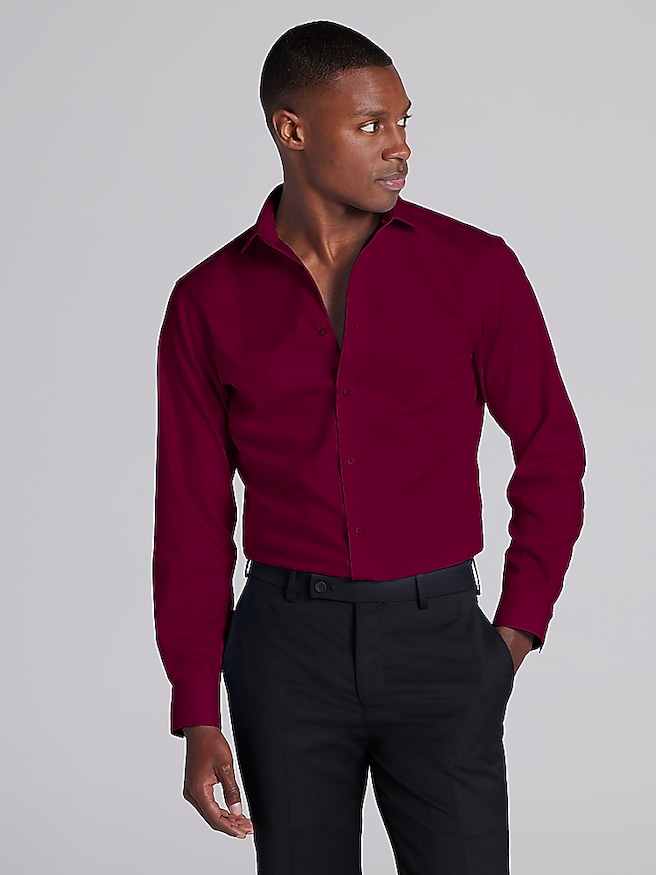
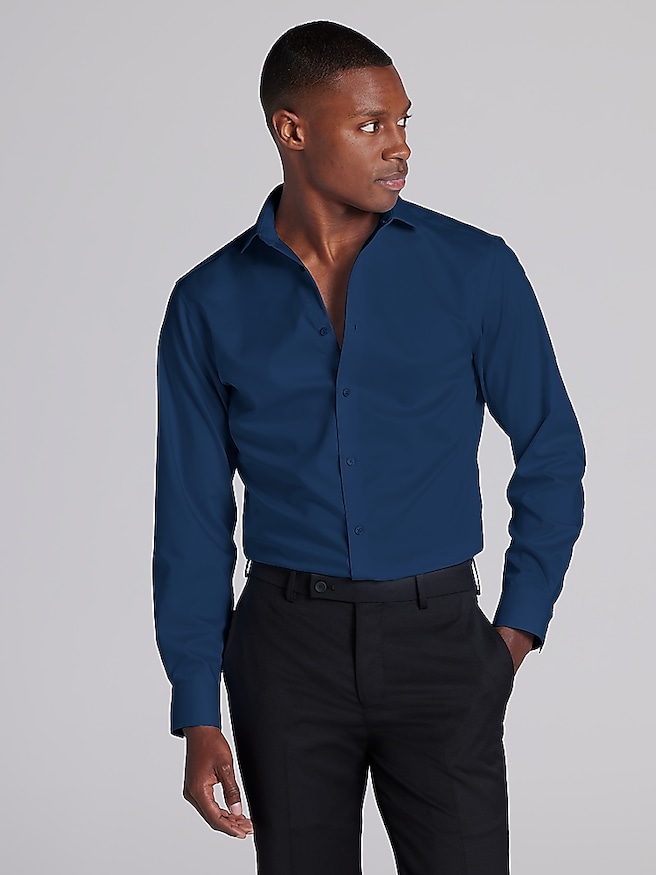
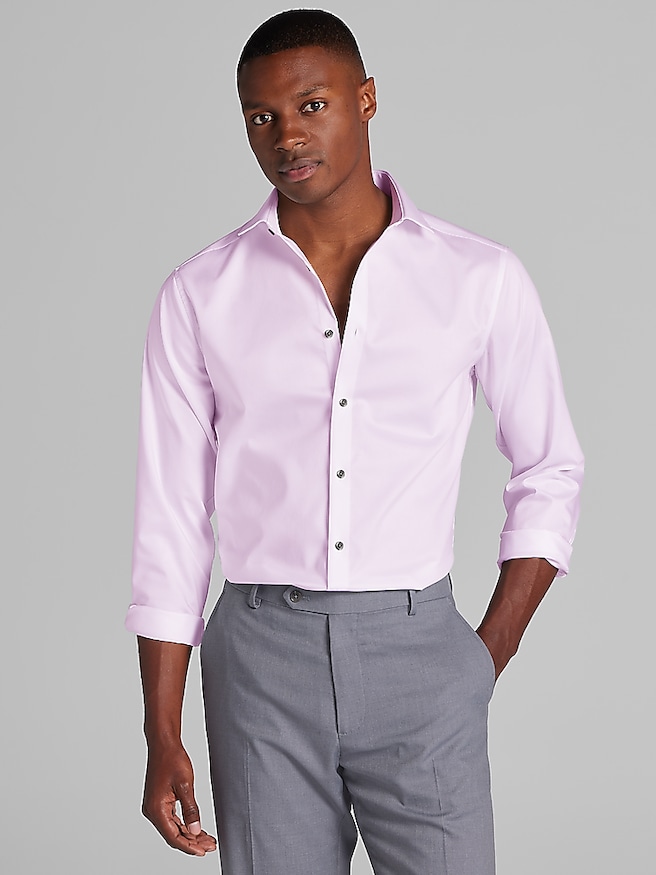
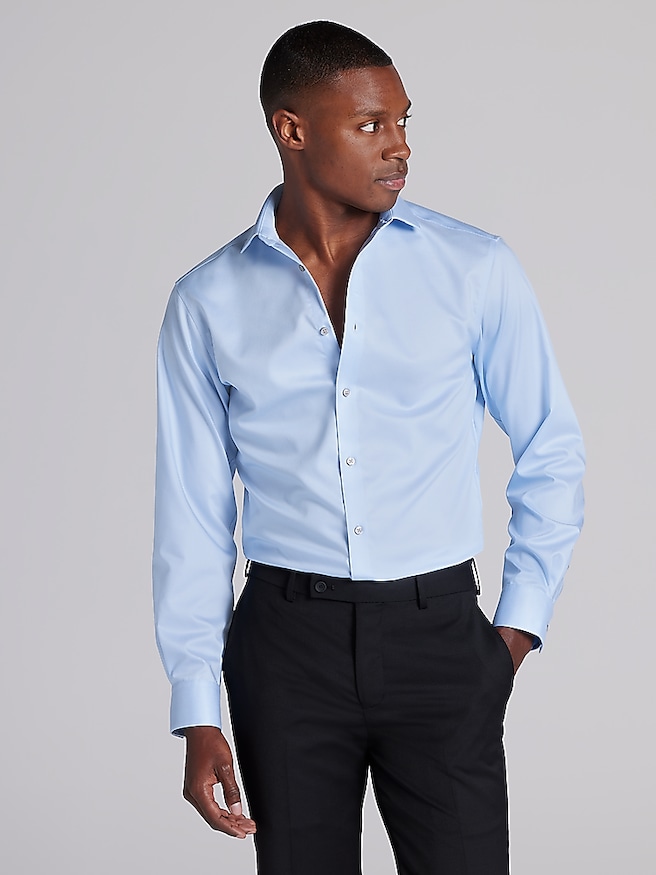
Men’s business casual shirts bring a polished appearance to workdays that do not call for a full suit and tie. Collared button-up shirts, Oxford cloth button-downs, smooth poplin shirts, subtly textured twill shirts, and refined polos all fit within the category, depending on the workplace. Their shared purpose is straightforward: looking professional without appearing overdressed for the setting. An Oxford shirt with chinos feels natural at a team meeting, while a finely woven button-up under a blazer brings more structure to a client presentation. Fabric makes a noticeable difference in how each look comes together. Oxford cloth has a basket-weave texture that gives it substance and a slightly relaxed character. Poplin has a finer, smoother surface that works well with tailored trousers, especially when a clean finish matters more than visible texture. Twill is distinguished by its diagonal weave and often has a supple drape, making it another useful choice for a polished office wardrobe. Cotton is valued for its breathability and comfortable feel, while cotton blends can incorporate stretch or help reduce wrinkling, depending on their composition and finish. Stretch fabrics allow more ease through movements such as reaching across a conference table or settling into a desk chair. Knit polos offer another interpretation of business casual, with a softer structure that can complement chinos or tailored pants in less formal offices. Piqué adds a small, raised texture; smoother knits create a sleeker impression. Solid white, light blue, navy, and understated neutrals provide an adaptable foundation, while fine stripes and small checks introduce pattern without taking over an outfit. The most useful distinction is not simply dressy versus relaxed, but how the shirt’s fabric, collar, and pattern work together. A crisp collar and restrained pattern can give a comfortable shirt enough definition for professional settings, even without a jacket. Workplace expectations still matter: a polo may suit an internal planning session, while a woven shirt may feel more appropriate when meeting a new client.
Fit gives men’s business casual shirts their finished appearance, whether the outfit includes dress pants, chinos, or dark denim in a workplace that permits it. A well-fitting shoulder generally places the seam near the edge of the shoulder rather than noticeably down the upper arm. Through the chest and midsection, the fabric should lie comfortably without pulling between the buttons or gathering in large folds at the waist. Slim fits typically follow the body more closely, while classic or more relaxed cuts provide additional room; the right choice depends on proportions, movement, and personal preference rather than the fit name alone. Sleeve length deserves the same attention. A long sleeve should reach the wrist with the arm relaxed, and the cuff should close comfortably without slipping far onto the hand. Under a blazer, a small amount of visible shirt cuff creates a deliberate finish. Shirt length also changes the character of an outfit. Longer tails help a tucked shirt remain secure through sitting and standing, while styles designed for untucked wear generally have shorter hems that keep the proportions balanced. A shirt that looks neat tucked into trousers may hang too low when worn loose, so these uses are not always interchangeable. Collar construction adds another distinction. A button-down collar has points secured by small buttons, which helps maintain its shape and gives the shirt an approachable, traditional look. A spread or point collar can appear more tailored, particularly beneath a jacket. These details make familiar combinations feel considered: a pale blue Oxford with tan chinos, a fine-striped shirt with charcoal trousers, or a solid knit polo with navy pants. Pattern scale matters when layers enter the picture, too. A small check can sit comfortably beneath a plain blazer without competing for attention. For days that move from desk work to an informal dinner, restrained colors and a balanced fit keep the same shirt useful without requiring an entirely new outfit.
Care and construction influence how consistently a business casual shirt performs over repeated wear. Even stitching, secure buttons, neatly finished seams, and a collar that holds its shape all contribute to a shirt that continues to look presentable beyond its first outing. No fabric is maintenance-free, and the care label remains the best reference for washing, drying, and pressing. Cotton shirts may need ironing to recover a crisp finish, while wrinkle-resistant or non-iron treatments can reduce that work when cared for as directed. Those terms describe fabric treatments, not a guarantee that every crease will disappear under every condition. Prompt removal from the dryer, when tumble drying is permitted, can limit wrinkles that become harder to smooth after the shirt sits in a pile. Hanging woven shirts with enough space between them helps protect their shape, while knit shirts may benefit from folding if hanging stretches the shoulders. Attention to collars and cuffs is especially worthwhile because those areas receive frequent contact throughout the day. Rotating shirts between wears also allows time for laundering and keeps one favorite from bearing the entire workload. For someone building a professional wardrobe, a few compatible colors and fabrics can support more combinations than several bold patterns that only work with one pair of pants. Related options such as Mens Smart Casual Everyday Button-Up Shirts extend that same balance of neat presentation and everyday versatility beyond the office. Business casual shirts can also make practical gifts for a recent graduate, someone beginning a new role, or a person whose work regularly includes meetings and presentations. A known neck size, sleeve length, or preferred fit provides a more useful starting point than guessing from appearance alone. Whether worn for a routine workday, a professional lunch, or a company gathering with a relaxed dress code, these shirts earn their place through comfortable movement, thoughtful proportions, and an appearance that feels appropriate without being overly formal.