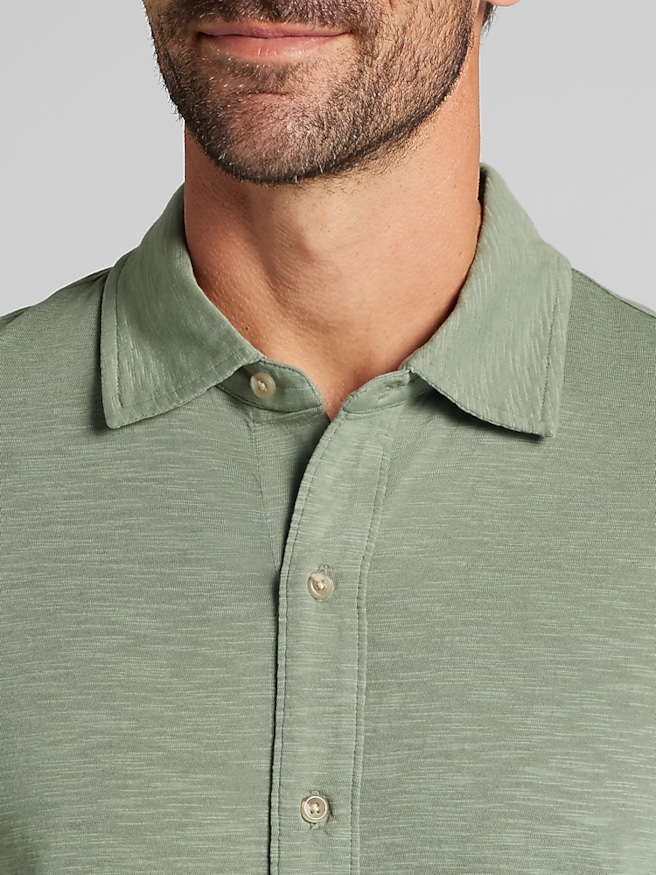
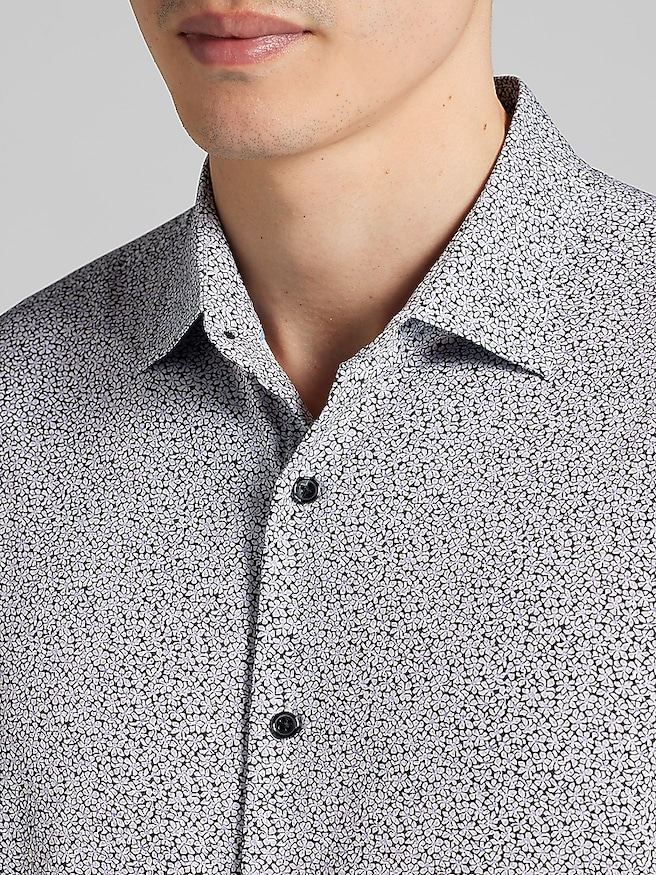
Cotton short-sleeve shirts bring the soft feel of a natural fiber to everyday clothing, from simple crewneck tees and collared polos to woven button-front styles. The category covers a range of looks: a knit shirt has an easygoing character, while a woven shirt with a collar creates a more defined outline. Cotton absorbs moisture, feels comfortable against the skin, and can be made into fabrics with distinctly varied textures and weights. A 100% cotton shirt emphasizes those natural fiber qualities, while a cotton blend may incorporate stretch, wrinkle resistance, or quicker drying, depending on its other fibers and construction. Fiber content is only part of what determines how a shirt feels. Jersey knit typically has a smooth face and natural give from its looped construction, making it familiar in everyday T-shirts. Piqué has a textured surface often associated with polo shirts, adding visual depth without requiring a print. Woven cotton fabrics such as poplin and oxford offer a more structured alternative, with poplin generally appearing smoother and oxford showing a recognizable basketweave texture. These distinctions matter when choosing between a shirt that drapes softly and one that holds a more defined shape through the chest and collar. A smooth, solid-colored shirt can serve as a quiet foundation for patterned pants, while stripes, checks, and small-scale prints give a straightforward outfit more personality. Fabric weight also affects coverage and drape; a lighter fabric may fall closer to the body, while a more substantial knit can have a firmer outline. Opacity varies with color, fabric density, and construction, so pale shades deserve particular attention when coverage is a priority. Combed cotton is processed to remove shorter fibers and impurities, which can contribute to a smoother hand. Neither softness nor weight alone determines quality, however; consistent stitching, an even fabric surface, and a collar that lies neatly all contribute to how a shirt looks and wears.
Fit gives cotton short-sleeve shirts much of their character, whether the goal is a clean, close silhouette or a little more room through the torso. On a conventional set-in sleeve, a shoulder seam that sits near the edge of the shoulder helps the shirt hang neatly without pulling across the upper back. Intentionally relaxed or dropped-shoulder designs follow a different proportion, so the overall shape matters more than any single measurement. Sleeves should leave enough room to bend the arms comfortably, with openings that neither pinch nor flare excessively for the intended look. A short sleeve ending around the middle of the upper arm often creates a balanced line, although sleeve lengths vary by design and personal preference. Across a woven shirt’s chest, the button placket should lie flat rather than separate when seated or reaching forward. Knit shirts can follow the body more closely, but cotton jersey’s natural give is not the same as the recovery provided by added stretch fibers. Hem length is another useful distinction: an untucked shirt should look deliberate rather than extend so far that it overwhelms the pants, while a shirt intended for tucking needs enough length to stay in place during normal movement. These practical details help make the same category useful for a casual office, a family lunch, a neighborhood gathering, or everyday errands. A solid cotton polo with chinos can look composed without the formality of a long-sleeve dress shirt. A short-sleeve button-front shirt works well with straight-leg jeans or casual trousers, especially when its pattern and collar suit the setting. The simple neckline of Soft Cotton T Shirts pairs naturally with denim and also sits comfortably beneath an open overshirt. For workplaces and occasions with specific dress expectations, the required level of formality still matters; a polished casual shirt does not automatically replace a dress shirt. Subtle texture, restrained patterns, and a tidy fit tend to make outfit combinations easier.
Everyday durability depends on both construction and care, particularly for cotton shirts that move repeatedly between wearing, washing, and storage. Neat seams, secure buttons, and cleanly finished hems help a shirt withstand regular handling, while reinforced stress points can support areas that receive frequent pulling. Cotton can shrink, and even a shirt described as preshrunk may experience some additional dimensional change. The care label is the best reference for washing and drying because dyes, finishes, trims, and blended fibers can require their own treatment. When machine washing is permitted, separating colors, avoiding an overloaded washer, and turning printed shirts inside out can help limit unnecessary friction and color transfer. If tumble drying is allowed, following the recommended setting and removing the shirt promptly can reduce excessive creasing; prolonged high heat may contribute to shrinkage. Woven cotton may need pressing for a crisp appearance, especially along the collar, placket, and sleeve hems, while a knit tee usually suits a softer finish. Any ironing should follow the label and account for printed graphics or decorative details. Folding knit shirts helps avoid hanger marks at the shoulders, and properly supported hangers can keep woven shirts ready to wear without crowding the closet. Practical care requirements also matter when cotton short-sleeve shirts are given as gifts. A familiar size, a preferred neckline, and colors the recipient already wears are often more useful than an unfamiliar pattern or a sharply contrasting fit. Someone who favors jeans and sneakers may appreciate a straightforward crewneck, while a person who regularly wears chinos may prefer a polo or casual button-front style. Size charts and measurements from a well-fitting shirt provide a stronger starting point than a size letter alone. Consider the recipient’s routine as well: easy laundering may matter most for frequent wear, while a smooth woven finish may appeal to someone who enjoys a more tailored casual look. Those everyday preferences help make cotton shirts a thoughtful, usable addition to a wardrobe.