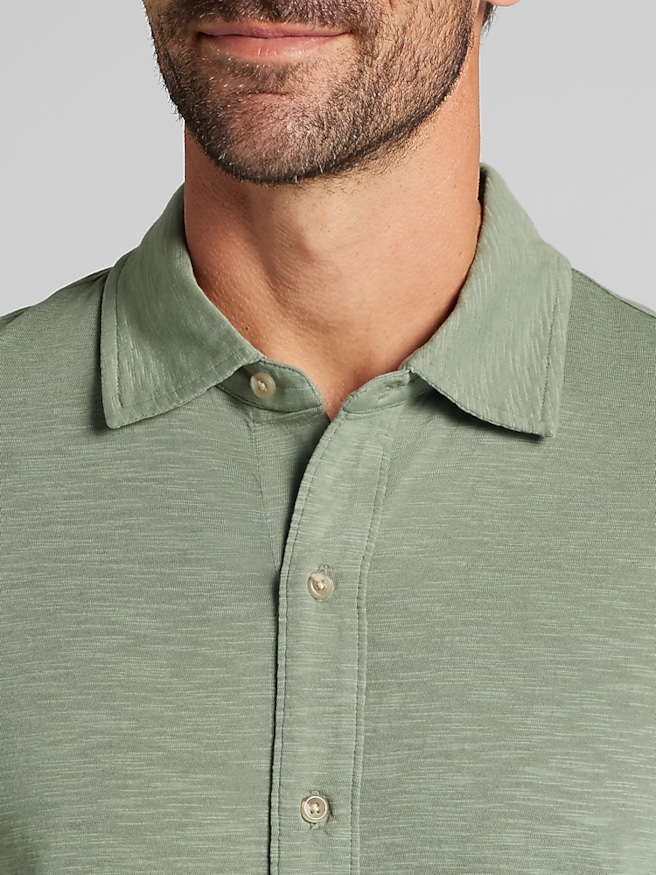
Cotton short-sleeve camp shirts are casual button-front shirts characterized by a flat, open collar, short sleeves, and a straight hem designed to look natural worn untucked. The camp collar, sometimes described as a Cuban-style collar, lies away from the neck rather than standing upright like a traditional dress-shirt collar. That construction gives the shirt its recognizable open neckline and relaxed appearance. Many camp shirts have a slightly boxy silhouette, although the amount of room through the chest and waist varies by cut. Cotton complements that shape with a familiar feel against the skin and a breathable structure suited to everyday wear. The fabric’s weave makes a noticeable difference: cotton poplin generally has a smooth surface and a cleaner outline, while slub cotton introduces subtle texture through variations in the yarn. A fine twill can add a little more substance and a soft diagonal texture. These distinctions influence how a shirt hangs, how readily it creases, and whether its overall character feels crisp or gently rumpled. Fabric weight matters, too. A lighter cloth may move more freely, while a more substantial weave can give the collar and hem a clearer shape. Neither weight alone nor an especially smooth finish determines quality; consistent stitching, a balanced collar, and neatly finished seams also deserve attention. A 100% cotton composition and a cotton blend should not be treated as interchangeable, since added fibers can change stretch, drape, and care requirements. Cotton absorbs moisture, but it does not automatically deliver the quick-drying performance associated with technical fabrics. For a shirt worn through a long lunch, an afternoon of errands, or an evening gathering, the appeal is often straightforward: a comfortable fabric, an uncluttered silhouette, and enough structure to look considered without the formality of a dress shirt. The combination also gives solid colors depth, allowing the fabric’s texture and the collar’s shape to provide interest without requiring a bold print.
The right fit preserves that easy shape without making the shirt look oversized by accident. Shoulder seams generally sit near the edge of the shoulder unless the design intentionally uses a dropped shoulder, and the chest should have enough room for reaching forward without pulling the button placket apart. When seated, the front should remain comfortable rather than drawing tight across the middle. Short sleeves look balanced when they leave space around the upper arm instead of gripping it, with their exact length depending on the shirt’s proportions and the wearer’s preference. An untucked hem usually works best when it covers the waistband without extending so far down that it overwhelms the trousers. Viewed from the side, the shirt should fall cleanly rather than bunching above the hips or flaring sharply away from the body. Cotton versions of Short Sleeve Camp Shirts For Men pair naturally with chinos, straight-leg denim, and relaxed tailored trousers, making them useful for casual dinners, weekend plans, travel, and workplaces where the dress code permits an open-collar shirt. A solid shirt with dark denim and simple leather sneakers creates a clean, understated combination; a small geometric print with plain chinos adds character without making every part of the outfit compete. Larger patterns tend to become the focal point, so quieter trousers and uncomplicated footwear help keep the overall look balanced. Loafers can make the same basic combination feel more polished without changing its relaxed character. Worn buttoned, the shirt lets the collar and front placket define the outfit. Worn open over a plain crewneck T-shirt, it creates a more casual layered arrangement, provided the pieces have compatible lengths and enough room to move comfortably. A camp collar is intentionally informal, so its strongest role is not replacing a dress shirt for a strict business or formal dress code. It works where ease and a neat appearance need to coexist: a restaurant patio, a museum visit, a family get-together, or a low-key celebration with friends.
Good care helps cotton camp shirts retain their proportions, color, and comfortable feel over repeated wear. The care label takes priority because fabric finishes, dyes, trims, and blended fibers can require different treatment. When machine washing is permitted, a cool, gentle cycle with similar colors is often a sensible approach, and turning a shirt inside out can help reduce surface abrasion. Treating a small mark promptly is generally easier on the fabric than repeatedly washing the entire garment to address an older stain. Excessive dryer heat can contribute to shrinkage in cotton, so drying instructions deserve as much attention as washing instructions. If the label permits air drying, smoothing the placket, collar, and hem while the shirt is damp can reduce the amount of pressing needed later. A suitable iron setting can restore a sharper finish, while a little natural creasing may suit a softer, more relaxed fabric. Neither approach needs to erase the shirt’s character. For storage, a supportive hanger helps maintain the shoulder line, and avoiding an overfilled closet gives the collar room to lie properly. For travel, folding along the seams and unpacking soon after arrival can help limit deep creases, though cotton should not be assumed wrinkle-resistant unless its fabric treatment specifically supports that claim. Long-term wear also depends on small construction details: securely attached buttons, even stitching, and seam edges that remain tidy after laundering. The areas around the underarms, side seams, and buttonholes are worth checking because they receive regular movement and handling. As a gift, a cotton camp shirt can suit a father, partner, brother, or friend who already favors untucked shirts and relaxed clothing. A familiar color and a manageable pattern are usually easier to incorporate into an established wardrobe than an unfamiliar statement print. Matching the recipient’s preferred fit and willingness to press cotton matters just as much as choosing a pleasing color. Those practical details help make the shirt something that feels natural to wear repeatedly, rather than something reserved for a single occasion.