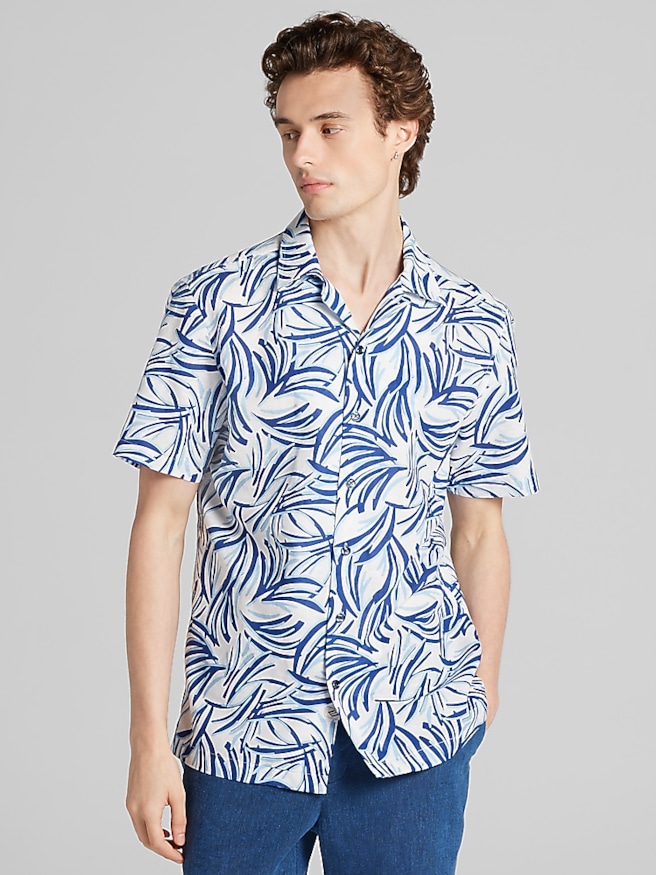
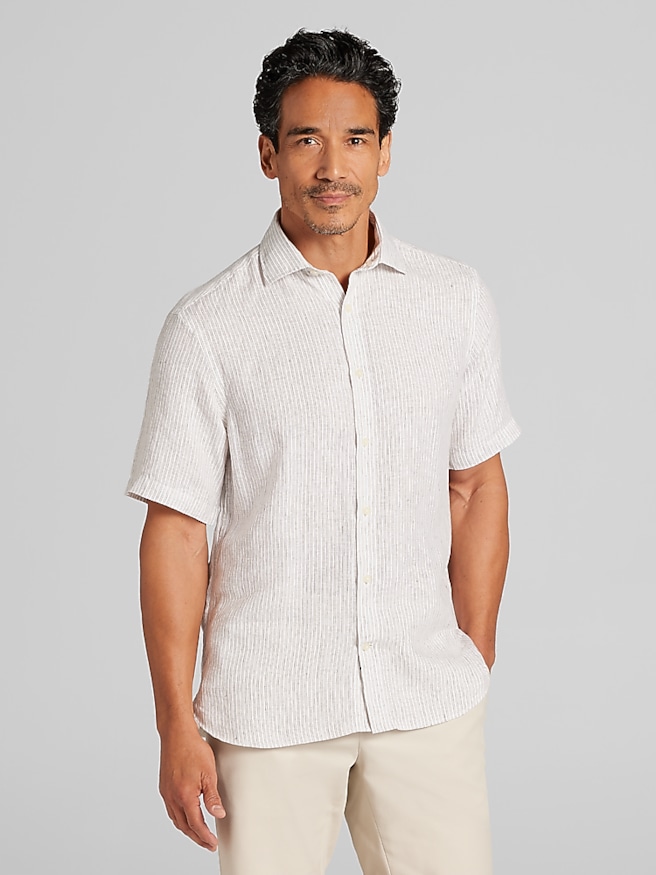
Short sleeve camp shirts for men are casual button-front shirts defined by an open, flat-lying collar, short sleeves, and an easy silhouette. Often called a camp collar or revere collar, the neckline folds away from the chest rather than standing upright like a traditional dress shirt collar. That shape gives the shirt its relaxed character: polished enough for dinner on a covered patio, comfortable enough for an afternoon spent walking through town. Many camp shirts have a straight hem designed to sit neatly outside the waistband, though hem shape and length vary by style. Their appeal comes from that balance of structure and ease. A button front gives the outfit a finished appearance, while the open neck keeps it from feeling formal. Solid colors, subtle woven textures, stripes, and expressive prints each bring their own personality to the same familiar shape. A muted olive or navy shirt can anchor an understated outfit, while a larger botanical pattern makes the shirt the focal point. For a more expressive take, tropical camp shirts for men bring foliage-inspired patterns and vacation character to this relaxed silhouette. These shirts suit weekend gatherings, casual restaurant visits, travel, and workplaces where open-collar clothing fits the dress expectations. They are not substitutes for dress shirts at occasions that call for a tie or formal tailoring, but they offer a useful middle ground between a T-shirt and a more structured button-front shirt. During the cooler months, they still have a place indoors, under lightweight layers, or packed for a trip to a milder climate. The strongest outfits let the collar and proportions do the work, with simple pants and shoes providing a clean backdrop. A camp shirt should look intentional without appearing stiff, whether the setting is a neighborhood coffee shop or a relaxed evening with friends.
Fabric has a strong influence on how a camp shirt feels, hangs, and holds its shape. Cotton usually offers a familiar, breathable feel, with crisp poplin creating a cleaner outline and textured weaves adding visual depth. Linen tends to feel airy and has a naturally irregular surface; its creases are part of its relaxed appearance rather than a sign that the shirt has lost its usefulness. Cotton-linen blends can balance a bit of structure with the texture associated with linen, although the result depends on the weave and fiber proportions. Rayon and viscose fabrics often have a fluid drape that follows the body instead of holding a boxy shape. That movement can be especially appealing in printed shirts, where the pattern sits softly across the chest and shoulders. Blends containing synthetic fibers may improve shape retention or reduce wrinkling, but breathability and comfort still depend on fabric weight and construction. A lightweight shirt is not automatically cool to wear if the weave is dense, just as a textured fabric is not necessarily heavy. Fit matters as much as fiber content. An easy fit should provide enough room to reach forward, sit comfortably, and move through the shoulders without pulling the button placket apart. For a conventional fit, the shoulder seam generally sits near the edge of the shoulder; a deliberately relaxed cut may extend beyond it. Sleeves should leave space around the upper arm without overwhelming it, and a hem worn untucked should cover the waistband without making the torso look disproportionately long. Trying the shirt while seated can reveal tightness that is less obvious while standing. Someone who plans to wear a T-shirt underneath will need a little more room through the chest and sleeves than someone wearing the camp shirt on its own. Size measurements, garment proportions, and the intended silhouette are more useful than assuming every relaxed shirt fits alike.
Styling works best when the rest of the outfit supports the camp shirt’s easy proportions. Chinos give it a tidy everyday foundation, while soft denim adds a familiar weekend feel. Tailored shorts work for mild-weather outings, and relaxed linen pants complement a shirt with a fluid drape. A printed shirt often looks most cohesive with solid pants that pick up one quieter shade in the pattern rather than competing with every color. With a solid shirt, texture can supply the interest: a slubbed weave against smooth chinos, for example, or a softly washed cotton shirt with dark denim. Minimal leather sneakers, loafers, and casual suede shoes can each suit the silhouette, depending on the setting. Wearing the shirt open over a plain crewneck T-shirt creates another option, especially when moving between comfortable indoor spaces and cooler air outside. A lightweight jacket with enough room through the shoulders helps preserve that ease without bunching the sleeves. Care deserves equal attention because a camp shirt’s appeal depends on its collar, drape, and surface texture staying in good condition. Follow the garment’s care label rather than applying one washing routine to every fabric. Some cotton shirts tolerate machine washing, while linen, rayon, and blended fabrics may call for gentler handling or professional cleaning. When washing is permitted, fastening buttons as directed, using an appropriate cycle, and avoiding excessive dryer heat can help limit stress on the fabric. Promptly removing the shirt after washing or drying can reduce stubborn creasing; reshape the collar and smooth the placket before storing it. Iron or steam only at a temperature suitable for the material. For durability, look for even stitching, secure buttons, neatly finished seams, and a collar that lies smoothly without twisting. Areas around the underarms, side vents, and buttonholes benefit from careful construction because they see repeated movement. Camp shirts can also make thoughtful gifts for men who enjoy travel, casual entertaining, or clothes with a little visual personality. A familiar color and an easy-to-coordinate pattern make the gift more approachable, while attention to the recipient’s usual fit and care preferences makes it more likely to become a regular part of the wardrobe.