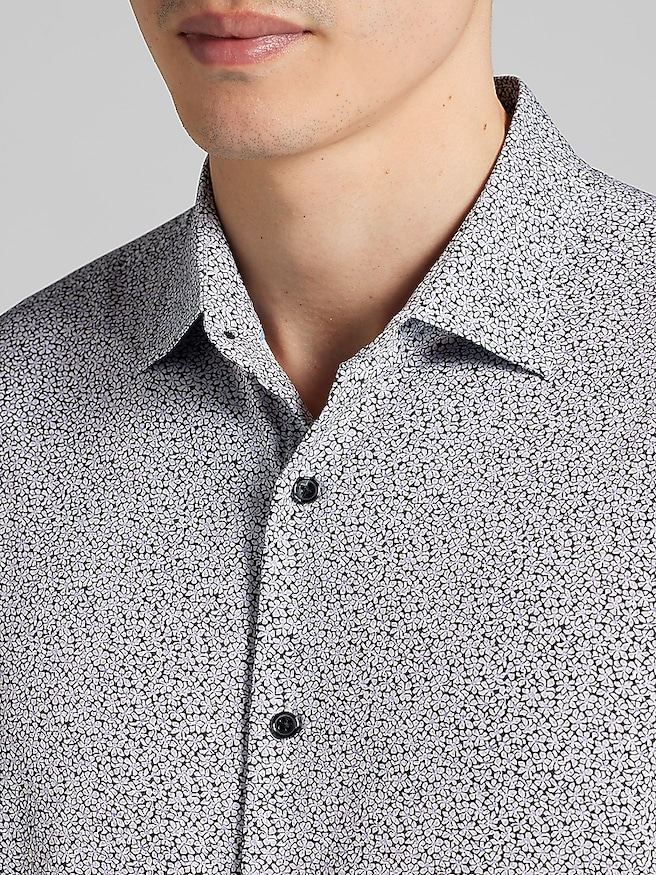
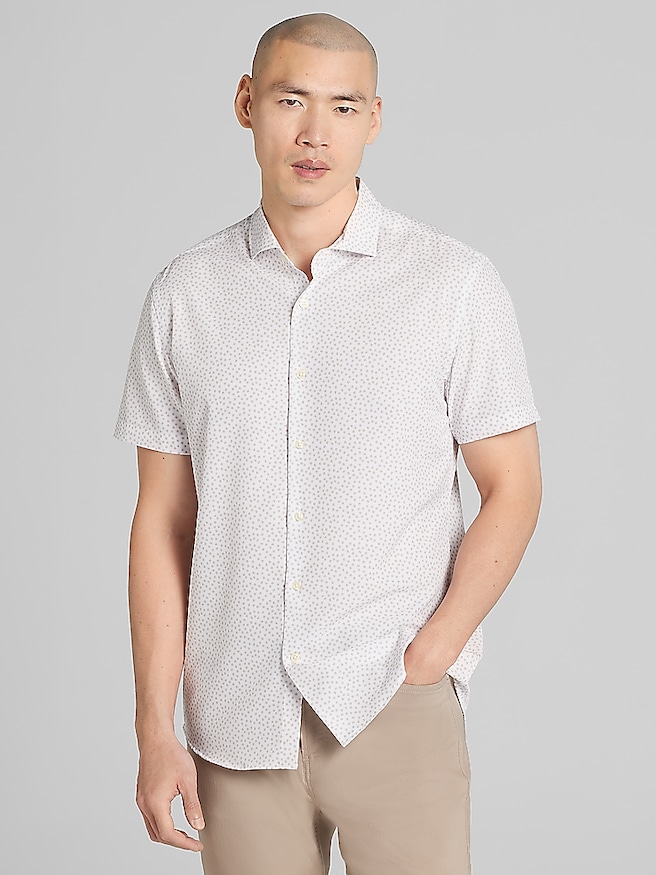
Short-sleeve men's shirts range from everyday T-shirts and polos to button-front shirts with traditional point collars, button-down collars, or relaxed camp collars. Each shape brings a distinct level of structure to an outfit. A crewneck tee keeps things simple, a polo adds a collar without the full button-front look, and a woven shirt creates a more defined silhouette for casual offices, dinners, and social gatherings. Camp collars sit open at the neck and give a shirt an easygoing appearance, while button-down collars help keep the collar points in place. Fabric makes just as much difference as the neckline. Cotton is a familiar choice for its softness and absorbency, although the weave and weight influence how it feels against the skin. Smooth cotton poplin has a clean surface, while an oxford weave adds visible texture and a slightly more substantial feel. Linen has a distinctive slubbed texture and an airy construction; its natural creasing is part of its character rather than a sign that the shirt needs replacing. Cotton-linen blends combine elements of both fibers, with the exact balance depending on the fabric composition. Knit fabrics, including jersey and piqué, generally feel more flexible than crisp woven fabrics. Piqué's small, textured pattern gives many polos their recognizable surface, while jersey has a smoother, softer hand. Blends containing synthetic fibers may offer quicker drying or improved wrinkle resistance, but those properties depend on the fabric and any treatments applied to it. Performance fabrics may also incorporate moisture-wicking features or added stretch. A little elastane can help a shirt move with the wearer, though stretch is not a substitute for a comfortable fit. Fabric weight, opacity, and texture are useful considerations for everyday wear: a shirt intended to stand alone should provide the coverage and drape its wearer prefers. Someone spending hours at a desk may value softness and freedom of movement, while a frequent traveler might prioritize a fabric that packs neatly and is straightforward to care for.
The fit of a short-sleeve shirt is especially noticeable at the shoulders, chest, and sleeve openings. On a conventional set-in sleeve, the shoulder seam should sit close to the edge of the shoulder rather than pulling inward or dropping far down the arm, unless the shirt is intentionally cut for a relaxed silhouette. The chest should allow comfortable movement without the buttons straining or the fabric forming strong horizontal pull lines. Sleeves that finish around the middle of the upper arm often create balanced proportions, although sleeve length varies with the shirt's design and the wearer's build. The opening should leave room to bend and reach without gripping the arm or flaring excessively. Slim fits follow the torso more closely, classic fits provide additional ease, and relaxed fits create a looser outline; these terms are not standardized, so measurements are more useful than the fit name alone. Length matters, too. A shirt worn untucked usually looks balanced when its hem falls around the middle of the fly rather than extending far down the thigh. Straight hems often work well untucked, while longer curved hems can provide coverage when tucked into trousers. The intended setting helps shape the rest of the outfit. A solid polo with chinos and clean leather sneakers offers a composed look for an office with a relaxed dress code. A small-pattern button-front shirt can bring detail to dark jeans for dinner, while a plain tee lets textured trousers or an overshirt carry more of the visual interest. Stripes, checks, and prints are easier to coordinate when one color repeats elsewhere in the outfit. Large patterns make a stronger statement, while smaller patterns often read as texture from a distance. For occasions requiring fuller arm coverage or a more traditional dress-shirt silhouette, long-sleeve men's shirts provide another option. Short sleeves suit many everyday settings, but a formal event or a workplace with a stricter dress code may call for a long-sleeve dress shirt instead.
Good construction and appropriate care help short-sleeve shirts keep their shape and appearance through repeated wear. Even stitching, securely attached buttons, and neatly finished seams are useful signs of careful assembly. At the collar, a consistent shape helps a woven shirt look tidy, while a knit collar benefits from enough recovery to lie flat after washing. Fabric should feel suited to its purpose: a soft everyday knit does not need the crispness of a woven shirt, and a relaxed linen shirt should not be judged by the same wrinkle expectations as a smooth cotton blend. The care label is the best starting point because shirts with similar appearances can have different washing and drying requirements. Where the label permits machine washing, separating colors and avoiding an overloaded drum can help reduce friction and excessive creasing. Turning printed shirts inside out may help protect the surface during laundering. High dryer heat can contribute to shrinkage or damage stretch fibers, so the recommended temperature matters. Removing a shirt promptly after drying and smoothing the collar, placket, and hem can reduce the need for ironing. Some woven fabrics benefit from pressing while slightly damp, but the iron setting should match the fiber content. Knits often store well folded, while woven shirts can hang on a properly shaped hanger without crowding. Addressing a loose button or a small seam opening early can prevent a minor repair from becoming a larger problem. These practical details also matter when giving a shirt as a gift. A father, brother, partner, or friend is more likely to wear a shirt regularly when its fabric, fit, and care requirements match his routine. A familiar size, a preferred collar style, and colors already present in his wardrobe provide useful starting points. For someone who favors simple outfits, a quiet solid or subtle texture can be easier to incorporate than a bold print. The most useful short-sleeve shirts feel comfortable through ordinary movements, coordinate naturally with frequently worn pants, and remain easy to maintain between outings.