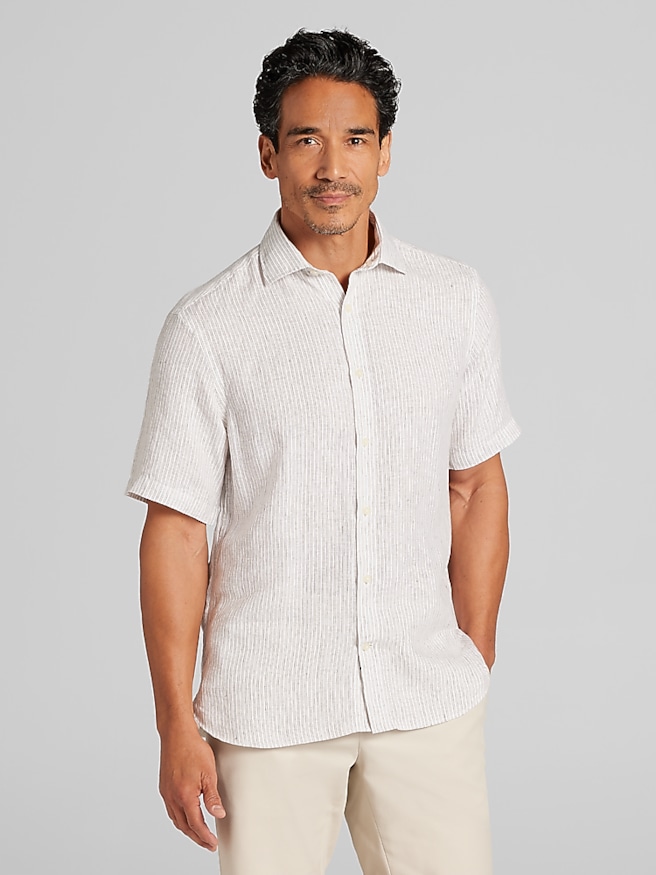
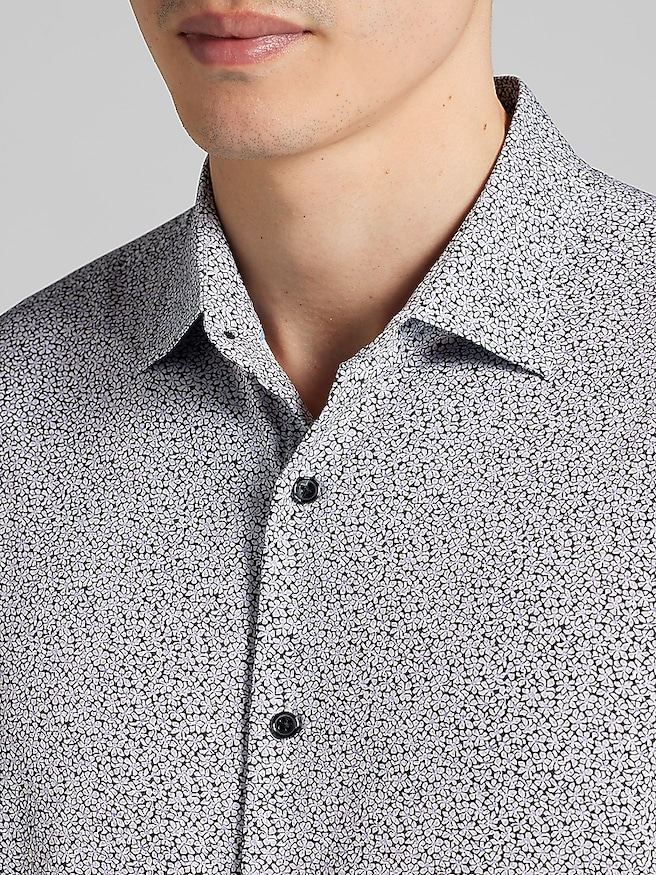
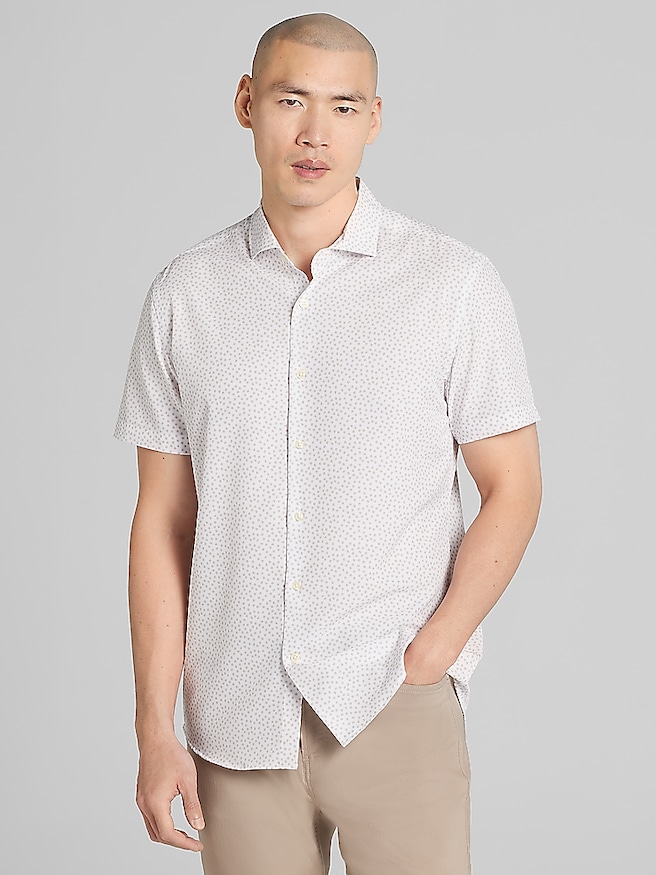
Short sleeve dress shirts for men combine the structure of a collared, button-front shirt with the ease of sleeves that finish above the elbow. They bring a polished look to business-casual offices, dinners, and social gatherings where a T-shirt feels too relaxed but a long-sleeve dress shirt is not necessary. A defined collar, a smooth front placket, and a balanced fit help distinguish these shirts from more casual button-ups, though fabric and pattern also shape the overall impression. The range of styles described as Mens Short Sleeve Dress Shirts spans crisp, understated looks and softer options with subtle texture. Cotton poplin has a smooth surface and a relatively lightweight feel, making it a natural choice for a clean silhouette with dress pants or chinos. Oxford cloth uses a basket weave that gives the fabric more visible texture and often a slightly more substantial feel; it works especially well in offices with a relaxed dress code. Linen blends offer an airy feel and a softly textured finish, with natural creasing that looks less formal than neatly pressed poplin. Depending on the blend, added cotton or synthetic fibers can change the shirt’s softness, drape, and care requirements. Performance fabrics may include stretch, moisture-management properties, or wrinkle resistance, but those features depend on the individual fabric and finish rather than the category name alone. Stretch can make a noticeable difference during a commute or a long afternoon at a desk, while wrinkle-resistant construction can help a shirt maintain a neater appearance through repeated sitting and standing. Fabric weight matters as much as fiber content: a fine, tightly woven shirt can feel quite distinct from a heavier, loosely woven one. During the cooler months, short sleeves still have a place in comfortably heated workplaces and mild climates, with a cardigan or casual jacket providing an extra layer outdoors.
Fit gives a short sleeve dress shirt much of its character. A shirt that sits neatly across the shoulders and falls smoothly through the torso looks intentional, whether worn tucked into tailored trousers or left untucked with chinos. Shoulder seams generally sit near the shoulder edge, without pulling inward or dropping far down the upper arm. Across the chest, the button placket should lie flat when standing and remain comfortable when seated; visible gaps between buttons usually indicate that more room is needed. Slim fits follow the torso more closely, while classic or regular fits typically provide extra space through the chest and waist. These labels vary by maker, so measurements and the shape of the shirt are more useful than the fit name alone. The sleeve opening deserves equal attention. It should allow easy movement without gripping the upper arm, yet avoid so much excess width that the sleeve flares outward. A length around the middle of the upper arm often creates balanced proportions, although the most flattering position depends on height and build. Hem shape and length help determine how the shirt is best worn. Longer tails are generally intended to stay tucked, while a shorter hem can create a cleaner untucked look without covering too much of the pants. Collar construction affects the finish, too: button-down points stay anchored for an orderly business-casual appearance, while a structured point or spread collar can look sharper when worn open at the neck. Solid white and light blue keep the emphasis on fit and fabric, fine stripes add definition, and small checks introduce pattern without dominating an outfit. Darker solids offer another understated option for evening plans. With textured trousers, a smooth shirt creates contrast; with plain chinos, a small-scale pattern adds interest. Clean shoes and a simple belt complete the combination without making it feel overly formal.
The intended setting helps determine which details matter most. In a workplace where collared shirts are the norm but jackets are optional, a smooth fabric, restrained pattern, and neatly tucked hem can meet the moment without feeling stiff. For a family dinner or an afternoon gathering that continues into the evening, a softer weave and a well-proportioned untucked hem can feel more relaxed while still looking considered. Short sleeve styles also suit people who prefer less fabric around their forearms when typing, writing, or moving between indoor spaces. They are generally less formal than long-sleeve dress shirts, so traditional business-formal settings and events with strict dress codes may call for another choice. As a gift, a short sleeve dress shirt can be useful for someone building a business-casual wardrobe or someone who regularly wears collared shirts outside work. A familiar color, known measurements, and an established fit preference make the selection more personal than choosing by size alone. For regular wear, durability depends on the fabric, construction, and care working together. Even stitching, firmly attached buttons, and neatly finished seams are practical details, especially at the armholes and side seams where movement puts stress on the garment. Closely woven fabrics often hold their shape well, but heavier does not automatically mean better; comfort and intended use should still guide the choice. Care begins with the label, since cotton, linen blends, stretch fabrics, and treated materials may need distinct washing and drying methods. When permitted, washing with similar colors and avoiding excessive heat can help protect the fabric and finish. Prompt removal from the dryer and hanging can reduce wrinkles, while pressing at the recommended setting can restore a crisp collar and placket. Wrinkle-resistant does not necessarily mean no ironing, and performance finishes do not eliminate routine care. Addressing collar marks promptly, replacing a loose button before it falls off, and rotating shirts between wears can help keep a dependable wardrobe looking neat through busy workdays and off-duty plans alike.