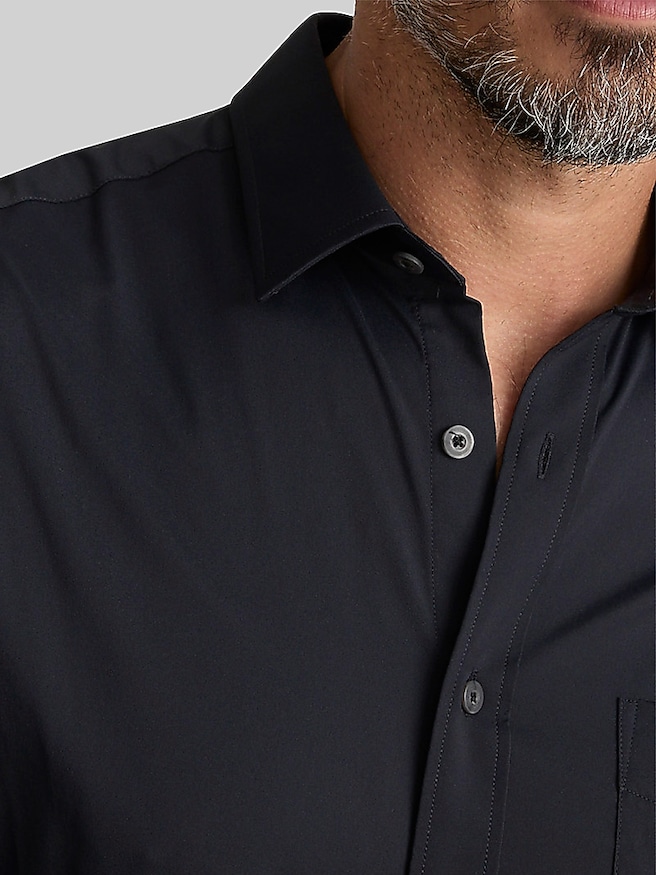
Long-sleeve dress shirts for men provide a polished foundation for business attire, wedding outfits, and occasions that call for more structure than a casual shirt. Their defining details typically include a button front, a shaped collar, full-length sleeves, and cuffs that sit neatly at the wrists. Worn beneath a suit jacket or paired with tailored trousers, a well-fitting dress shirt creates a clean line without restricting everyday movement. Fabric plays a large part in how that shirt feels and looks throughout the day. Cotton is valued for its breathable feel and familiar texture, while cotton blends can combine softness with features such as stretch or wrinkle resistance. Stretch fabrics may make reaching, sitting, and moving between appointments more comfortable, although the amount of flexibility depends on the fabric composition and construction. Weave matters, too. Poplin generally has a smooth surface and a crisp appearance that works well with business suits. Twill has a subtle diagonal texture and often drapes more softly, while pinpoint Oxford offers fine texture without the heavier appearance associated with many casual Oxford shirts. These distinctions can be noticeable when a jacket comes off during a meeting or dinner: a smooth weave looks understated, while a textured weave adds quiet visual interest. Solid white and light blue are versatile choices because they coordinate easily with many suit colors and tie patterns. Fine stripes and small checks introduce detail without necessarily dominating an outfit. Collar shape also influences the overall effect. A point collar has a narrower opening, while a spread collar leaves more space around a tie knot. Button-down collars generally suggest a more relaxed approach to dressing. Barrel cuffs fasten with buttons and suit everyday use; French cuffs fold back and fasten with cuff links for a more formal finish. Together, fabric, collar, and cuff construction help determine whether a shirt feels most at home in a conference room, at a celebration, or with polished business-casual separates.
Fit determines how comfortably a long-sleeve dress shirt performs and how cleanly it sits beneath other clothing. Slim fits generally provide a closer shape through the chest and waist, while regular and classic fits tend to leave more room through the body. Those labels are useful starting points, but measurements and proportions matter more than the name alone. A shirt that suits one build may pull across another, even when both wearers have the same neck measurement. The shoulder seams should sit near the edges of the shoulders rather than dropping noticeably onto the upper arms. Across the chest, the front should lie smoothly without gaps between buttons or horizontal tension lines. A comfortable waist allows the fabric to settle into the waistband without excessive bunching, and the back should permit a natural reach without feeling stretched tight. Collar fit deserves particular attention when a tie is part of the outfit. The top button should close comfortably, leaving a little breathing room rather than pressing into the neck. Sleeve length should allow the cuff to reach the wrist without covering the hand; beneath a properly fitted jacket, a small amount of shirt cuff can remain visible. Extra sleeve length is not a substitute for enough room through the shoulders, just as a larger collar does not necessarily solve tightness in the chest. For men with longer torsos or broader builds, body length and overall proportions are especially important to keeping a shirt tucked during normal movement. The hem needs enough length to stay secure when sitting down or reaching across a table. Styling can then follow the occasion. A pale solid shirt keeps the focus on a patterned tie, while a restrained stripe adds dimension to a plain suit. When both the shirt and tie have patterns, varying their scale helps keep the combination visually clear. Without a tie, an open collar can look relaxed but still purposeful beneath a sport coat. A smooth tuck, tidy cuffs, and a collar that holds its shape often contribute more to a finished appearance than elaborate accessories.
Care and construction influence how well men's long-sleeve dress shirts hold up to repeated wear. Reinforced stress points, secure buttons, and consistent stitching are useful details to consider, particularly for shirts that become part of a regular work rotation. Fabric weight alone does not determine durability; weave, fiber quality, fit, and laundering habits all affect how a shirt ages. A shirt that pulls tightly whenever the wearer sits or reaches places additional strain on seams and buttonholes. Repeated high heat can also be hard on fabric and may affect fit, so the care label is the best reference for washing, drying, and ironing. Wrinkle-resistant and non-iron finishes can simplify maintenance, but their care requirements still vary. Promptly removing a shirt from the dryer, when machine drying is permitted, can help limit creasing. Hanging it with the collar and shoulders properly supported helps preserve its shape between wears. Collars and cuffs often need extra attention because they come into frequent contact with skin; treating marks according to the fabric's care instructions can help prevent buildup. Ironing, when recommended, should use a setting suitable for the fabric rather than assuming every dress shirt tolerates the same heat. For travel, careful folding and unpacking upon arrival can reduce deep creases before a presentation or celebration. Within the broader category of Long Sleeve Men's Shirts, dress shirts are distinguished by the combination of refined fabric, structured details, and proportions suited to tailored clothing. They serve professionals building a dependable work wardrobe, graduates preparing for interviews, and guests dressing for weddings or milestone dinners. They can also make thoughtful gifts for a father, partner, or recent graduate when neck size, sleeve length, and preferred fit are known. A recipient who wears a tie daily may value a comfortable collar and easy-care fabric, while someone who dresses up occasionally may appreciate a versatile color and understated texture. The most useful choice reflects how the shirt will actually be worn: comfortable enough for a full day, appropriately polished for the setting, and straightforward to maintain.