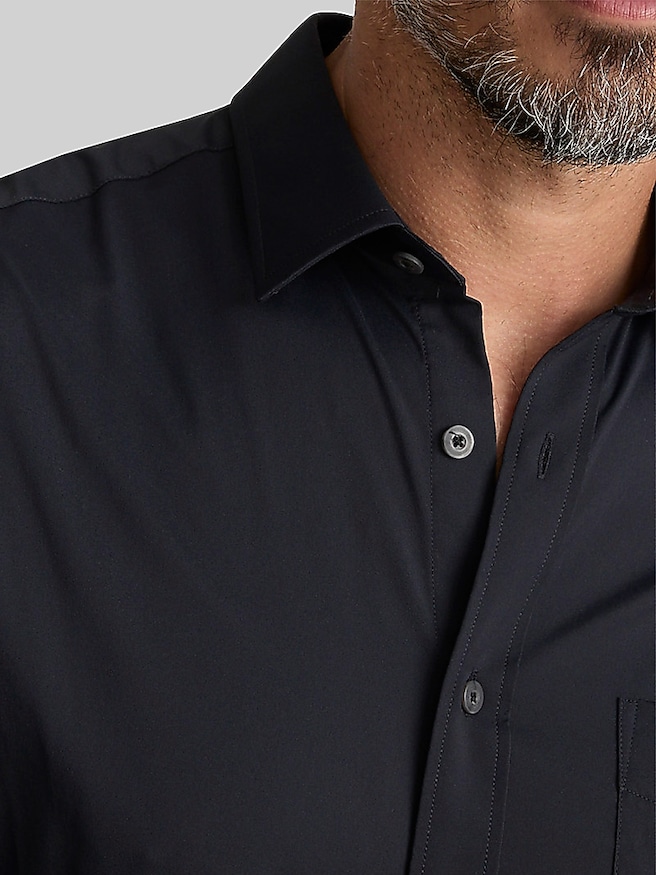
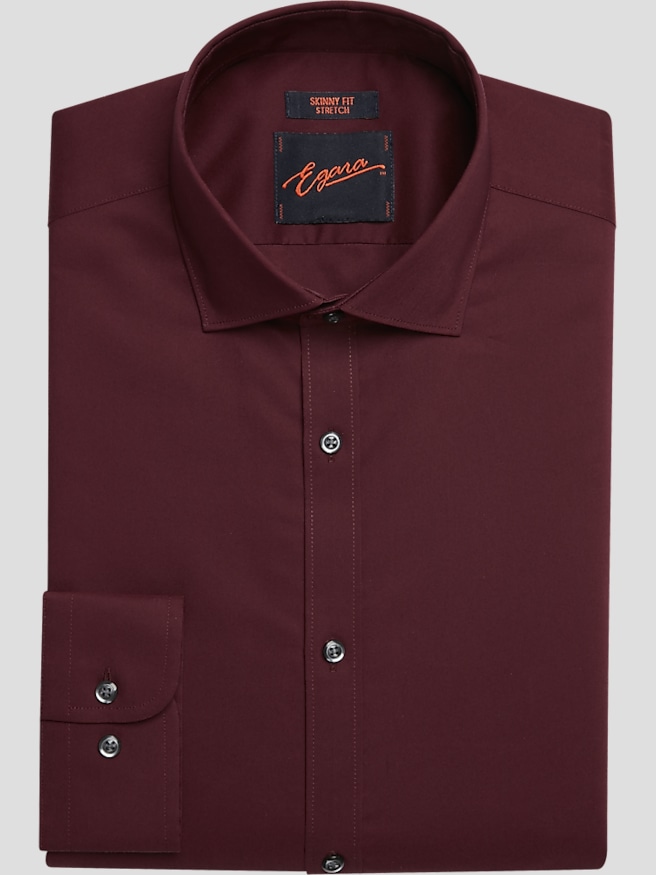
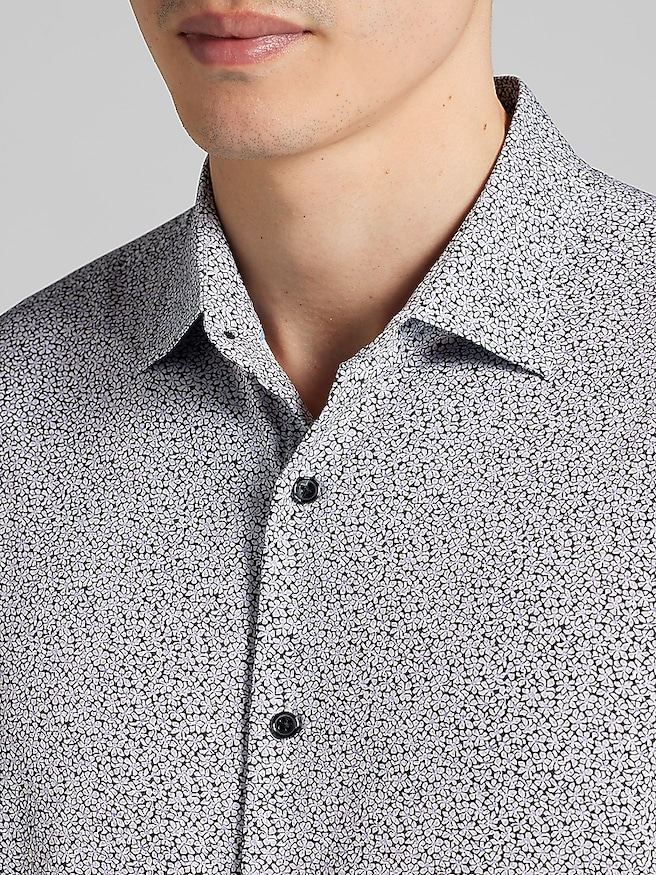
Long sleeve men's shirts are a foundation for outfits that need to look considered without feeling overdone. A shirt worn beneath a suit brings a clean line to a presentation or wedding outfit, while the same general silhouette in a textured fabric can feel relaxed with jeans and leather sneakers. The distinction often comes down to the details: the shape of the collar, the finish of the fabric, the length of the hem, and the structure of the cuffs. A crisp point collar creates a defined frame around the face and works naturally with a tie. A spread collar leaves more room for a fuller knot, while a button-down collar keeps its points in place and often suits a less formal outfit. Solid colors make coordinating trousers and jackets straightforward; stripes, checks, and subtle woven patterns add interest without requiring elaborate styling. White and light blue have a familiar place in professional wardrobes, while deeper shades can create a more understated look for dinner or an evening gathering. For occasions that call for a tailored appearance, long sleeve dress shirts for men complement suit separates, dress trousers, and ties. More casual versions can be worn open over a plain T-shirt or buttoned with chinos, depending on the cut and fabric. Hem shape matters here: a longer, curved hem usually provides enough fabric to stay tucked, while a shorter hem can sit more neatly outside the waistband. Long sleeves also give the outfit a defined finish at the wrist, whether the cuffs are buttoned beneath a jacket or folded back for a relaxed setting. For someone moving from a desk to a client meeting and then to dinner, those small differences in construction can make a shirt feel appropriate across several parts of the day. The most useful choices are not necessarily the most elaborate; they are often the ones whose proportions, color, and finish work easily with clothing already in the closet.
Fabric and fit shape how a long sleeve shirt feels after several hours of wear, not just how it looks on a hanger. Cotton is a common choice because it feels comfortable against the skin and can be woven into distinctly different textures. Broadcloth generally has a smooth surface that works well for a polished outfit, while oxford cloth has a more noticeable basket-weave texture and a substantial hand. Twill is recognizable by its diagonal weave and often drapes softly, though its weight and finish vary. Linen has a characteristic texture and relaxed appearance, with natural creasing that is part of its character rather than a flaw. Blended fabrics may balance softness with easier care, and a small amount of stretch can provide flexibility through the shoulders and elbows. Fiber content alone does not tell the whole story: fabric weight, weave, finishing, and construction all influence comfort and appearance. A substantial cloth can feel reassuring without being stiff, while a finer fabric may sit smoothly beneath a close-fitting jacket. Fit is equally personal. A slim silhouette can create a clean outline, provided the buttons lie flat and the fabric does not pull across the chest. A roomier cut may suit a broader build or someone who prefers more freedom through the torso. Shoulder seams generally look most balanced near the edge of the shoulder, and sleeves should allow the arms to bend without drawing the cuffs far up the forearm. A buttoned collar needs enough room to feel comfortable, especially when worn with a tie, but should not leave a conspicuous gap. For desk work, driving, or frequent movement, ease across the upper back can matter as much as the waist measurement. Under a jacket, excess fabric around the sleeves or torso may bunch, while an overly narrow shirt can restrict movement. These practical details help distinguish a shirt that merely buttons from one that feels comfortable throughout a full day.
Care and construction have a lasting effect on the appearance of long sleeve men's shirts. Even stitching, secure buttons, neatly finished seams, and cuffs that hold their shape contribute to a garment that can handle repeated wear. Collars and cuffs receive frequent contact with skin, desks, and jacket linings, so their construction deserves attention alongside the main fabric. Easy-care and wrinkle-resistant finishes can reduce routine maintenance, but they do not mean every shirt can be treated the same way. The care label remains the best reference for washing, drying, ironing, and any professional cleaning requirements. Cotton, linen, and blended fabrics can respond differently to heat and agitation, and some materials may shrink or lose their shape when handled outside the recommended conditions. Prompt attention to a mark at the collar or cuff can help prevent it from becoming harder to remove, while avoiding unnecessary drying time can limit creasing and stress on the fabric. A smooth, well-supported hanger helps preserve the shoulder line between wears; a neatly folded shirt can also travel well when the collar and cuffs are not crushed beneath heavier belongings. Shirts worn frequently benefit from a rotation that allows each one to be cleaned and stored properly rather than repeatedly pressed into service. For travel, a fabric with suitable wrinkle resistance and a pattern that coordinates with several trousers can simplify packing without making every outfit look identical. Long sleeve shirts can also make thoughtful gifts for a graduation, a new job, or another personal milestone, particularly when the recipient's measurements and usual fit are known. A familiar collar style, a comfortable fabric, and a color that works with an existing wardrobe are often more useful than an unfamiliar design. Whether intended for regular office wear, celebrations, or relaxed weekends, a well-proportioned shirt offers a dependable balance of comfort and presentation, with details that continue to matter long after the first wear.