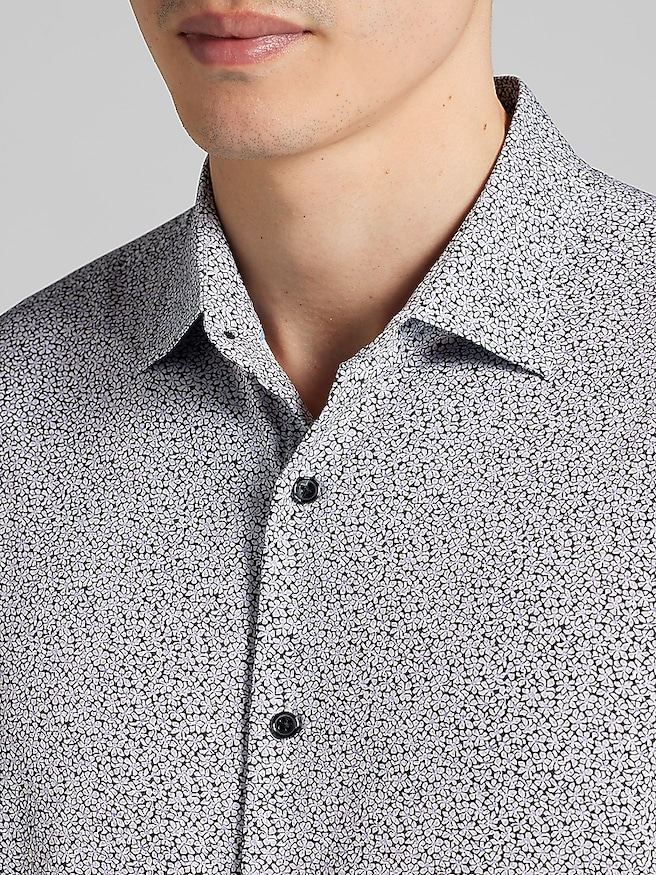
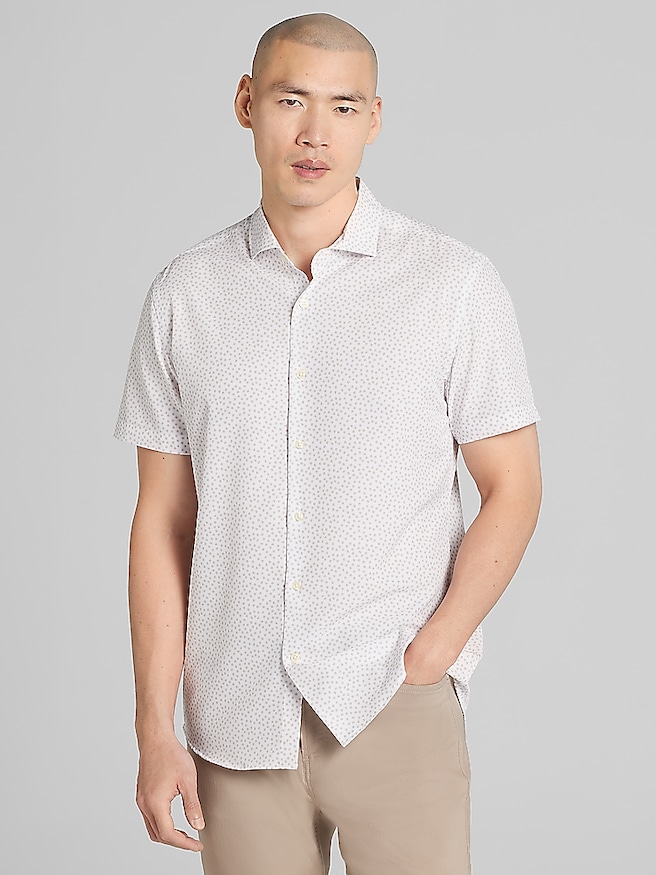
Men’s short sleeve dress shirts bring the structure of a collared shirt to an outfit without the length of a traditional dress-shirt sleeve. A defined collar, a neat button front, and a well-proportioned silhouette give them a place in business-casual offices, at client lunches, and at dinners where a T-shirt would feel too relaxed. Their appeal is in those familiar dress-shirt details: a collar that sits smoothly against the neck, a placket that lies flat, and fabric that looks intentional whether the shirt is tucked into trousers or worn over chinos. The material makes a noticeable difference in how the shirt feels and hangs. Cotton is a familiar choice for its softness and breathability, while a cotton blend can combine that feel with other qualities, such as easier care or improved resistance to wrinkling, depending on its construction and finish. A small amount of stretch can provide extra give across the back and chest when reaching for a file or settling into a chair. Smooth poplin has a clean, relatively flat surface that works well with tailored pants; a subtle twill adds texture and often a slightly more substantial drape. Oxford cloth has a more visible woven texture and a relaxed character, making it a natural companion to chinos in workplaces with a less formal dress code. Fabric weight and opacity matter, too, particularly with pale colors: a shirt should offer the coverage and structure that suit its intended setting. Wrinkle-resistant finishes can simplify a daily routine, but they do not mean every shirt will emerge perfectly pressed after washing. The strongest starting point is a fabric that feels comfortable against the skin, holds the desired shape, and fits the amount of care its wearer wants to give it. Those practical qualities help distinguish a shirt suited to repeated office wear from one chosen mainly for an occasional dinner or celebration.
Fit gives men’s short sleeve dress shirts much of their finished appearance, especially because the sleeve opening and upper arm remain visible. A shoulder seam that rests near the edge of the shoulder helps the shirt look balanced, while enough room through the chest allows the button front to stay flat when seated. Pulling between buttons, bunching beneath the arms, or a back panel that feels restrictive can interrupt an otherwise clean silhouette. A slimmer cut follows the torso more closely; a classic or roomier cut leaves additional space through the body. Neither needs to look tight or oversized to feel appropriate. Sleeve length and width deserve the same attention as the body: an opening that sits comfortably around the upper arm creates a neater line than one that grips or flares broadly. The collar should frame the face without crowding the neck, and its shape can shift the character of the whole outfit. A button-down collar tends to feel more relaxed, while a point or spread collar can look more dress-oriented, depending on the fabric and styling. Hem length also affects where the shirt belongs. Longer tails help a shirt stay tucked during a day of sitting, standing, and walking; a shorter, balanced hem is generally better suited to wearing untucked. With tailored trousers, a tucked shirt and a simple leather belt create a straightforward office combination. With chinos, an untucked style can work for a casual workplace or an evening meal. Solid white and light blue offer familiar versatility, while fine stripes, small checks, and restrained patterns add detail without dominating an outfit. Darker solids can provide a stronger contrast against lighter pants. For settings where the workday is the main consideration, Mens Short Sleeve Office Shirts offer a related focus. Workplace expectations still matter: short sleeves suit many business-casual environments, but occasions requiring traditional business dress or formal attire may call for a long-sleeve shirt instead.
Regular wear puts the details of a short sleeve dress shirt to the test. Secure buttons, even stitching, neatly finished seams, and a collar that retains its shape all contribute to a shirt that continues to look presentable beyond its first outing. The fabric should also suit the wearer’s routine. Someone who spends much of the day at a desk may appreciate a finish that helps limit creasing, while someone moving between appointments may value a little stretch and a comfortable range of motion. For travel, care requirements and the way a fabric recovers after folding can matter as much as its initial appearance. The care label is the best reference for washing, drying, and ironing, since fiber blends, finishes, and construction can require different treatment. Sorting by color, avoiding an overloaded washer, and removing a shirt promptly when its drying cycle is complete can help preserve a tidy appearance. If ironing is permitted, attention to the collar, button placket, and sleeve edges often makes the biggest visible difference. Following the recommended dryer setting also helps protect fit and fabric over time; high heat is not a substitute for careful laundering. Hanging a clean shirt on a properly sized hanger gives the shoulders support and helps keep it ready for the next wear. These are useful considerations when choosing a gift as well. A short sleeve dress shirt can be a practical option for a father, partner, graduate, or someone starting a job with a business-casual dress code, provided the recipient’s sizing and preference for short sleeves are known. Familiar colors and understated patterns are often easier to incorporate into an existing wardrobe than a bold print. Ultimately, the value of the category lies in repeat use: a shirt that feels right at a desk, looks composed across a lunch table, and pairs naturally with the trousers already in the closet earns its place through dependable fit, thoughtful construction, and manageable care.