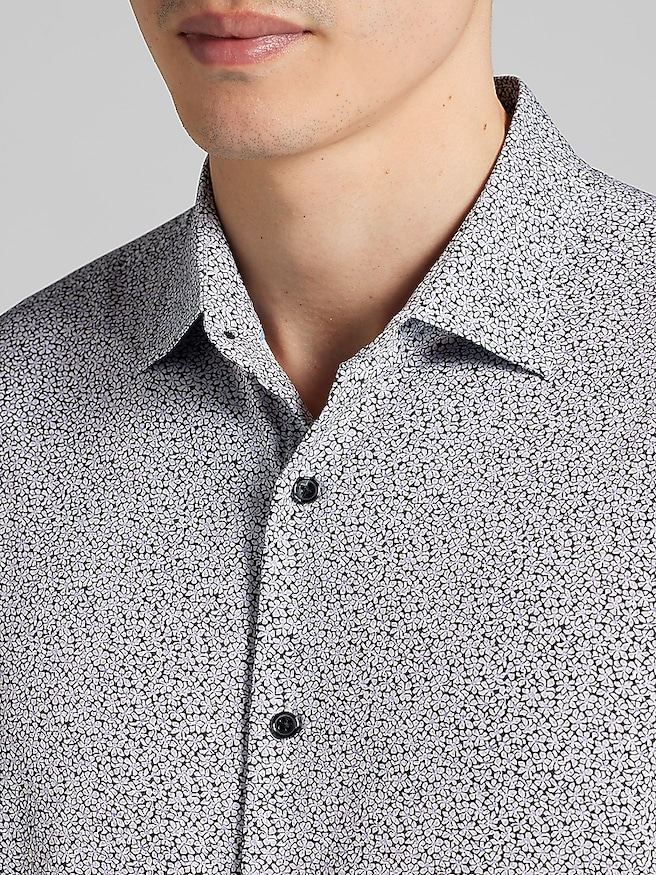
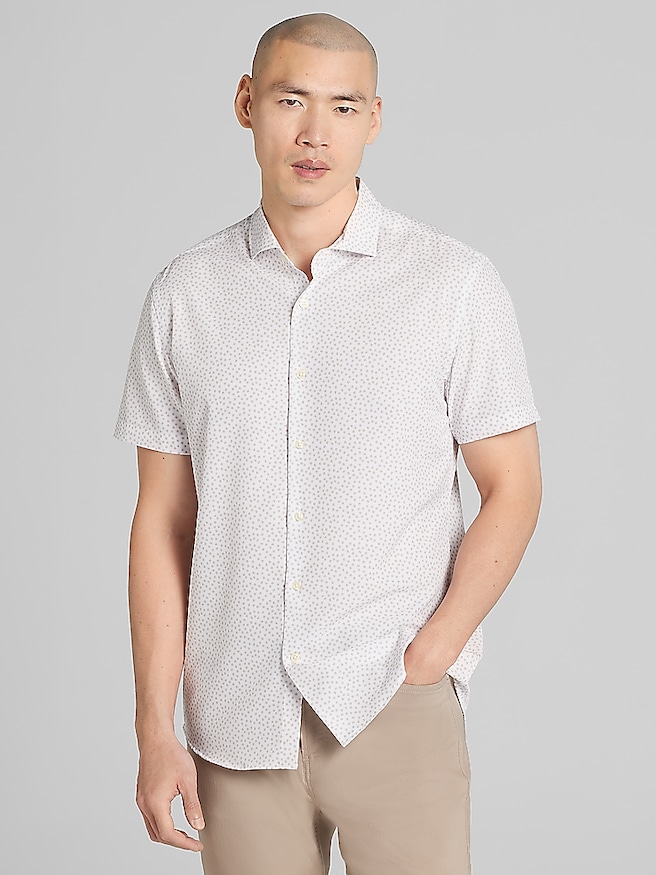
Men’s short-sleeve office shirts are collared shirts that bring a neat, professional appearance to business-casual outfits without the formality of a long-sleeve dress shirt and tie. Their place in a work wardrobe depends on the office dress code: they suit many everyday settings, while a formal presentation, conservative client meeting, or suit-required occasion may call for long sleeves instead. For an ordinary day of desk work, team meetings, and lunch with colleagues, a short-sleeve button-front shirt pairs naturally with flat-front chinos or tailored trousers. A structured collar, smooth front, and clean shoulder line help the outfit look deliberate rather than overly casual. White, light blue, pale gray, and muted blue stripes are easy to coordinate with navy, charcoal, stone, or khaki pants. Small checks and restrained geometric patterns can add interest without dominating the outfit, especially when the pants are a solid color. A solid shirt also provides a quiet backdrop for textured trousers or a subtly patterned belt. Leather loafers, derbies, or other office-appropriate shoes complete the look; simple leather sneakers can work where the dress code permits them. The strongest combinations do not need many accessories. A belt that relates to the shoes, a watch, and a shirt that sits neatly at the waist are often enough. Tucking creates a more defined line with dress trousers, while an untucked shirt can suit a relaxed workplace when its hem is designed for that purpose. A shorter, relatively even hem generally looks more intentional untucked than long shirttails extending well below the hips. Collar shape matters, too: a button-down collar tends to hold its position, while a well-structured point collar gives the neckline a clean outline. With the top button open, the collar should frame the neck rather than collapse outward. These details make short-sleeve office shirts useful for professionals who want a straightforward outfit that looks considered from the first meeting to the last appointment.
Fabric and fit determine much of how a shirt looks after several hours of wear. Cotton poplin has a smooth surface and a crisp appearance, making it a natural companion to tailored pants. Oxford cloth has a more noticeable woven texture and usually reads a little more relaxed, though a neat collar and restrained color can keep it appropriate for business-casual settings. Twill is identified by its diagonal weave, which can give the fabric a subtle texture and fluid drape; its weight and feel depend on the fibers and construction. Mens Short Sleeve Twill Shirts offer another direction for an office wardrobe built around collared shirts and clean-lined pants. Cotton blends may combine a familiar hand feel with easier maintenance, while stretch blends can provide flexibility when reaching across a desk or sitting through a meeting. Performance fabrics may offer moisture management or wrinkle resistance, but those qualities depend on the individual fabric and should be confirmed on the garment label. Linen blends have visible texture and a naturally relaxed character, so they fit most comfortably within less formal dress codes. Fabric opacity deserves attention, particularly with white or pale colors: the shirt should provide the coverage needed for the workplace without relying on a jacket. Across these materials, the shoulder seam should sit near the shoulder’s edge, and the front should lie smoothly when buttoned. Pulling across the chest, a spreading placket, or horizontal lines across the back can signal that more room is needed. Excess fabric gathering at the waist can make an otherwise polished outfit appear loose and untidy. Slim fits generally follow the torso more closely, while classic or relaxed fits provide additional room; the best choice leaves enough space to sit, reach, and move without strain. Sleeves should frame the upper arm without gripping it or flaring widely at the opening. A hem around the middle of the upper arm often creates balanced proportions, although arm length and personal preference affect the final result. Comfort and a clean outline matter more than the fit name alone.
Care helps preserve the features that make a short-sleeve shirt suitable for the office: an even color, a collar that holds its shape, smooth seams, and a front that buttons cleanly. The garment’s care label is the starting point because cotton, linen blends, stretch fabrics, and performance materials do not all respond to washing, drying, or ironing in the same way. Sorting similar colors, treating marks promptly with a fabric-appropriate method, and avoiding excessive dryer heat can help maintain the shirt’s appearance. Removing a washable shirt promptly at the end of the cycle and smoothing the collar, placket, and sleeves before hanging may reduce the amount of pressing needed. If ironing is permitted, the correct setting matters, especially for blends containing synthetic fibers. Wrinkle-resistant does not mean that a shirt will never crease; time spent folded in a bag or compressed against a chair can still leave marks. A hanger that supports the shoulders helps a clean shirt retain its outline between wears, and leaving a little room in the closet prevents unnecessary crushing. Durability also depends on construction and fit. Secure buttons, evenly stitched seams, and reinforced stress points are useful details, while enough room through the chest and back limits repeated tension on the fabric. Rotating several shirts rather than repeatedly wearing and washing the same one can spread out that wear. For someone building a first office wardrobe, a few compatible colors and subtle patterns make it easier to create dependable combinations with existing pants and shoes. Professionals who move between desk work, internal meetings, and business-casual appointments may appreciate the same versatility. A short-sleeve office shirt can also be a practical gift for a graduate starting a job or someone refreshing an established work wardrobe, provided the recipient’s measurements, preferred fit, and workplace expectations are known. The most useful choice is one that feels comfortable in motion, works with familiar clothing, and maintains a tidy appearance through a full workday.