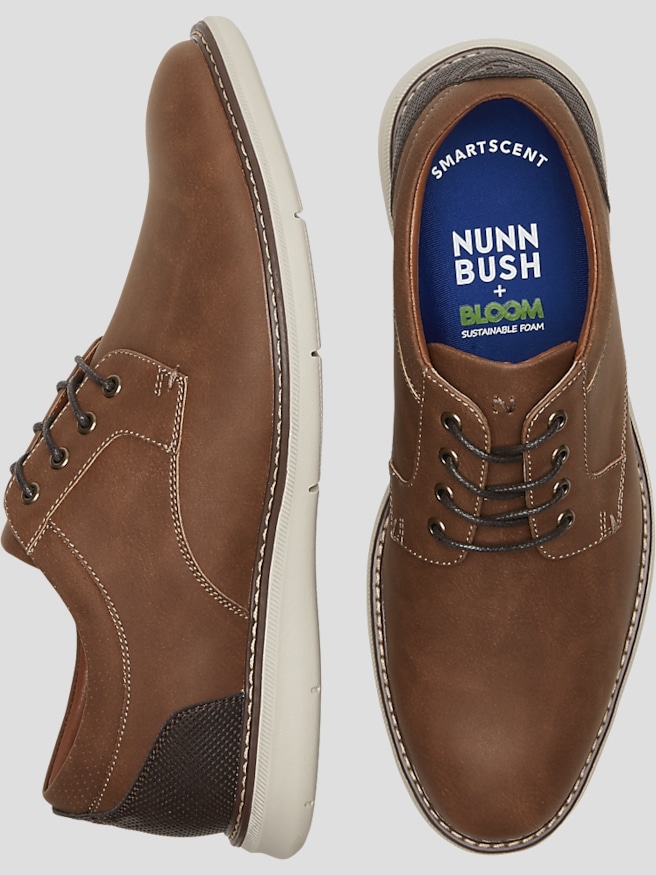
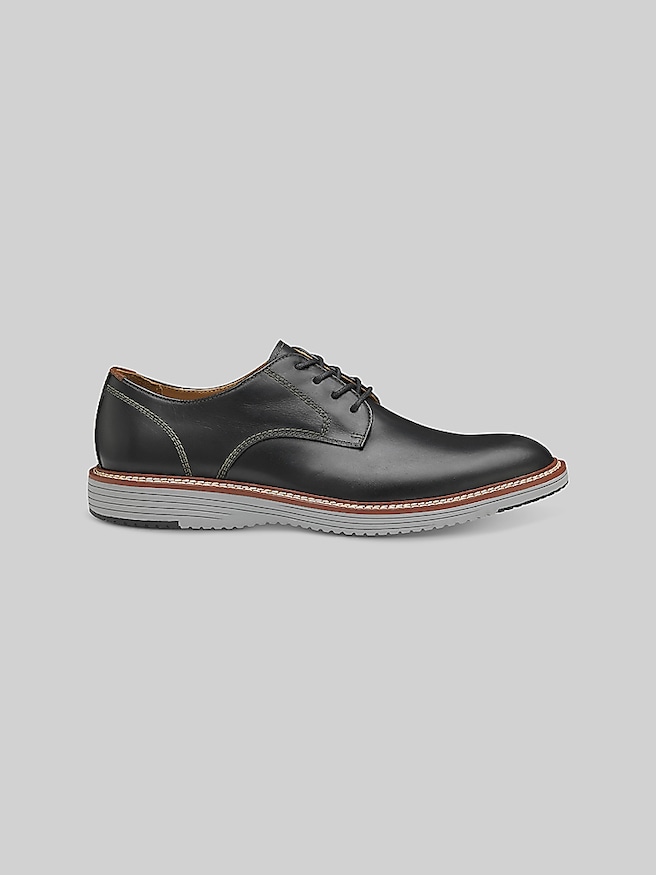
Black derbies are lace-up dress shoes defined by an open lacing system: the sections holding the eyelets are stitched on top of the vamp, the part of the upper that covers the top of the foot. This construction lets the laces adjust across the instep, giving the shoe a slightly more relaxed appearance than an oxford with closed lacing. In smooth black leather, that balance of structure and ease makes derbies a versatile choice for business clothing, tailored separates, and polished everyday outfits. A plain-toe silhouette keeps the focus on the leather and the shape of the shoe, while a cap toe adds a defined line across the front. Brogue detailing introduces texture and a less formal character; a substantial sole gives the same basic shape a bolder presence. For a job interview, black derbies with a restrained profile sit neatly beneath charcoal or navy suit trousers, especially when the hem has a slight break rather than gathering over the laces. For an office that favors separates, they bring a clean finish to gray wool trousers and a tucked-in shirt. They can also work with dark, clean denim or chinos when the rest of the outfit is similarly considered. A black belt in a comparable finish helps connect the look without requiring every leather accessory to match exactly. These shoes suit professionals building a dependable work wardrobe, graduates preparing for interviews, and wedding guests whose invitation calls for a suit. They are appropriate for many dressy settings, although traditional black-tie attire generally calls for more specialized formal footwear. Their appeal lies in that broad middle ground: sharp enough for a presentation, comfortable enough when properly fitted for an evening reception, and understated enough to wear repeatedly without dominating an outfit. The most useful silhouette depends on the clothing around it, with a slimmer sole complementing tailored trousers and a heavier profile working well with more substantial casual fabrics.
Materials, shape, and construction influence how black derby shoes look and feel as much as their color does. Smooth leather can take a soft sheen or a higher polish, making it especially adaptable to professional and dress occasions. Grain texture creates a more tactile surface and may make minor marks less noticeable, while suede gives black footwear a softer, more casual appearance and requires its own care routine. Leather quality and finishing vary, so flexibility, an even surface, and tidy stitching are useful details to consider rather than relying on shine alone. Inside the shoe, a smooth lining, well-finished seams, and cushioning placed where the foot needs it can make extended wear more pleasant. Open lacing can offer useful adjustment for a higher instep, but it does not automatically make a derby wide or guarantee a comfortable fit. Width, toe shape, heel volume, and the shape of the last all matter. The forefoot should feel secure without being squeezed, the toes should have room to move, and the heel should stay reasonably stable during a normal stride. Try shoes with the type of socks intended for regular wear, and assess both feet while standing and walking. A longer, tapered toe may leave space beyond the toes by design; that extra length should not be confused with excessive room through the rest of the shoe. Leather may soften with use, but persistent pressure, pinching, or numbness is not a sensible break-in plan. For anyone whose routine includes walking between meetings or standing through a reception, Comfortable Derby Shoes keep the focus on a practical priority: support and fit that hold up beyond the first few minutes. Sole design deserves equal attention. Leather soles often create a refined outline, while rubber soles can add flexibility, cushioning, or traction, depending on their design. A low-profile rubber sole can preserve a dressy appearance, whereas a pronounced lug sole makes a more casual statement. Neither material alone determines comfort; the complete construction and the way the shoe fits the foot are more important.
Durability comes from a combination of materials, assembly, regular care, and how the shoes are worn. Welted construction can make resoling possible, although repair options depend on the specific construction and the condition of the upper. Other methods can produce lighter or more flexible shoes, so the practical choice is not always the heaviest or most rigid pair. For frequent wear, pay attention to clean joins between the sole and upper, secure eyelets, and a heel that feels stable underfoot. Simple maintenance helps black leather derbies retain the crisp appearance that makes them useful with tailored clothing. After wearing, remove surface dust with a soft brush or cloth, and let the shoes air out before storing them. Cedar shoe trees can help maintain the shape and absorb some moisture from wear; they should fit without stretching the upper. Rotating footwear gives each pair time to dry naturally and reduces the strain of repeated use without a pause. Smooth leather generally benefits from occasional conditioning and a compatible polish, used according to the maker’s care directions and tested first in an inconspicuous spot. More product is not necessarily better: a thin, even application is easier to work into the surface and buff cleanly. Suede needs a suitable brush and products intended for that material rather than standard leather cream. If shoes become damp, let them dry away from direct heat, which can damage leather and adhesives. A shoehorn helps protect the heel counter when putting shoes on, and loosening the laces before removal avoids unnecessary stress on the back of the shoe. Worn heel edges, thinning soles, and frayed laces are worth addressing before they affect stability or appearance. As a gift, black derbies can mark a graduation, a new professional role, or another milestone that calls for a more developed wardrobe, provided the recipient’s size, width, and style preferences are known. For personal use, their lasting value is equally straightforward: a considered shape, a reliable fit, and consistent care create footwear that feels at home across many of the occasions that call for looking put together.