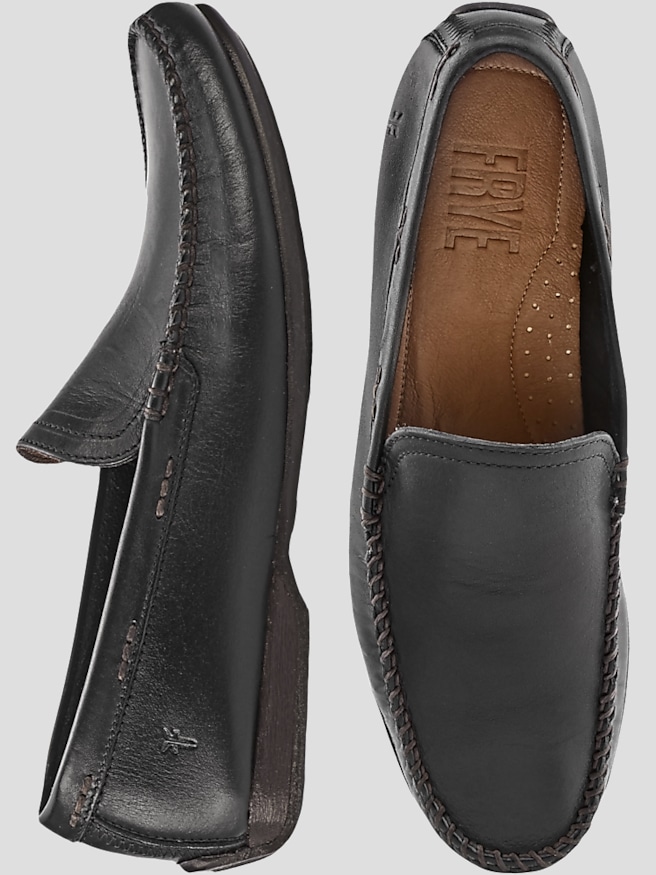
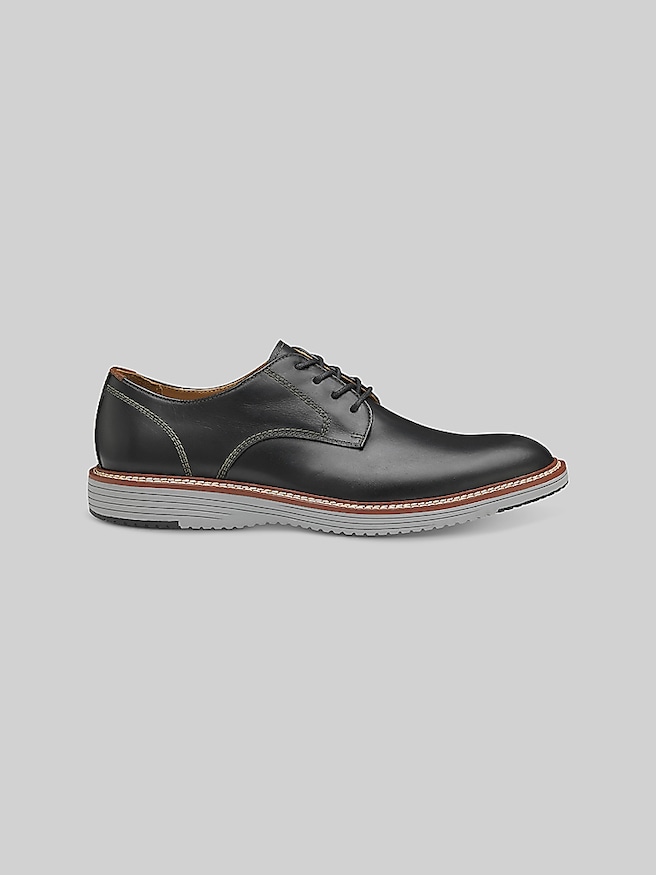
Solid black shoes bring a clean, consistent finish to an outfit, whether the setting calls for a tailored suit, business casual separates, or dark denim. Their defining feature is a black color scheme without contrasting panels or bold color accents; fully monochromatic designs carry that color through the laces, stitching, and soles. Within that restrained palette, shape and texture make a noticeable impact. A smooth leather upper with a slim sole looks crisp beneath dress trousers, while a pebbled finish and a more substantial sole give the same color a relaxed character. Black dress shoes are a familiar choice for interviews, presentations, weddings, and evenings that call for polished clothing. Oxford shoes, recognized by their closed lacing, have a compact appearance that complements formal tailoring. Derby shoes use open lacing for a slightly less formal look that also works with chinos and sport coats. Loafers offer a slip-on silhouette, and understated black sneakers suit casual offices, travel days, and off-duty outfits when the dress code permits them. For traditional black-tie attire, sleek black formal footwear, often in patent leather or a highly polished finish, complements a tuxedo more naturally than a chunky everyday shoe. Solid black footwear also pairs comfortably with charcoal, navy, and medium-gray clothing, giving a wardrobe a consistent foundation without requiring every piece to match exactly. A black leather belt can reinforce that continuity when one is worn, while socks close to the trouser color create an uninterrupted line. Toe shape matters, too: a softly rounded or almond-shaped toe tends to sit neatly below a tailored hem, whereas a broader profile reads as more casual. For someone moving from a morning meeting to an evening reception, a restrained lace-up style can make that transition without drawing attention away from the rest of the outfit. The appeal lies in that flexibility: one color can support many settings, with the construction and finish establishing the level of formality.
Materials, fit, and construction determine how solid black shoes feel after the first few minutes and how they hold up over time. Smooth leather can develop subtle creasing with wear and generally responds well to compatible conditioner and polish. Full-grain leather retains the hide’s natural surface, though the quality of the tanning, stitching, and overall construction also influences longevity. Suede has a softer, matte appearance that works especially well with textured trousers and casual tailoring, but it needs care suited to its nap rather than standard cream polish. Patent leather provides a glossy finish associated with formal occasions, while textile and synthetic uppers offer other combinations of texture, flexibility, and maintenance needs. Lining materials, interior seams, and footbed design can matter as much as the outside finish during a long day. A cushioned insole may soften the feel underfoot, but cushioning cannot make up for a shape that squeezes the toes or leaves the heel unstable. A comfortable fit gives the toes room to move, holds the midfoot securely, and avoids concentrated pressure across the top of the foot. Trying shoes with the socks intended for regular wear helps make that assessment more useful, particularly when thicker socks enter the rotation during cooler weather. Feet may swell through the day, so a fit that feels barely tolerable in the morning can become restrictive by evening. Leather may soften with use, but a shoe that is too short should not be expected to stretch into the proper size. Underneath, leather soles create a traditional dress profile, while rubber soles can add flexibility and traction depending on their composition and tread. A commuter crossing sidewalks has practical needs beyond those of someone wearing formal shoes mostly indoors. Secure stitching, a firmly attached heel, and an appropriate outsole support repeated wear; some stitched constructions also allow professional resoling. For work that requires certified slip resistance or protective features, those specifications matter more than an all-black appearance alone.
Keeping black shoes looking sharp is largely a matter of small, consistent habits. Dust and road residue can dull a dark finish, especially around the welt, toe, and heel, so a soft brush or cloth is useful after wear. Smooth leather benefits from occasional conditioning with a compatible product, followed by black polish when appropriate to refresh color and soften the appearance of minor scuffs. A light application is usually easier to control than a heavy coating, and any unfamiliar care product should first be tested on an inconspicuous area. Suede calls for a dedicated brush and suitable cleaner, while patent leather needs gentle cleaning that preserves its glossy surface. Care directions for the material should take priority over a single routine applied to every pair. During the cooler months, damp sidewalks and deicing residue add another consideration: black coloring does not make a shoe waterproof, and a dress sole does not automatically provide grip on slick ground. Footwear with weather-appropriate materials and tread can be a more practical companion for outdoor portions of the day. For a seasonal focus, Winter Black Shoes brings the same versatile color into a cold-weather context. Wet shoes should dry naturally away from radiators or other direct heat, which can damage uppers and adhesives. Cedar shoe trees can help absorb moisture and preserve shape, and allowing time between wears gives the interior a chance to dry. A shoehorn helps protect the heel structure when putting shoes on, while replacing worn laces can restore a tidy finish without changing the character of the footwear. These details are especially worthwhile for shoes worn repeatedly to the office or reserved for meaningful occasions. Solid black shoes can also make a thoughtful gift for a graduate beginning a professional role or someone building a more formal wardrobe, provided the recipient’s size, width, and style preferences are known. Whether worn beneath a carefully pressed suit or alongside everyday separates, the strongest choice balances the occasion with a comfortable fit and a care routine that suits regular life.