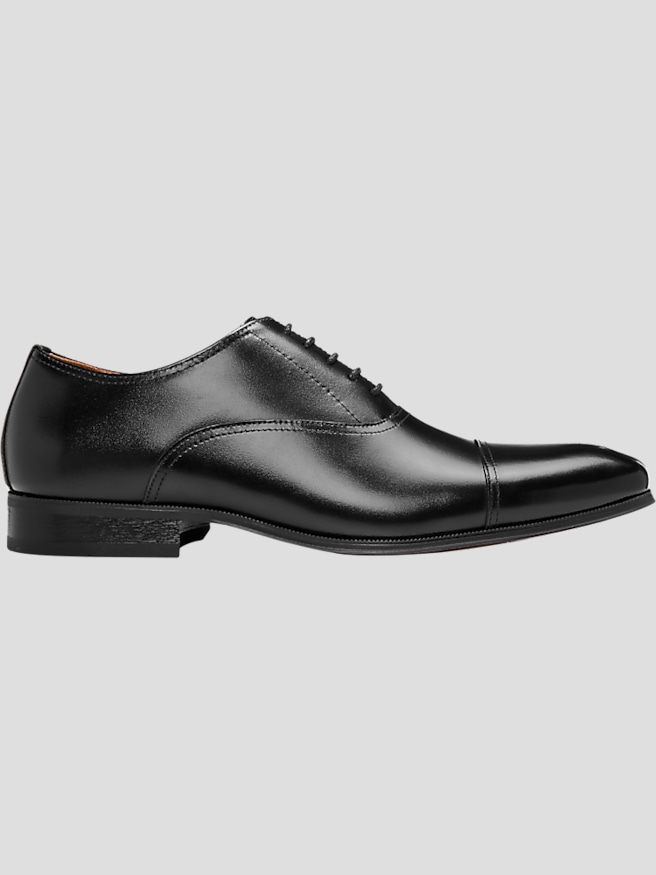
Black dress shoes are a foundation of formal footwear, suited to business attire, dressy celebrations, and occasions that call for a polished, understated appearance. Their dark color creates a clean visual connection with black, charcoal, and navy tailoring, while the shape, finish, and detailing help determine how formal they look. A smooth leather Oxford with closed lacing has a neat profile that works especially well with a business suit or dress trousers. A cap toe adds a defined seam across the front without drawing much attention, making it a versatile choice for presentations, interviews, and ceremonies. Plain-toe styles keep the look simple, while brogue perforations introduce texture and a slightly less restrained character. Derby shoes have open lacing, which creates a more relaxed appearance and can provide additional adjustment over the top of the foot. Black loafers offer a slip-on alternative for tailored trousers and settings where the dress code allows a less formal approach. For black-tie occasions, sleek patent leather shoes or highly polished, minimally detailed lace-ups complement the clean lines of a tuxedo. The distinction matters in practical terms: the shoes that look appropriate beneath everyday office trousers may have a heavier sole or more visible stitching than the pair chosen for an evening ceremony. Toe shape also influences the overall impression. An almond-shaped or gently rounded toe tends to look balanced beneath tailored pants, while a sharply elongated silhouette makes a more noticeable statement. Trouser length should allow the shoe to remain visible without fabric gathering heavily around the ankle. Black dress socks create a continuous line between the pants and footwear, and a black leather belt can bring consistency to an outfit when a belt is appropriate. Whether the occasion is a courtroom appearance, a wedding, a memorial service, or a client dinner, black dress shoes provide a quiet finishing detail that supports the clothing rather than competing with it.
Materials and construction shape how black dress shoes feel, age, and perform through repeated wear. Smooth leather is valued for its polished appearance and ability to develop character, although its texture and flexibility vary with the hide, finish, and thickness. Full-grain leather retains the natural grain surface and can respond well to regular conditioning, while corrected-grain leather has a more uniform surface created through additional finishing. Neither label alone determines comfort; lining, seams, sole design, and the shape of the shoe all contribute. Patent leather offers a glossy finish associated with formal evening attire, while suede has a softer, matte appearance that generally reads as less formal. Leather soles create a traditional profile, and rubber soles may offer more flexibility and traction, depending on their design. Welted construction can make resoling possible when the upper remains sound, though repair options depend on the shoe and the work a cobbler can perform. Cemented construction attaches the sole with adhesive and is common in lighter footwear, with longevity influenced by materials and use. Fit deserves attention beyond the size printed inside. Toes should have room to move without pressing against the front or sides, the ball of the foot should align comfortably with the widest part of the shoe, and the heel should feel secure without rubbing. A small amount of movement can occur in some new shoes, but pronounced slipping or pinching is not something to dismiss as normal. Feet can differ in size, so fit should accommodate the larger foot while keeping both secure. Trying shoes with the dress socks intended for regular wear gives a more useful impression than trying them with thick athletic socks. For someone moving between a desk, a conference room, and a reception, cushioning and a stable heel can matter as much as appearance. The Black Comfortable Dress Shoes page brings that priority into focus. A supportive fit should still leave enough space across the forefoot and instep; softness underfoot cannot compensate for a shoe that is too narrow or too short.
Consistent care helps black dress shoes maintain the clean finish that makes them useful across so many occasions. Dust and surface grit can dull leather and collect around seams, so a soft brush or cloth is useful after wear. Smooth leather benefits from occasional conditioning with a product appropriate to its finish, followed by black cream or polish when color and shine need refreshing. A small amount applied evenly is preferable to heavy layers that build up around stitching and flex points. Testing a care product on an inconspicuous area helps confirm compatibility before treating the whole shoe. Patent leather and suede need care suited to their distinct surfaces rather than the same polish used on smooth leather. Cedar shoe trees can help preserve shape and absorb moisture from normal wear, while a shoehorn reduces strain on the heel counter when putting shoes on. Alternating pairs gives the interiors time to dry between uses and can reduce the wear concentrated in one pair. Sole edges, heel tips, and stitching are worth checking periodically, particularly when shoes are worn for frequent commuting or long events. Replacing a worn heel before damage spreads may help preserve the shoe’s structure, and a cobbler can assess whether repairs are practical. These details are especially relevant for someone whose footwear must move from a workday to a formal dinner without looking tired. Black dress shoes can also make a thoughtful graduation, career milestone, or wedding gift when the recipient’s size, width, and preferred style are known. A person who usually wears lace-ups may value familiar adjustability, while someone who prefers slip-ons may appreciate a loafer for dressy gatherings with a flexible dress code. The most useful choice reflects actual habits: how often the shoes will be worn, how much time will be spent standing, and which trousers or suits they need to complement. A balanced shape, an appropriate finish, and dependable fit give black dress shoes lasting relevance well beyond a single occasion.