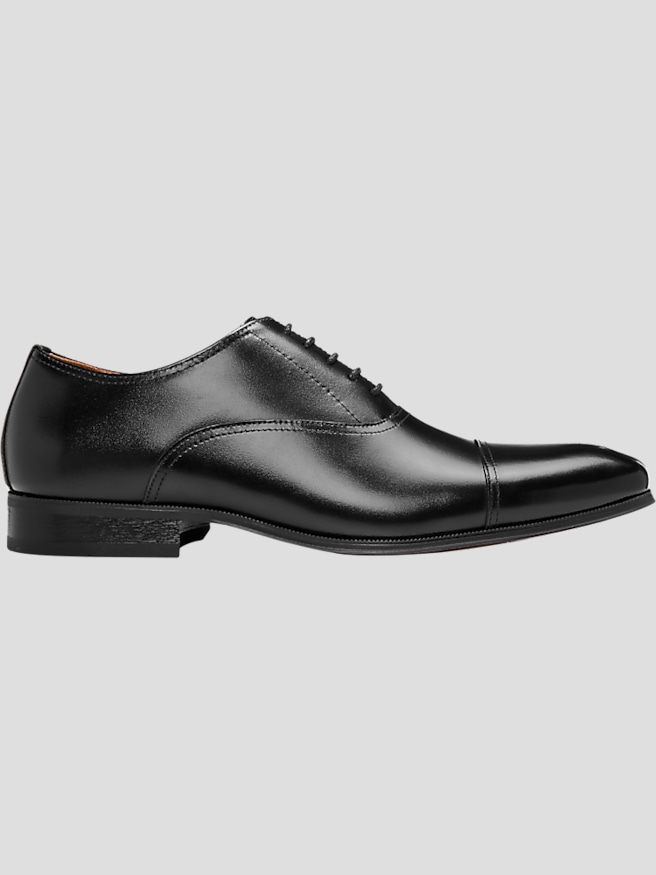
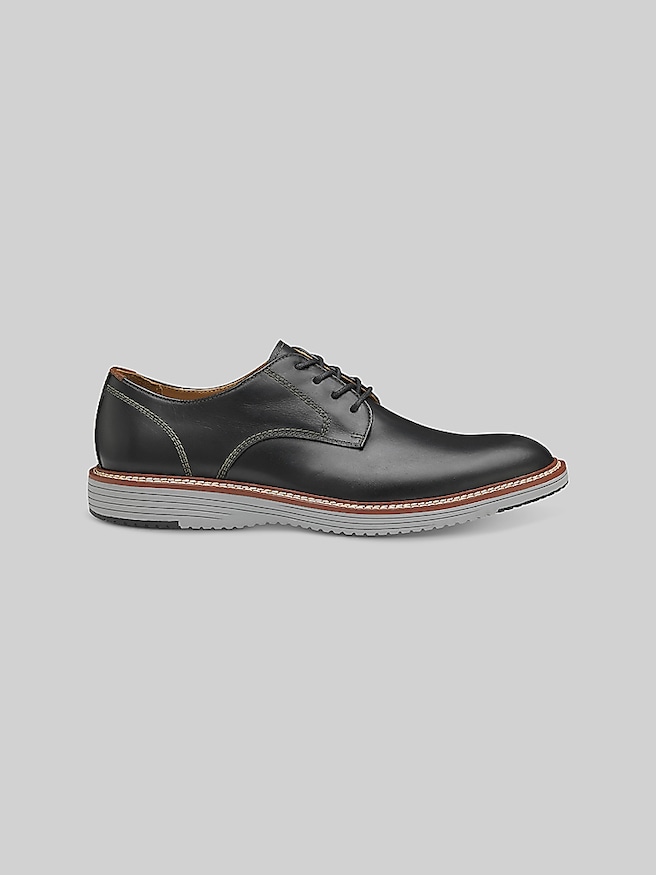
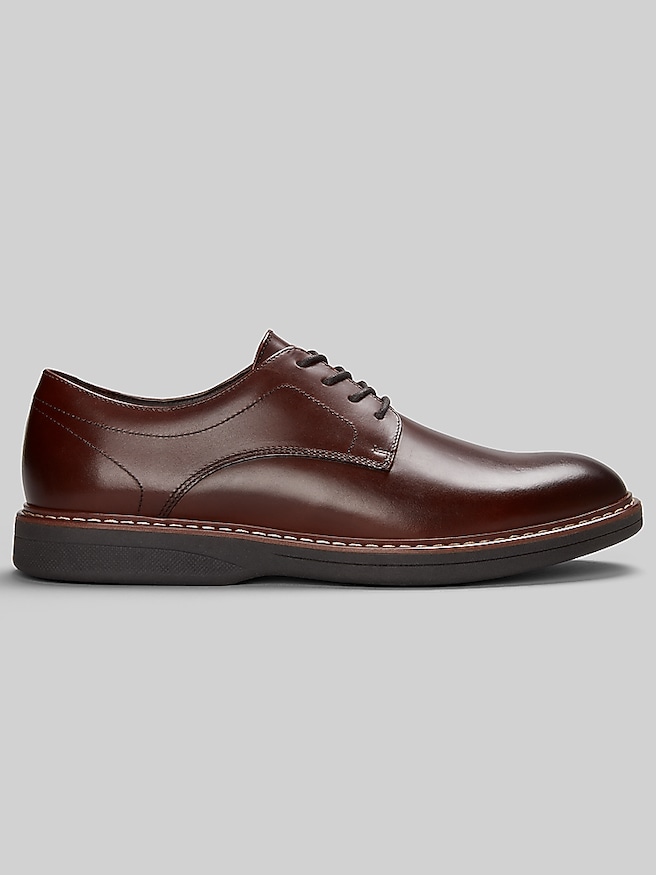
Men’s black dress shoes include lace-up Oxfords and Derbies, slip-on loafers, and buckle-fastened monk straps, offering distinct looks for business attire, weddings, and formal occasions. Their versatility comes from a neutral color that complements navy, charcoal, gray, and black tailoring without drawing attention away from the outfit. Within that shared color, construction and detailing make a meaningful difference. Oxfords have closed lacing, with the eyelet sections attached beneath the front of the upper, creating a sleek profile that works especially well with suits. Derbies feature open lacing, with eyelet sections sewn over the upper; that design allows more adjustment over the instep and gives the shoe a slightly less formal appearance. Loafers offer a clean, laceless silhouette that can complement dress trousers, a sport coat, or relaxed tailoring, depending on their shape and finish. Monk straps use one or two buckles in place of laces, adding a distinctive detail while maintaining a tailored appearance. Plain-toe designs keep the surface uninterrupted, while cap toes add a seam across the front. Broguing introduces decorative perforations that make a shoe look more detailed and generally less formal than an otherwise similar plain design. A smooth black cap-toe Oxford is a familiar companion to a business suit, while a refined loafer can feel appropriate for a dinner reservation or an office with a less formal dress code. For black-tie attire, highly polished plain-toe shoes or patent leather formal shoes provide the understated finish associated with a tuxedo. The shape matters alongside the style: a softly rounded or almond-shaped toe tends to sit naturally beneath tailored trousers, and a restrained sole profile keeps the overall look balanced. For someone moving from a morning presentation to an evening reception, a simple silhouette can serve both settings without requiring a change of shoes. The strongest pairing is usually one in which the shoes match the formality of the clothing rather than compete with it.
Materials influence how black dress shoes look, feel, and respond to repeated wear. Smooth leather offers a traditional appearance and can develop natural creasing as it flexes with the foot. Full-grain leather retains the hide’s natural surface, while corrected-grain leather has been treated to create a more uniform finish; the quality of the hide, finishing process, and shoe construction all affect long-term performance. Patent leather has a glossy surface suited to formal dressing, while suede creates a softer, matte appearance that generally works better with less formal tailoring. Synthetic uppers vary in flexibility and breathability, so the material description is more useful than appearance alone when assessing how a shoe may feel through a full day. Linings matter, too. A smooth interior, well-finished seams, and padding placed where the foot needs support can make the difference between shoes that feel comfortable during a brief fitting and shoes suited to hours of wear. Underfoot, leather soles offer a traditional profile and can feel firm initially, while rubber soles can provide cushioning, flexibility, and traction, depending on their composition and tread. A discreet rubber insert may preserve a dressy appearance while improving grip, although no sole should be assumed slip-resistant without a specific performance rating. Construction also contributes to durability. Welted designs may allow resoling when the upper remains in good condition, while cemented construction can produce a lighter, flexible shoe; repair options depend on the individual design. Neat stitching, secure heel attachment, and an evenly finished sole edge are useful signs of careful assembly. A lightweight shoe may suit someone walking between meetings, whereas a firmer, more structured pair may appeal to someone who prefers a substantial feel. Cushioning alone does not determine comfort: the relationship between the shoe’s shape, its flexibility, and the wearer’s foot is just as important. A refined appearance and practical construction can coexist without an oversized sole or conspicuous detailing.
Fit deserves particular attention because dress shoes often have a more structured shape than everyday sneakers. The correct size should leave room for the toes to rest naturally without pressing against the front or sides, while holding the heel securely without rubbing. Width and instep volume matter as much as length; sizing up to solve a narrow fit can leave excess space at the toe and allow the foot to slide. The widest part of the foot should align with the widest part of the shoe, and the upper should feel secure rather than tight across the ball of the foot. Trying shoes with the type of dress socks intended for regular wear gives a more realistic sense of fit. Walking on a clean surface can reveal heel movement, pressure across the instep, or a stiff edge that was not noticeable while seated. Leather may soften with use, but a break-in period should not be expected to correct pinching or a fundamentally poor fit. For a wedding party member standing through a ceremony or a professional spending hours at a conference, that distinction matters more than an appealing silhouette alone. Consistent care helps preserve both appearance and usefulness. Dust and surface dirt can be removed with a soft brush or cloth, followed by care products appropriate to the upper material. Smooth leather may benefit from occasional conditioning and a suitable black cream or polish, while suede needs a dedicated brush and should not be treated with ordinary shoe polish. Patent finishes require their own compatible cleaning approach. Allowing shoes to air out between wears and using properly sized shoe trees can help manage moisture and maintain their shape. Direct heat can damage leather and adhesives, and worn heel tips are worth addressing before uneven wear affects the shoe’s balance. As a gift for a graduate, a partner beginning a new role, or someone preparing for a milestone celebration, black dress shoes combine everyday usefulness with occasion-ready polish. Knowing the recipient’s size, width, usual dress code, and preferred fastening makes the choice more personal and more likely to become a dependable part of regular dressing.