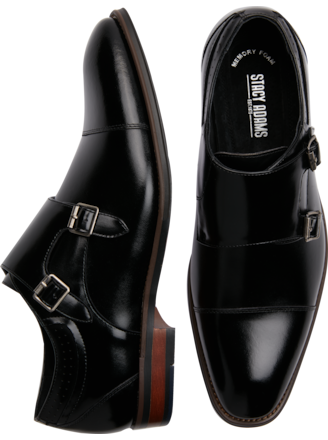
Men’s modern black dress shoes bring a clean, composed finish to tailored clothing, whether the occasion is a job interview, a wedding, or a regular day at the office. Their appeal starts with versatility: black footwear pairs naturally with charcoal and navy suits, complements gray dress pants, and creates a continuous line beneath black trousers. Modern styling often comes through in the proportions rather than elaborate decoration—a gently tapered toe, a balanced heel, and a profile that sits neatly beneath the pant hem. An almond-shaped toe can look sharp without the exaggerated length of a strongly pointed design, while a rounded shape offers a more understated appearance. Classic shoe types still provide the foundation. Oxfords have closed lacing that creates a compact, formal look; derbies have a more open lace structure that can suit both tailoring and less formal combinations. Monk straps introduce buckle detailing, and streamlined loafers offer a lace-free alternative where the dress code allows. The amount of stitching, perforation, and shine also affects the overall impression. A smooth upper with minimal detail tends to look more formal than a heavily patterned surface, making it an easy match for a presentation or an evening reception. Materials contribute just as much to that character. Smooth leather can develop subtle creases and a softer feel with wear, while polished finishes emphasize a crisp appearance. Suede has a matte texture that lends itself to softer tailoring and occasions that do not call for strict formalwear. Patent leather has a distinctive reflective finish associated with tuxedo dressing, though the event’s dress code should determine the choice. Synthetic uppers vary in texture, flexibility, and maintenance needs, so their care requirements deserve attention as well. The most useful pair is not necessarily the most decorative; it is the one whose shape, finish, and level of formality fit the settings in which it will be worn.
Fit gives modern black dress shoes their practical value, especially when a day involves more than sitting behind a desk. A commute, several flights of stairs, a standing reception, and a walk back to the car can make small differences in shape and support noticeable. Length is only part of the equation. Width across the ball of the foot, room above the instep, and the way the heel sits inside the shoe all affect comfort. Toes need space without the foot sliding forward, and the widest part of the foot should align comfortably with the widest part of the shoe. A tapered exterior does not have to feel cramped, but the internal shape matters more than the appearance of the toe. Leather may soften with wear; it should not be expected to correct significant pinching or an unsuitable size. Dress socks also influence fit, particularly when switching between thin hosiery and more cushioned socks. Lace-up styles allow adjustments across the top of the foot, while loafers depend more heavily on a close match between the foot and the shoe’s shape. A secure heel and comfortable instep are especially important in a slip-on design. Underfoot details deserve equal attention. Cushioning can soften the feel of repeated steps, a supportive footbed can make extended wear more comfortable, and a flexible forefoot can help the shoe move naturally while walking. Sole materials change both the look and the experience: leather soles often create a refined profile, while rubber soles can provide grip and cushioning depending on their design. Neither material makes every shoe equally comfortable or durable. Construction, sole thickness, tread, and the connection between the upper and sole all contribute to performance. Some stitched constructions may allow professional resoling, while other designs have different repair options. For someone who regularly moves between meetings and evening events, these less visible details can matter as much as a sleek silhouette.
A well-chosen pair of black dress shoes can anchor several outfits without making each one look identical. With a navy suit and a white shirt, a smooth lace-up creates a clear, professional finish. With charcoal trousers and a fine-gauge knit, understated detailing keeps the look polished without suggesting a full formal ensemble. For a wedding guest or someone attending an awards dinner, the right finish depends on the invitation and the rest of the clothing; a tuxedo calls for a different level of formality than a blazer and dress pants. Trouser length plays a role, too. A hem that rests lightly on the shoe shows its shape, while excess fabric can obscure even a carefully chosen design. Matching the general finish of a black belt to the footwear helps the outfit feel considered without requiring every accessory to have an identical texture. When the setting calls for a more relaxed approach, Men Casual Black Shoes offers a related direction for outfits built around chinos, denim, and less structured layers. Care helps dress footwear retain its appearance through repeated use. Smooth leather generally benefits from removing surface dust with a soft brush or cloth, followed by suitable conditioning and polish according to the material’s care instructions. Suede requires its own brush and compatible treatments rather than conventional leather cream, and specialty finishes need products intended for those surfaces. Testing a treatment on a discreet area can help prevent unwanted changes in color or sheen. Allowing shoes to rest between wears, storing them away from direct heat, and using appropriately sized shoe trees can help manage moisture and preserve their shape. Heel wear, loose stitching, or a thinning sole are worth addressing before they become larger problems. As a gift for a graduate, a partner, or someone beginning a new professional role, black dress shoes can be useful for years of important occasions. Knowing the recipient’s size, preferred width, typical dress code, and taste in toe shape makes that choice more personal—and more likely to become a dependable part of an everyday wardrobe.