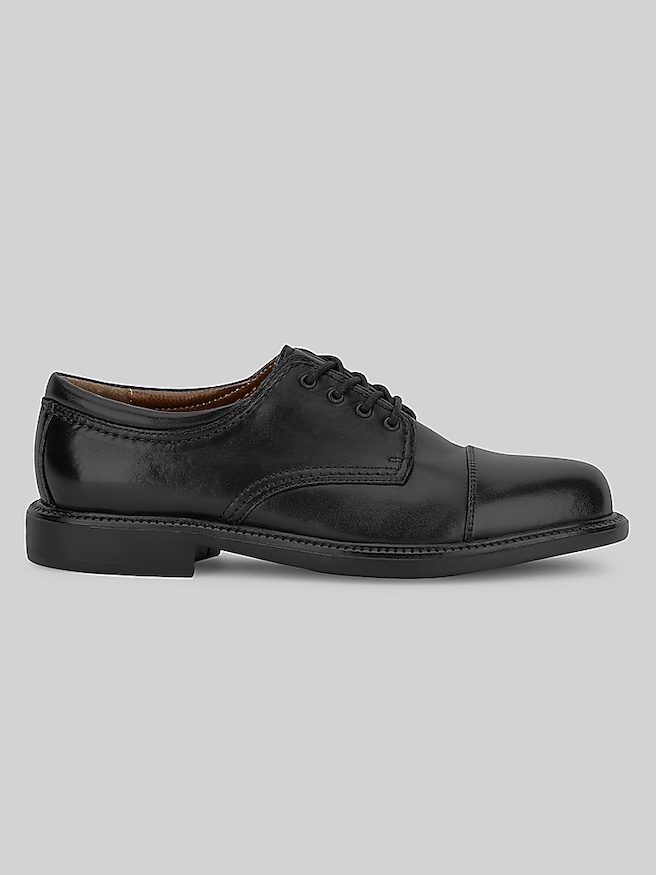
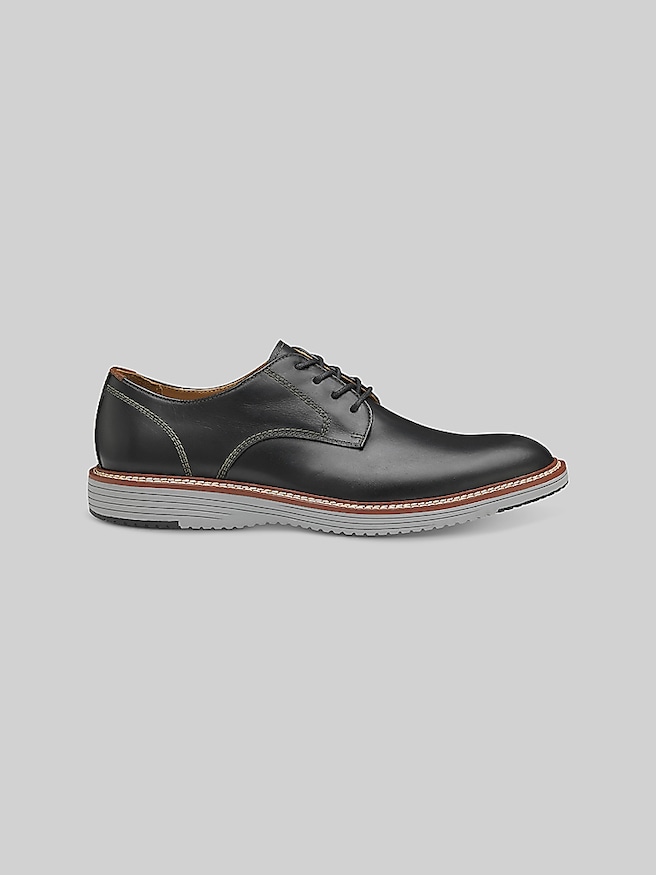
Men’s casual black shoes bring a clean, grounded finish to everyday outfits without making them feel overly dressed up. Their versatility comes from both the color and the shape: black creates a consistent visual line with dark denim or black chinos, while a relaxed silhouette keeps the look comfortable enough for an afternoon downtown, a casual office, or dinner with friends. A low-profile sneaker has a sporty feel that works with straight-leg jeans and a cotton shirt; a simple loafer adds polish to chinos and a knit polo without needing the structure of a suit. Casual lace-up styles fall comfortably between those two looks, especially when their uppers have minimal detailing and their soles are substantial without appearing bulky. Small design choices make a noticeable difference. A rounded toe tends to look relaxed, a slightly tapered toe feels more refined, and a smooth black upper reads differently from a textured or softly brushed surface. Even the sole edge changes the impression: a matching black sole creates an understated finish, while a contrasting edge gives the shoe a more distinct outline. Pants matter, too. A hem that rests lightly near the top of the shoe lets its shape show, whereas excess fabric can hide the details and interrupt the line of the outfit. Black footwear also pairs naturally with charcoal, olive, cream, and navy, making it useful for a wardrobe built around familiar neutral colors. For men whose days move from a desk to a lunch meeting and then to an informal evening gathering, this balance of comfort and polish is especially practical. The distinction between casual and dress footwear usually lies in the construction, finish, and proportions rather than color alone. When an occasion calls for a sharper silhouette alongside tailored trousers or a suit, Men's Black Dress Shoes offer a more formal direction, while casual black shoes keep everyday dressing relaxed and put together.
Materials help determine how casual black shoes look, feel, and hold up to regular wear. Smooth leather can develop subtle creases and character over time, with a surface that generally responds well to appropriate cleaning and conditioning. Suede has a softer, more textured appearance that suits relaxed outfits, though its raised nap needs a different care routine from smooth leather. Woven textiles can give a shoe a lighter, sportier appearance, while synthetic uppers vary considerably in flexibility, finish, and maintenance needs. The lining deserves attention as well: its texture, seams, and breathability affect how the shoe feels against the foot during a full day. Underfoot, cushioning can soften the initial step, but comfort also depends on the relationship between the footbed, sole flexibility, and overall fit. A thick sole is not automatically more supportive, and a very soft footbed is not necessarily the best match for every wearer. Someone who spends much of the day standing may prefer a stable base and secure heel, while someone who walks between transit stops, office buildings, and restaurants may appreciate a sole that bends naturally through the forefoot. Fit should feel secure without squeezing. The toes need room to move, the widest part of the foot should align comfortably with the widest part of the shoe, and the heel should stay reasonably steady during a normal stride. Lace-up closures allow adjustment across the instep, which can be helpful when foot volume or sock thickness varies. Slip-on styles rely more heavily on the shape of the upper and the fit around the heel, so excessive movement can be more noticeable. Trying footwear with the socks intended for everyday use gives a more accurate sense of comfort than judging it with an unfamiliar thickness. A shoe that feels sharply tight across the toes or rubs at the heel should not depend on an uncertain break-in period to become wearable. For a wardrobe staple, dependable comfort matters just as much as a clean appearance.
Regular care helps black casual shoes retain their depth of color and keeps everyday wear from becoming unnecessary damage. Dust and residue can dull a black upper, so gentle cleaning suited to the material makes a visible difference. Smooth leather benefits from a soft cloth and compatible care products used according to the maker’s directions; too much conditioner or polish can leave buildup rather than improve the finish. Suede is better maintained with a suitable brush that lifts the nap without soaking the surface, while textile and synthetic materials should be cleaned according to their care instructions. Testing a treatment on a discreet area helps protect the original texture and color. Shoes should dry naturally after cleaning, away from direct heat, and should not be put in a washing machine unless the care instructions specifically permit it. Alternating pairs gives linings and footbeds time to air out between wears, and suitable shoe trees can help leather uppers maintain their shape. Durability also depends on details that may be less obvious than the upper: secure stitching, well-finished edges, a stable heel, and a sole suited to the intended activity all contribute to everyday performance. Smooth indoor floors, long walks, and frequent standing place different demands on footwear, so tread and flexibility deserve consideration alongside style. Casual black shoes can also make a thoughtful gift for a father, brother, partner, or friend who prefers practical wardrobe additions. Knowing the recipient’s usual size, width, preferred closure, and daily routine is more useful than relying on size alone, since fit can vary between silhouettes. A man who wears chinos most days may appreciate a streamlined loafer, while someone who lives in jeans may favor a simple sneaker or relaxed lace-up. The strongest choice fits naturally into the wearer’s routine: easy to coordinate, comfortable for its intended use, and straightforward to maintain. With those qualities in place, black casual footwear becomes a familiar finishing touch rather than something that needs a special occasion.