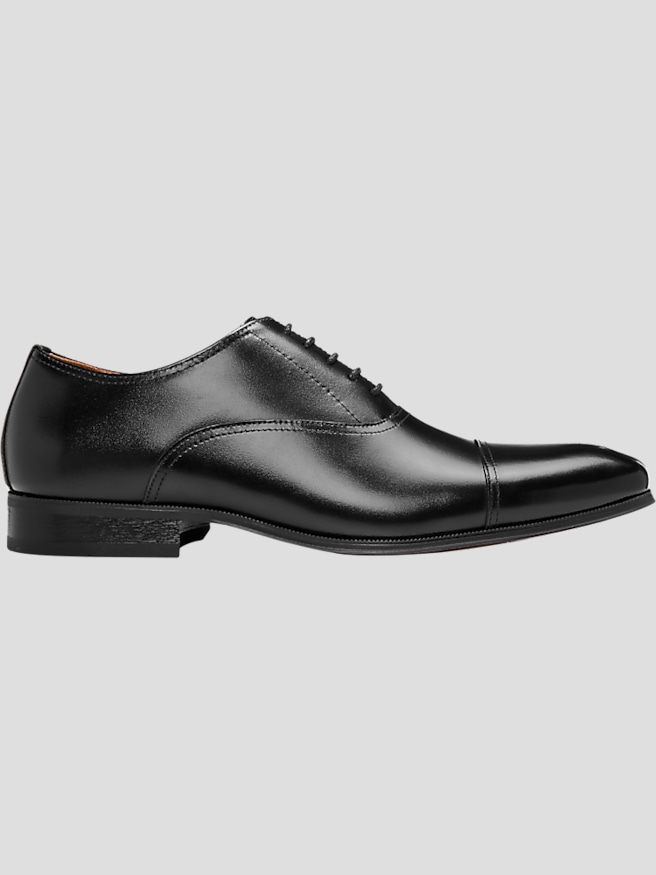
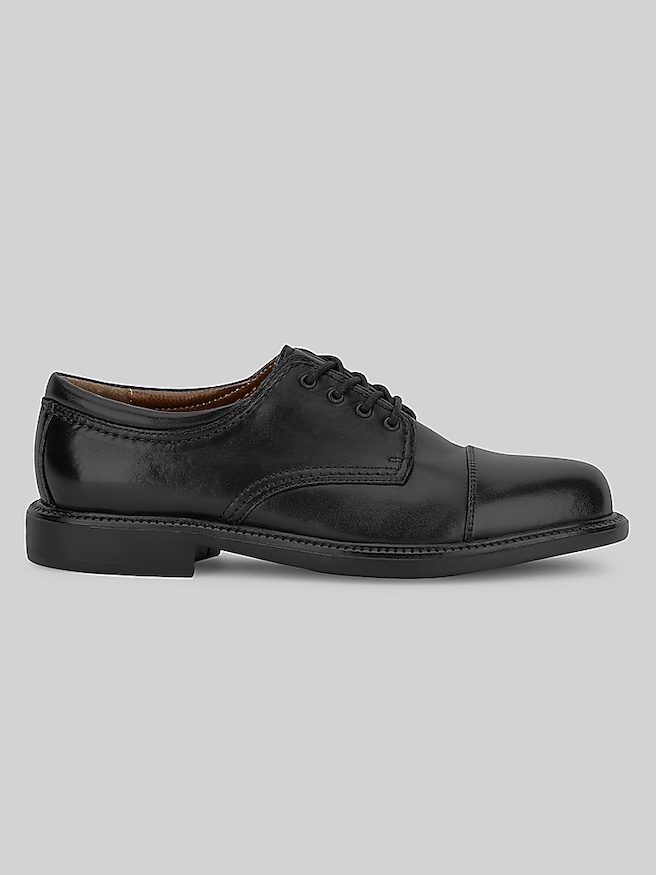
Black comfortable dress shoes combine a polished appearance with features that help make time on your feet more manageable, such as cushioned footbeds, flexible forefoot construction, supportive contours, and a secure fit. The appeal is practical: a shoe can look right with tailored trousers while feeling comfortable through a commute, a presentation, and an evening reception. Comfort is not simply a matter of adding the softest padding. A balanced design gives the foot room to move, holds the heel without excessive slipping, and provides a stable base underfoot. For men who spend much of the day standing, walking between appointments, or moving across large event spaces, those details can matter as much as the shape of the toe. Black leather also creates a clean visual line with charcoal, navy, and black tailoring, making these shoes useful for business meetings, interviews, weddings, and other occasions that call for a finished appearance. A smooth cap-toe oxford has a restrained character that works well with a suit, while a derby offers a slightly more relaxed profile and an open lacing system that can allow greater adjustment over the instep. Loafers bring easy slip-on styling to dress trousers and less formal office outfits, although their fit needs to be secure without the help of laces. Brogue detailing adds texture, while plain-toe designs keep attention on the silhouette and finish. Within the broader category of black dress shoes, comfort-focused construction can preserve those familiar dress details without requiring a heavy or rigid feel. The most suitable style depends on both the setting and the way the shoes will be worn: a seated dinner, a day of client visits, and hours spent greeting wedding guests place different demands on footwear. A streamlined outsole generally reads as more formal, while a thicker, athletic-inspired sole gives the shoe a more casual character, even when the upper is polished black leather. Neither appearance alone establishes comfort; the relationship between the upper, footbed, sole, and individual foot is what matters.
Materials and construction influence how comfortable black dress shoes feel at the first fitting and how they perform with repeated wear. Full-grain leather retains its natural surface and can develop character over time, while other smooth leather finishes offer a consistent, polished appearance. Supple leather uppers can gradually conform to the foot, but that flexibility should not be confused with a promise that a tight shoe will eventually fit. Suede provides a softer, textured alternative for less formal combinations, and high-shine finishes create a dressier effect for occasions with a more formal dress code. Inside the shoe, smooth linings and neatly finished seams help reduce friction, particularly around the heel and across the toes. Underfoot cushioning may come from foam, EVA, or layered footbed materials, each with a different feel. Softer cushioning can ease the sensation of impact, while a more structured footbed may feel steadier; the best balance varies with the wearer. Contoured support should sit comfortably beneath the arch rather than create a noticeable pressure point. Rubber outsoles can add flexibility and traction, although grip depends on the tread, compound, surface, and conditions, not simply the presence of rubber. Leather outsoles offer a traditional finish and may feel firmer initially. Regardless of material, the shoe should bend near the ball of the foot rather than feel restrictive through every step. Fit brings these features together. Toes need enough space to rest naturally without pressing against the front or sides, and the widest part of the foot should align with the widest part of the shoe. Extra length is not a reliable substitute for the correct width. Trying shoes with the dress socks intended for regular wear gives a more realistic sense of fit, as does walking rather than judging comfort only while seated. Feet can change in volume over the course of a day, so a fit that remains comfortable later in the day is useful for extended wear. Removable footbeds may accommodate personal inserts, provided the shoe has enough depth and the replacement does not crowd the foot.
Durability and care help preserve both the appearance and the comfort of black dress shoes. A well-maintained upper stays more supple, while an evenly worn sole and stable heel help the shoe retain its intended feel. For smooth leather, removing surface dirt with a soft brush or cloth before applying suitable care products keeps grit from being worked into the finish. Leather conditioner can help prevent excessive dryness, and a compatible black cream or polish can refresh color and restore a controlled shine. Product directions matter because suede, coated leather, and high-shine finishes require different treatment; a polish intended for smooth leather is not a universal solution. Shoes that become damp should dry naturally away from direct heat. Giving each pair time to air out between wears can help manage moisture, and properly sized shoe trees can support the shape while the shoes rest. A shoehorn also reduces repeated crushing of the heel counter when putting shoes on. Over time, worn heel edges, flattened cushioning, loose stitching, or a sole that no longer feels secure deserve attention. Some construction methods allow professional resoling or heel replacement, but repair options depend on how the shoe is made. Everyday habits matter, too: clean socks with a smooth toe seam can reduce irritation, and a measured break-in period is more sensible than making a long ceremony or full workday the first outing. New shoes should feel fundamentally comfortable from the start, without sharp pressure, numbness, or persistent rubbing. For a graduate entering a professional setting, a partner preparing for a formal celebration, or someone rebuilding a work wardrobe, comfortable black dress shoes can also be a useful gift when sizing and style preferences are known. Their lasting value comes from versatility: the same understated shape can finish a suit, sharpen tailored separates, and support the ordinary movement that happens between the occasions people remember.