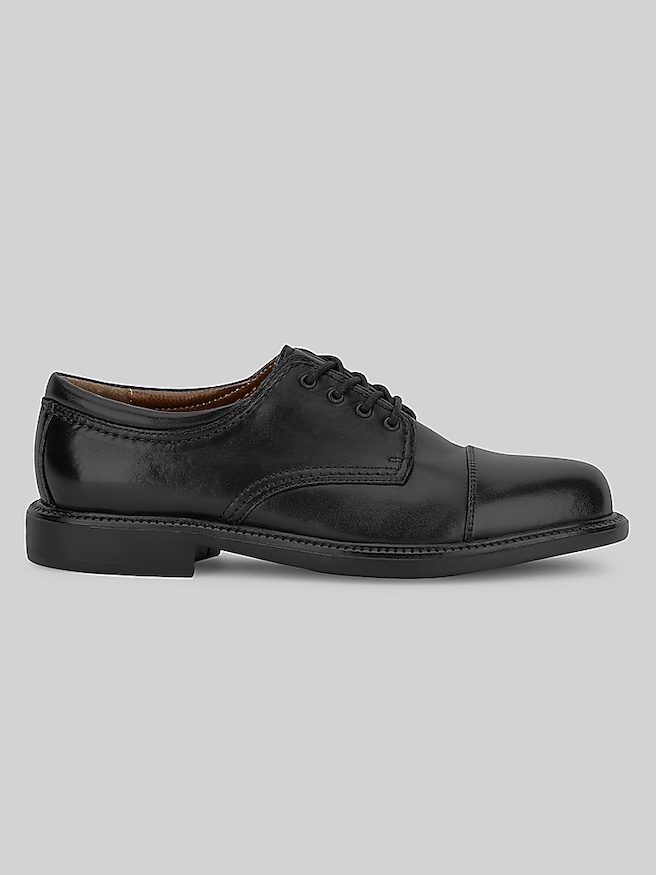
Blue dress shoes are men’s footwear designed to complement tailored clothing, with shades ranging from understated navy to vivid royal blue. They bring color to an outfit without losing the polished look associated with dress shoes. Deep navy leather can appear nearly black in subdued lighting, making it an approachable choice for business attire, wedding guest outfits, and dinners that call for a jacket. Brighter blue tones create a more noticeable accent, especially against gray trousers or a neutral suit. The shape and finish matter as much as the color: a smooth leather oxford with minimal detailing feels more formal than a suede loafer, even when both are the same shade. Oxfords have closed lacing that creates a neat profile, while derbies use open lacing for a slightly less formal appearance. Loafers offer a clean slip-on option for dress trousers, chinos, and more relaxed tailoring. Brogue perforations, wingtip details, and cap toes each add a different degree of visual interest. A plain toe lets the blue color do most of the work; decorative stitching and burnishing give the shoe more texture and depth. Navy dress shoes pair particularly well with light gray, charcoal, and tan clothing, although the best combination depends on the finish and the occasion. With a navy suit, a subtle difference between the fabric and shoe color can keep the outfit from looking overly matched. A pale blue shirt or a tie with a small blue pattern can connect the shoes to the rest of the clothing without repeating the same shade everywhere. For an important presentation, dark blue lace-ups with gray trousers offer a restrained alternative to black. For a celebratory dinner, blue suede loafers can lend a softer, more relaxed character. Strict formal dress codes still deserve attention: blue dress shoes are not a universal substitute for the traditional black footwear expected with classic black-tie attire.
Materials influence how blue dress shoes look, feel, and hold up to repeated wear. Smooth leather offers a defined surface that can generally be cleaned and conditioned with products appropriate to its finish. Over time, leather may develop creases across the forefoot and subtle changes in tone; those signs of wear are distinct from cracking caused by dryness or neglected care. Suede has a soft, textured surface that makes navy appear rich and slightly muted, while velvet creates a deeper visual effect suited to more expressive occasion dressing. Synthetic uppers can provide a consistent color and finish, though their flexibility, breathability, and care needs vary by construction. A glossy finish draws attention to the shape of the shoe, while a matte finish tends to blend more easily with textured trousers and less formal jackets. Inside the shoe, lining materials, seams, cushioning, and arch shape all affect comfort. A padded footbed can soften the feel underfoot, but it cannot compensate for a shoe that pinches across the toes or presses against the instep. A comfortable fit leaves room for the toes to move without allowing the foot to slide forward. The heel should feel secure, with no persistent rubbing or substantial slipping during a normal stride. Trying dress shoes with the socks intended for the outfit gives a more useful sense of fit than trying them with unusually thick athletic socks. Lace-ups allow some adjustment across the top of the foot, while loafers rely more heavily on the match between the shoe’s shape and the wearer’s foot. Width, toe shape, and instep height can matter just as much as the marked size. For someone moving between meetings or standing through a wedding reception, sole flexibility, stable heel construction, and comfortable interior seams deserve close attention. Rubber outsoles often provide a more forgiving feel and useful grip on smooth floors; leather soles have a traditional appearance, with traction and flexibility depending on their construction and wear.
Keeping blue dress shoes looking sharp starts with care suited to the material rather than a single treatment for every pair. Smooth leather benefits from gentle cleaning, occasional conditioning when appropriate, and polish that is compatible with both the color and finish. Blue shades can be difficult to match precisely, so testing a suitable product on an inconspicuous area helps prevent an unexpected change in tone. Neutral polish may be appropriate for some leathers, but it is not suitable for every finish and will not necessarily restore lost color. Suede needs a dedicated brush and material-specific cleaning methods; ordinary leather polish can flatten its texture and leave marks. Velvet also calls for a light touch and care consistent with the manufacturer’s directions. Removing surface dust after wear prevents buildup around seams and decorative details. Letting shoes rest between outings gives the interior time to air out, while properly fitted shoe trees can help leather shoes retain their shape. Storage should protect the uppers from abrasion and avoid crushing the heel or bending the toe. Durability depends on more than the upper material: secure stitching, sound sole attachment, and a well-built heel all contribute to how a shoe handles repeated use. Shoes worn regularly may eventually need attention from a shoe repair professional, although repair options vary with construction. These practical details are especially useful when choosing a gift for a graduate, a partner starting a new role, or someone who enjoys dressing for special occasions. A familiar shoe size is a helpful starting point, but knowing the recipient’s usual width, preferred fastening, and everyday dress code makes the choice more personal. Dark navy lace-ups suit someone who favors traditional tailoring, while blue loafers may better match a wardrobe built around chinos and sport coats. For weddings, family portraits, or other occasions involving younger members of the family, Boys Dress Shoes can help complete their outfits without requiring everyone to wear identical footwear. The strongest choice balances a blue shade the wearer enjoys with a comfortable fit, appropriate formality, and care that fits into everyday routines.