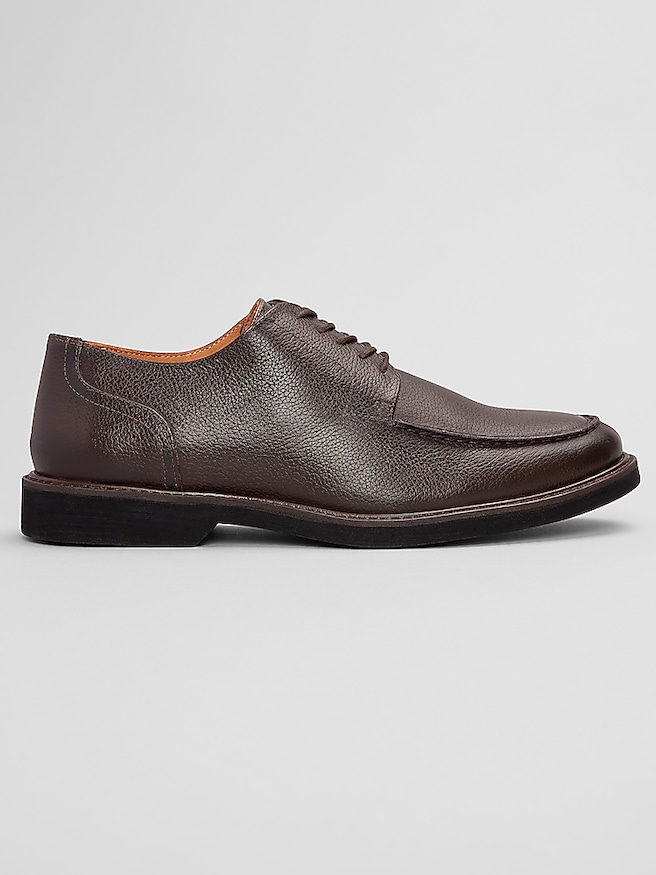
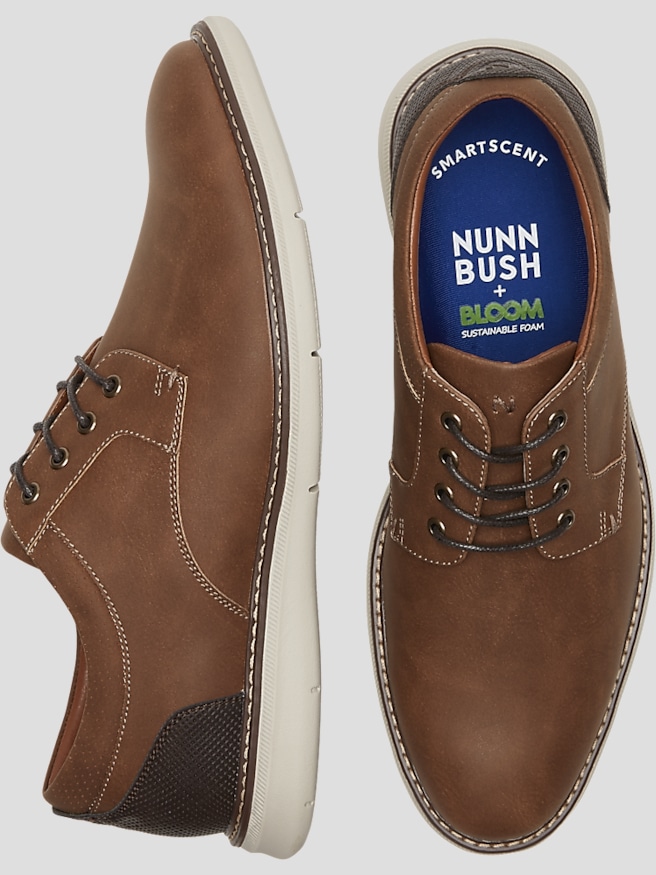
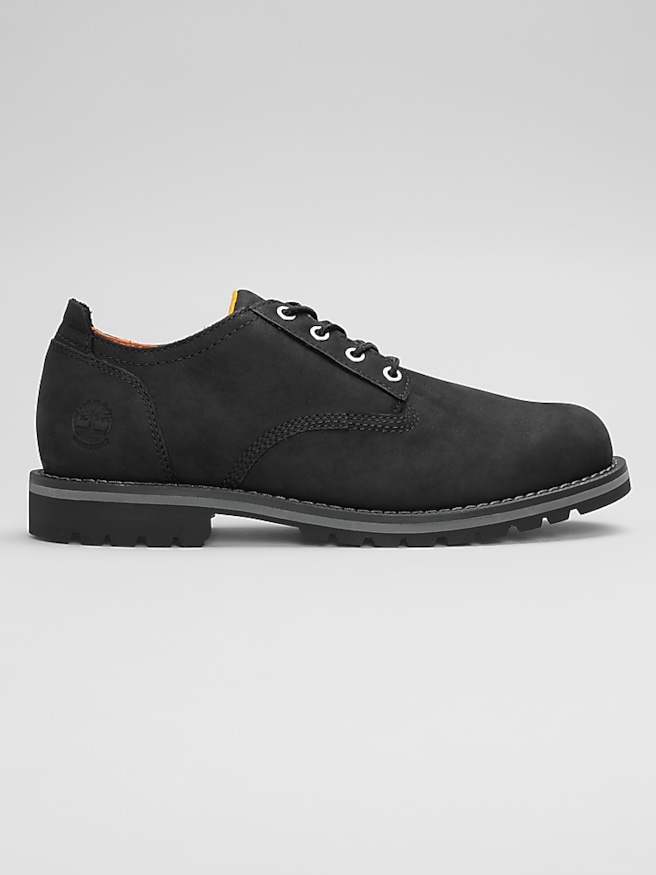
Men’s derby shoes are lace-up dress shoes defined by an open-lacing construction: the sections that hold the eyelets sit on top of the vamp, the piece of leather covering the front of the foot. That design lets the laces open more widely than the closed lacing of an Oxford, offering adjustability across the instep and giving the shoe a slightly more relaxed appearance. The result is footwear that moves comfortably between tailored clothing and polished casual outfits. A smooth black pair can complement a charcoal suit for a business presentation, while brown leather works naturally with navy trousers, a tucked-in shirt, and a textured sport coat. With chinos or dark, clean-lined jeans, a derby adds structure without making the outfit feel overly dressed up. Within the category, shape and detailing influence the overall impression as much as color. A plain toe creates an uninterrupted surface that feels understated; a cap toe adds a defined line across the forefoot; decorative perforations, known as broguing, bring texture and a more casual character. Broguing describes the decoration rather than the lacing construction, so a derby can also be a brogue. Slim soles and gently tapered toes tend to look dressier, while rounded shapes and substantial soles lend themselves to less formal settings. The versatility of derby shoes makes them useful for office wardrobes, wedding guests, graduation ceremonies, and evenings that call for something more refined than sneakers. They are not interchangeable with every formal shoe, however: traditional black-tie clothing generally calls for more formal footwear. For everyday tailoring and many suit-and-tie occasions, a restrained derby offers an approachable balance of polish and practicality. A hem that rests lightly near the top of the shoe keeps the silhouette clean, and a belt in a similar leather tone helps the outfit feel considered without requiring an exact color match.
Materials and construction help determine how men’s derby shoes look, feel, and age. Smooth leather has a crisp finish that suits tailored trousers, and its surface can often be refreshed with appropriate conditioning and polish. Full-grain leather retains the natural grain, while other leather finishes may be buffed or coated to create a more uniform appearance. A highly uniform finish is not, by itself, proof of greater durability; the quality of the upper, stitching, lining, and sole all matter. Suede offers a soft, matte texture that pairs especially well with chinos and less structured tailoring, though it needs care suited to its raised nap rather than conventional shoe polish. Leather linings can help manage moisture, and a neatly finished interior reduces the likelihood of rough edges rubbing against the foot. Underfoot, leather soles provide a traditional profile, while rubber soles can offer useful cushioning and traction, depending on their compound and tread. Neither material guarantees comfort on its own. Someone walking several blocks between a station and an office may value flexibility and grip more than someone wearing dress shoes mainly for seated meetings. Welted construction can make future resoling possible when the rest of the shoe remains sound, although repair options depend on the particular construction and a cobbler’s assessment. Cemented construction bonds the sole to the upper and can create a lighter, flexible feel, but it is often less straightforward to resole. Small finishing details also deserve attention: even stitching, secure eyelets, smooth seams, and a stable heel contribute to a shoe that feels dependable through repeated wear. For a wedding with a ceremony, photographs, and hours of standing afterward, support and a secure fit matter more than a sleek profile alone. For a frequently worn office pair, an easy-to-maintain upper and a sole suited to the daily walk may have greater practical value than decorative details. The most useful combination reflects where the shoes will go and how long they will stay on.
Fit is especially important because the open lacing of a derby offers adjustment, not a substitute for the correct size and width. The design can accommodate a higher instep more readily than some closed-laced styles, but not every derby is wide or generously shaped. The last, the form around which the shoe is made, determines much of its toe room, heel shape, and overall volume. A comfortable fit holds the heel securely, supports the foot without squeezing, and leaves room for the toes to move without sliding forward. The widest part of the foot should sit comfortably within the widest part of the shoe, with no sharp pressure across the ball or along the little toe. Trying dress shoes with the socks intended for them gives a more realistic sense of fit, and anyone using orthotics should account for the space those inserts require. A small amount of leather softening is normal with wear, but persistent pinching or cramped toes should not be treated as a necessary break-in stage. For someone receiving derby shoes as a graduation gift or to mark a first professional role, knowing their usual dress-shoe size, width, and preferred silhouette is more helpful than relying on sneaker size alone. Once the fit is right, consistent care helps preserve both appearance and structure. Dust and grit can be removed from smooth leather with a soft brush or cloth before applying a suitable conditioner or polish according to the care directions. Suede benefits from a dedicated brush and products formulated for that material. Cedar shoe trees help maintain shape and absorb residual moisture between wears, while alternating pairs gives linings time to dry. Shoes should dry naturally away from direct heat if they become damp. A shoehorn protects the heel counter during dressing, and timely attention to worn heel tips or soles can prevent more extensive damage. These habits keep a well-chosen derby looking composed through commutes, celebrations, and the ordinary days when a polished finish makes a difference.