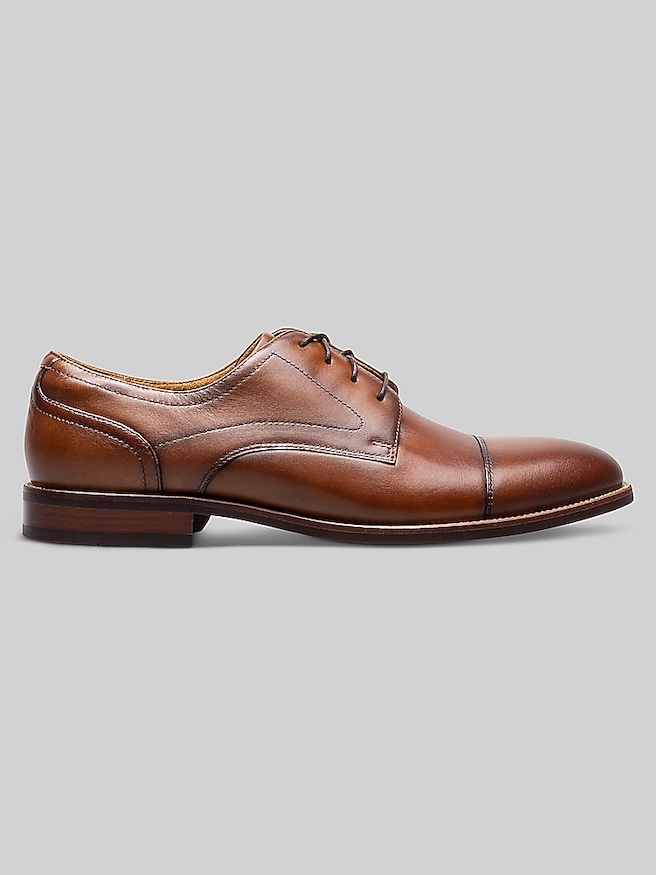
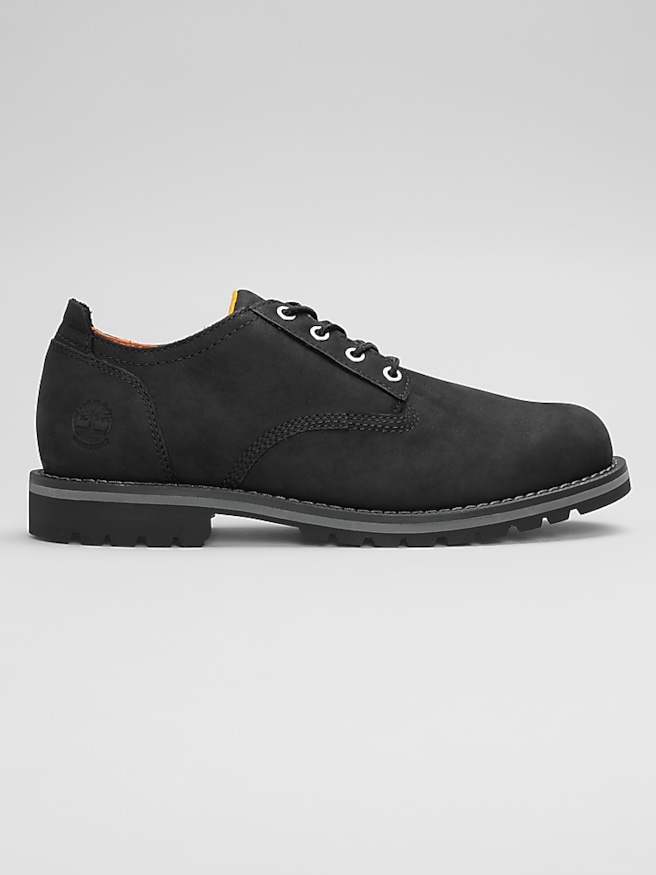
Men’s brown leather derby shoes bring a grounded, polished finish to outfits that fall between strictly formal and comfortably relaxed. Their defining feature is open lacing: the sections holding the eyelets sit on top of the vamp, the piece of leather that covers the front of the foot. That construction gives the upper an adjustable opening and a slightly less formal appearance than a closed-lace oxford, making derbies a natural companion to tailoring, chinos, and neat dark denim. Brown adds another layer of versatility. A deep espresso shade can sit quietly beneath navy trousers, while chestnut or cognac creates more contrast and draws attention to the shape and finish of the shoe. With a charcoal suit, darker brown often produces a more restrained combination; with tan trousers, a richer medium brown gives the outfit definition without making the footwear feel disconnected. The details matter as much as the color. A plain toe keeps the silhouette clean, a cap toe adds a subtle line across the front, and brogue perforations introduce texture that works particularly well with less formal tailoring. A slim, gently rounded profile tends to look refined beneath narrower trouser openings, while a fuller toe and more substantial sole can balance straight-leg pants. For an office presentation, a wedding with a suit-and-tie dress code, or dinner at a favorite restaurant, brown leather derbies can provide a dressed-up finish without the ceremony of evening footwear. They are not a substitute for the shoes expected with traditional black-tie attire, but they cover a broad range of everyday and celebratory occasions. A belt in a similar brown family helps the outfit feel considered; the shades do not need to match perfectly. Even the trouser hem changes the effect: a clean break lets the lacing and toe shape show, while excess fabric can obscure the shoe’s proportions. The appeal is that balance of structure and ease, with enough character to complement an outfit rather than compete with it.
Leather quality, lining, and construction influence how brown derby shoes look and feel long after the first wear. Smooth leather offers a crisp surface that responds well to brushing and appropriate conditioning, while pebbled leather brings visible texture and can make minor surface marks less noticeable. Full-grain leather retains the natural grain surface and may develop individual creases and tonal variation with use, though the leather’s thickness, tanning, and finishing also affect its performance. A highly uniform finish can create a sleek appearance, but no single label tells the whole story of comfort or durability. Consistent stitching, neatly finished edges, and a secure connection between the upper and sole are useful details to examine. Inside, a smooth lining and well-finished seams help reduce friction, especially around the heel and along the sides of the forefoot. Cushioning can soften the feeling underfoot, but it should complement a supportive fit rather than compensate for a shoe that is too large. The shape used to build the shoe, known as the last, determines its overall proportions, including toe room, heel width, and the curve through the arch. Open lacing allows some adjustment over the instep, yet it does not automatically make every derby suitable for a wide foot or high instep. A comfortable fit holds the heel securely without pinching, leaves room for the toes to move, and places the foot’s natural bending point near the shoe’s flex point. Trying shoes with the socks intended for regular wear gives a more useful sense of fit than relying on size alone. Some initial firmness is normal with structured leather footwear; persistent pressure, cramped toes, or rubbing should not be dismissed as an unavoidable break-in period. For someone who spends the day moving between a desk, meeting rooms, and a commute, that distinction matters. A handsome profile has limited value if every walk across the lobby calls attention to an uncomfortable seam or a slipping heel.
The sole and care routine help determine how well brown leather derby shoes suit a particular schedule. Leather outsoles give dress shoes a traditional finish and can feel firm at first, while rubber outsoles often provide more cushioning or flexibility, depending on their design. Grip varies with the compound and tread, so a dress shoe should never be assumed to meet occupational requirements simply because it has a rubber bottom. Anyone comparing men's brown leather work shoes for a job with specific footwear rules should check the stated safety features against the employer’s requirements. For everyday derbies, construction also affects long-term upkeep: some stitched designs can be resoled by a qualified cobbler, while other constructions have more limited repair options. Routine attention begins with removing surface dust using a soft brush or cloth before it settles into creases and stitching. A conditioner intended for the leather type can help maintain suppleness, and a compatible cream polish can refresh color and soften the appearance of small scuffs. Testing any care product on an inconspicuous area first is especially important with lighter browns, since treatments may deepen the shade. Wax polish can add shine to the toe and heel, but heavy buildup around flexing areas can look uneven. Suede and nubuck require their own brushes and treatments rather than the products used on smooth leather. After wear, allowing the interior to dry naturally and using properly sized shoe trees helps preserve the shape; direct heat can damage leather and should be avoided. Rotating pairs also gives each pair time to air out between wears. These practical details make brown derbies a thoughtful gift for a graduate starting an office role, a partner refreshing a tailored wardrobe, or someone who appreciates well-maintained leather footwear. Knowing the recipient’s size, preferred width, and usual trouser styles is more useful than guessing based on appearance alone. With the right proportions and regular care, a pair can develop the subtle creasing and depth of color that make leather feel personal while retaining the clean lines that earned it a place in the wardrobe.