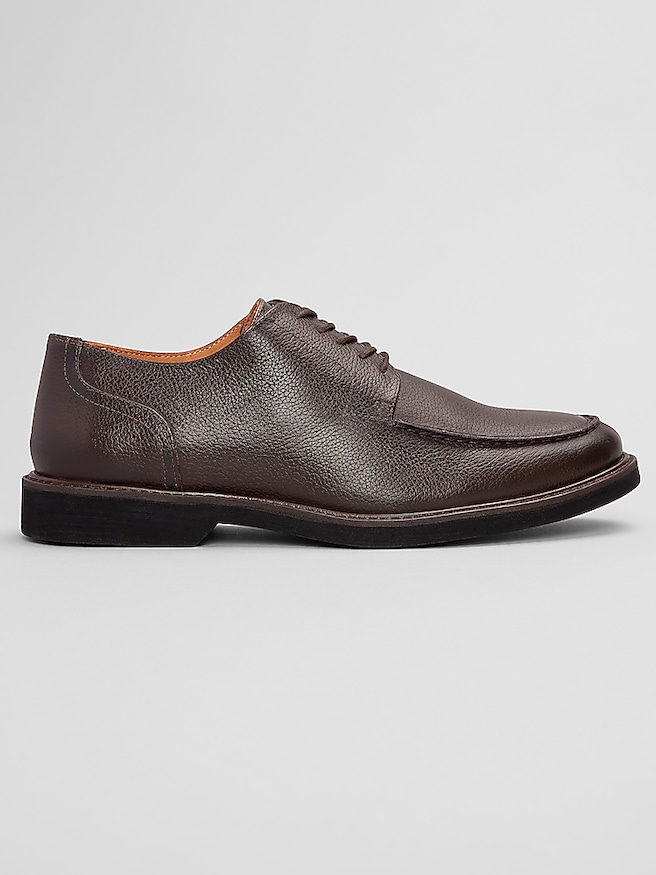
Men's brown leather work shoes bring a polished finish to office outfits while offering a practical foundation for the hours between the morning commute and the last meeting. The most suitable pair balances the expectations of the workplace with the amount of walking, standing, and sitting the day involves. A smooth leather upper, secure fit, and well-supported sole can matter just as much as the shape of the toe or the depth of the brown finish. Dark brown shoes tend to look more formal with navy, charcoal, and medium-gray trousers, while walnut and cognac tones add contrast to khakis, olive chinos, and textured sport coats. A plain toe keeps the look understated; a cap toe introduces a defined line that works naturally with tailored pants. Broguing adds visual texture and often suits business-casual settings, especially when the rest of the outfit is simple. Oxfords have closed lacing for a closely drawn profile, while derbies have open lacing that allows more adjustment across the instep. For a closer look at that versatile lace-up shape, men's brown leather derby shoes offer a useful connection between traditional office dressing and more relaxed work outfits. Loafers provide another option where the dress code permits, though their slip-on construction makes a secure heel and instep fit especially important. Brown leather coordinates easily with a leather belt in a similar shade; the colors do not need to match perfectly, but a comparable finish makes the outfit feel cohesive. For client presentations, interviews, and daily desk work, restrained details generally provide the widest styling range. In hospitality, retail, or other roles with substantial time on foot, comfort and job-specific requirements deserve equal attention. A professional appearance alone does not make a shoe suitable for every work environment, particularly where protective footwear or tested traction is required.
Leather quality and shoe construction influence how men's brown leather work shoes feel at the beginning of the day and how they hold their shape over time. Full-grain leather retains the hide's natural surface and can develop a distinctive patina with proper care. Top-grain leather has been lightly refined for a more uniform appearance, while corrected-grain finishes may create an especially consistent surface. These descriptions help explain appearance and aging, but none replaces a closer look at the lining, stitching, sole attachment, and overall fit. A softer upper may feel accommodating from the start, while a firmer leather can offer a more structured shape. Neither should require tolerating pinching or numbness. The widest part of the foot should sit comfortably within the shoe's widest area, with enough room for the toes to rest naturally rather than press against the front or sides. Width matters independently of length: sizing up to solve tightness across the forefoot can leave excess space at the heel. Trying shoes with the socks intended for work gives a more realistic sense of fit, and walking on a clean surface helps reveal heel movement, pressure over the instep, or a stiff flex point. Cushioning can soften the feel underfoot, but a plush footbed is not the same as stable support. For long stretches of standing, a secure heel, supportive midsole, and suitable outsole can be more meaningful than softness alone. Removable footbeds may be helpful for anyone who uses an orthotic, provided the shoe has sufficient internal space. Rubber outsoles can add flexibility and grip, while leather soles provide a traditional dress-shoe finish; performance depends on the actual construction and surface conditions. Slip resistance, safety toes, and electrical-hazard protection are separate features that must be confirmed in the manufacturer's specifications and checked against workplace rules. A tread pattern or substantial-looking sole is not proof of a safety rating. Where recrafting matters, welted construction may allow resoling, although repair options depend on the shoe's design and condition.
Regular care helps brown leather work shoes maintain their finish, flexibility, and professional appearance through repeated wear. Dust and grit are easiest to address before they settle into seams and creases, so a soft brush or clean cloth belongs alongside the shoes rather than buried in a closet. Leather conditioner can help replenish oils, but the appropriate formula and frequency depend on the leather and its finish. Too much product can leave residue or alter the surface, making a small test on an inconspicuous area worthwhile. Cream polish can refresh color and soften the appearance of minor scuffs, while wax polish can add shine, especially at the toe and heel. Suede and nubuck require care products designed for their textured surfaces rather than the creams used on smooth leather. Cedar shoe trees can help preserve the shape of the upper and absorb some moisture after wear; they should support the shoe without stretching it tightly. Allowing shoes to air between wears and rotating pairs gives linings time to dry and reduces constant stress on the same leather creases. A shoehorn protects the heel counter from being crushed when shoes go on in a hurry. Worn heel edges, loose stitching, and thinning soles are worth addressing early, before a small repair becomes more involved. Those details matter for someone crossing a large office campus, greeting clients at a reception desk, or moving between a workstation and conference rooms throughout the day. Brown leather shoes can also make a thoughtful gift for a graduation, a new position, or a professional milestone when the recipient's size, width, workplace expectations, and preferred style are known. The strongest choice is not necessarily the most formal or heavily detailed one, but the pair that fits the person's actual routine. A comfortable shape, an appropriate sole, and a finish that complements frequently worn trousers give work shoes a clear role in an everyday wardrobe. With attention to fit and upkeep, brown leather brings character to that role without looking out of place in a professional setting.