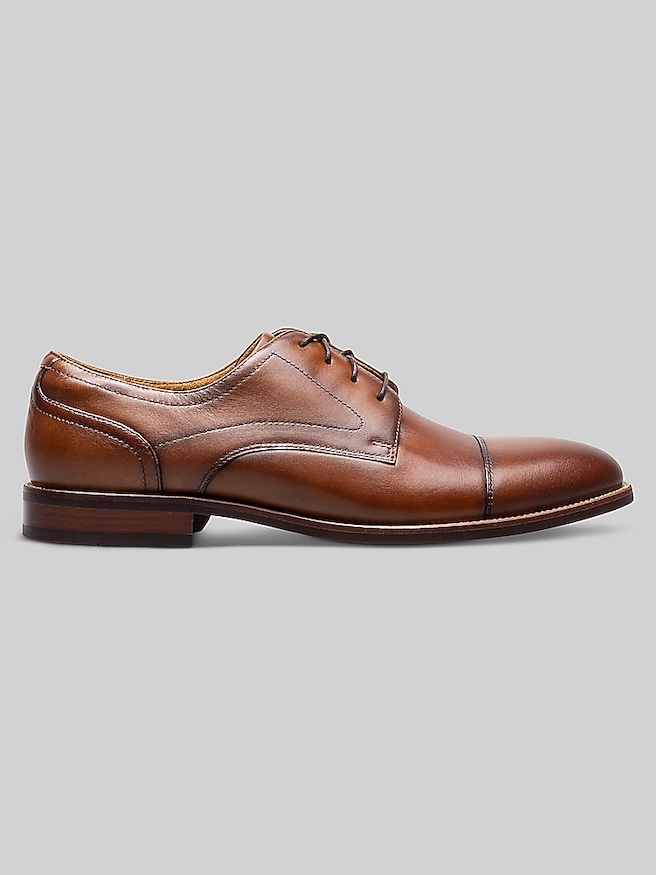
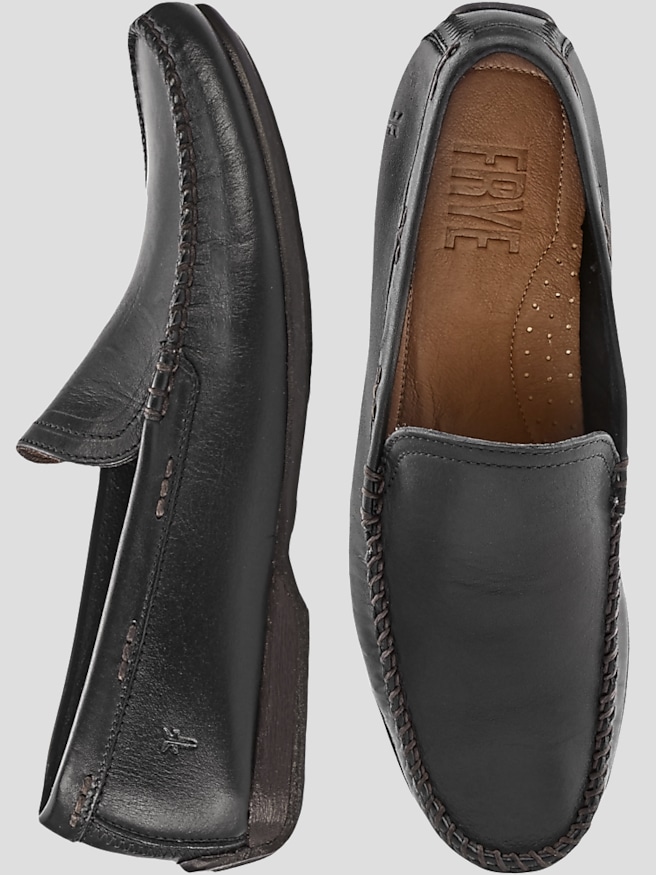
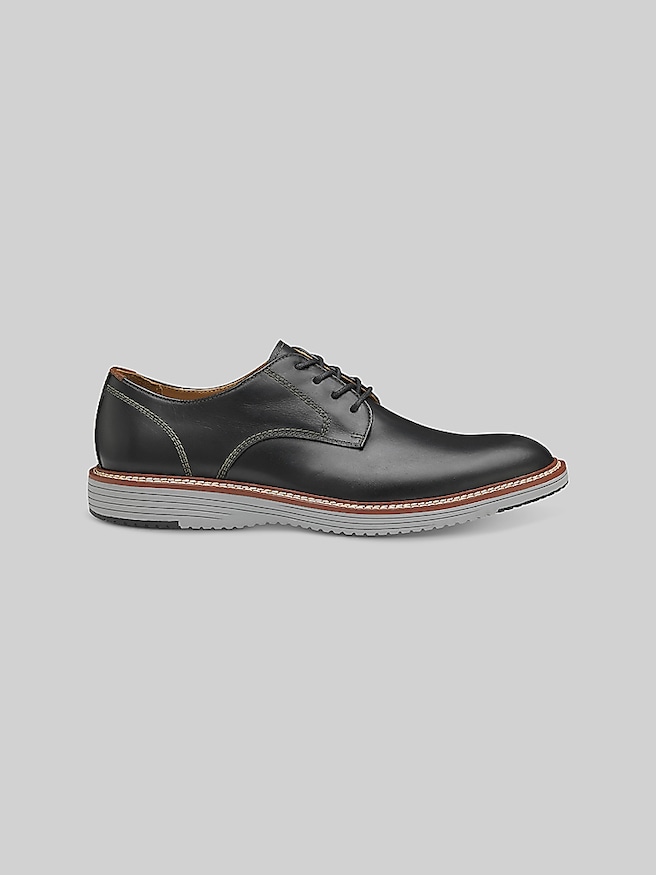
Men’s leather shoes for work bring a finished look to professional outfits, with styles ranging from lace-up oxfords and derbies to loafers and understated dress boots. The right type depends on the workplace: a polished oxford suits a traditional business setting, while a derby’s more open lacing can feel at home with chinos and a button-down shirt. Loafers offer a slip-on option for offices where tailored separates are more common than matching suits. Leather uppers give these shoes their distinctive character, from smooth surfaces with a subtle shine to textured grain that adds depth without a bold pattern. Full-grain leather retains the hide’s natural surface, while top-grain leather has been refined for a more uniform appearance; either can make a practical upper when supported by sound construction and consistent care. Suede is leather, too, though its soft nap creates a more relaxed effect and calls for a separate cleaning routine. Black leather tends to look crisp with charcoal, gray, and navy tailoring, while brown shades pair naturally with navy trousers, tan chinos, and earth-toned jackets. For a streamlined slip-on look, Black Leather Loafers for Work complement tailored trousers without adding the visual detail of laces. Toe shape also affects the overall impression: a rounded or gently tapered toe generally works across a broad range of business outfits, while an exaggerated point or bulky profile creates a more pronounced statement. A plain toe keeps the shoe visually quiet; a cap toe adds definition, and brogue perforations introduce decorative detail. In an office where a jacket comes out for client meetings but stays on the chair through desk work, a restrained leather shoe can connect both versions of the outfit. Matching the formality of the shoe to the actual dress code matters more than choosing the most elaborate design. The goal is a pair that looks appropriate at the conference table and still feels natural during the rest of the workday.
Fit is especially important in leather work shoes because a polished appearance cannot compensate for pressure across the toes or a heel that slips with every step. A comfortable fit leaves room for the toes to move without allowing the foot to slide forward, holds the heel securely, and supports the widest part of the foot without squeezing it. Leather may soften and conform with wear, but a painful shoe should not be expected to become the correct size through stretching alone. Width, instep height, and the shape of the shoe all influence comfort, so the same labeled size can feel noticeably different across designs. Derby lacing generally offers more adjustment over the instep than the closed lacing of an oxford, while loafers rely more heavily on a secure fit through the heel and midfoot. Trying shoes with the socks intended for work gives a more realistic sense of space and support. For someone who walks between buildings, stands during presentations, or moves regularly between a desk and a reception area, the sole and interior deserve as much attention as the upper. Cushioning can soften the feel underfoot, but support, flexibility, shoe weight, and a stable heel also affect comfort over several hours. Rubber outsoles often provide a more cushioned feel and can offer useful grip, while leather outsoles create a traditional dress-shoe profile; actual traction depends on the outsole design and the surface underfoot. A low, broad heel generally provides a steadier platform than a narrow one. Construction influences longevity as well. Secure stitching, neatly finished edges, and a firm heel counter are useful details to examine, while some welted constructions allow worn soles to be replaced by a qualified cobbler. Office footwear should also be distinguished from occupational safety footwear. A leather upper alone does not establish slip resistance, electrical protection, or toe protection. Workplaces with specific hazards require footwear that meets the employer’s stated safety standards, rather than a dress shoe selected for appearance.
Consistent care helps leather work shoes retain their shape, finish, and usefulness through repeated wear. Smooth leather benefits from having dust and surface dirt removed with a soft brush or lightly damp cloth before any conditioning or polishing. A conditioner suited to the leather can help keep the upper supple, while an appropriate cream or wax polish can refresh color and improve the finish. Product compatibility matters: suede, nubuck, patent leather, and coated finishes may need treatments that differ from those used on ordinary smooth leather. Testing a treatment on an inconspicuous area and following the care directions helps avoid unwanted changes in color or texture. Suede typically calls for a dedicated brush and suitable spot-cleaning methods rather than conventional shoe polish. Between wears, allowing shoes to air out helps manage moisture from normal use. Cedar shoe trees can help maintain the shape of the upper and absorb some of that moisture, and a shoehorn reduces the strain placed on the heel when slipping shoes on. Alternating pairs gives each one time to dry naturally; direct heat can damage leather and adhesives. Small repairs are also easier to address before they become structural problems. A worn heel tip, loose stitch, or thinning sole may be repairable, depending on the construction and the condition of the upper. These habits are useful for anyone building a dependable work wardrobe, from a recent graduate preparing for interviews to an experienced professional dressing for daily appointments. Leather work shoes can also be a thoughtful gift for a new role or a career milestone when the recipient’s size, preferred fit, and workplace dress code are known. Practical details often make the strongest choice: enough room for everyday socks, a closure that suits the foot, an outsole appropriate to the setting, and a finish that complements the trousers already in regular rotation. With those elements aligned, leather footwear becomes a reliable part of getting dressed for work rather than an outfit detail that needs constant adjustment.