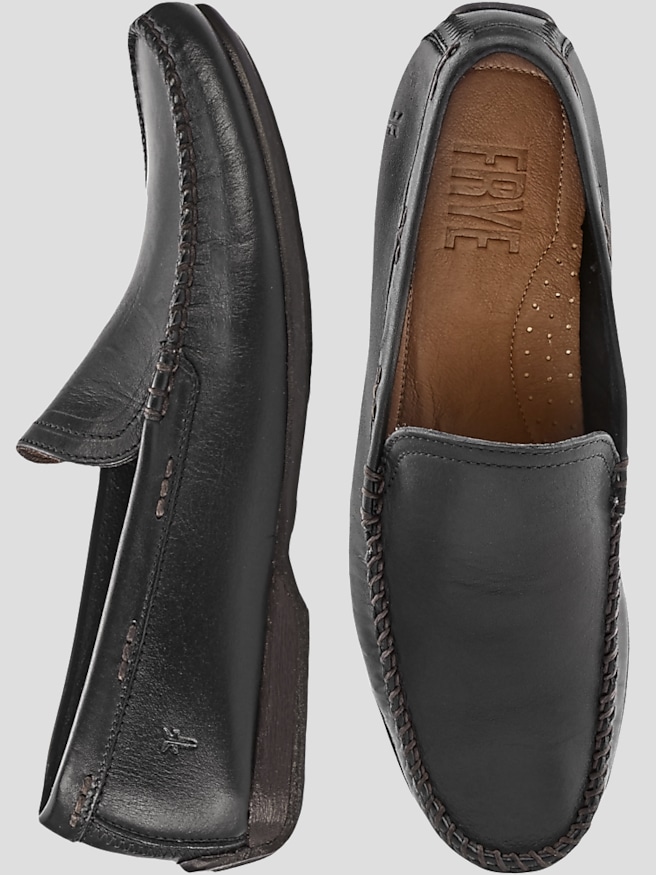
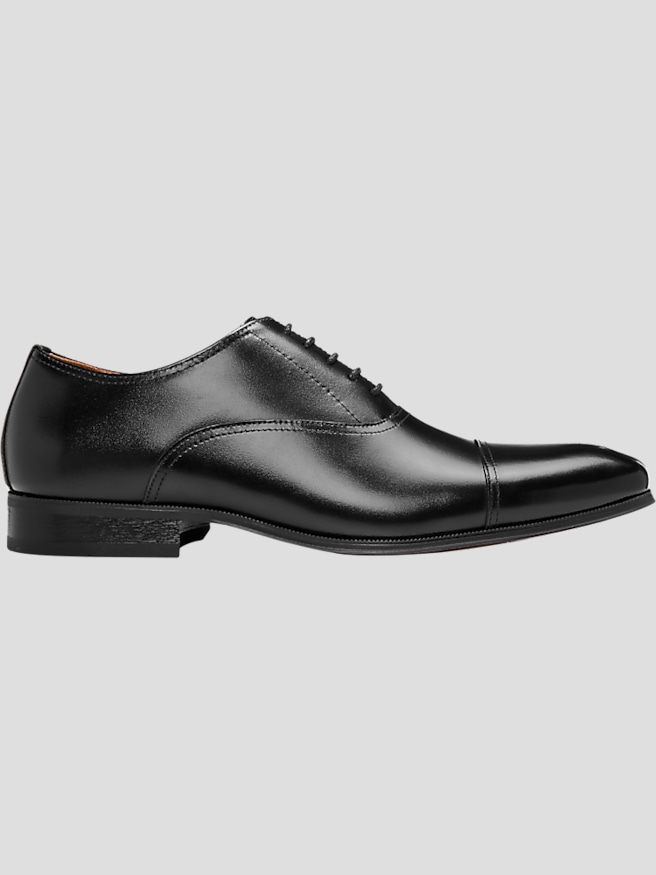
Black leather shoes for men span polished dress shoes, relaxed loafers, streamlined sneakers, and boots, giving the same versatile color several distinct roles in a wardrobe. Leather uppers provide the defining material, while the shape, fastening, finish, and sole determine how formal or casual a pair feels. An oxford has closed lacing, with the lace sections joined beneath the front of the upper, creating a neat profile that works well with tailored suits. A derby uses open lacing, giving it a slightly less formal appearance and more adjustability over the top of the foot. Both can suit office meetings, interviews, and wedding celebrations, depending on their detailing. A plain toe keeps the front clean and understated; a cap toe adds a seam across the toe without necessarily adding much visual weight. Broguing introduces decorative perforations that generally make a shoe feel less formal than a comparable plain design. Loafers offer a slip-on alternative for dress trousers, chinos, and relaxed tailoring, while monk straps replace laces with buckled straps for a distinctive but still refined look. Minimal leather sneakers belong with more casual clothing, and black leather boots can bring structure to dark denim or tailored separates. The occasion matters as much as the color: a sleek, polished lace-up has a different effect beneath a suit than a thick-soled sneaker. For traditional black-tie attire, patent leather or highly polished formal shoes are more appropriate than everyday casual styles. Black leather also pairs naturally with charcoal, gray, and navy clothing, making it useful for men who move between several dress codes. A black belt in a compatible finish helps connect the outfit without requiring every leather accessory to look identical. Trouser length affects the overall impression, too; a hem that rests cleanly above or lightly on the shoe lets the silhouette remain visible rather than disappearing beneath pooled fabric.
Material and construction influence how black leather shoes feel on the foot and how they hold up to repeated wear. Smooth leather creates a crisp appearance and accepts polish, while pebbled or other textured finishes give the surface more visual depth. Calfskin is often valued for its fine grain and supple feel, though leather quality also depends on how it is processed and finished. Full-grain leather retains the original grain surface; top-grain leather has generally undergone some surface refinement. Neither label alone describes the entire shoe, so the lining, stitching, sole attachment, and overall workmanship deserve attention alongside the upper. Leather-lined interiors can feel smooth against the foot, while cushioned footbeds may soften the experience of standing through presentations or walking between appointments. Sole choice makes another noticeable difference. Leather soles offer a traditional dress-shoe appearance and feel, whereas rubber soles can provide flexibility, cushioning, and grip, depending on their design. A slim rubber outsole can preserve a dressier profile without the visual weight of a pronounced tread. Welted construction may allow a qualified cobbler to replace the soles, extending the useful life of a well-maintained upper; cemented construction bonds the sole to the shoe and can create a lighter, flexible design, though repair options vary. Fit remains more important than any single construction feature. Toes need room to lie naturally without touching the front, the widest part of the foot should align with the widest part of the shoe, and the upper should hold the foot without pinching. Laces offer adjustment, but tightening them cannot correct a shoe that is substantially too wide or too long. A loafer depends more heavily on the match between the foot and the shoe’s shape because there is no lacing to adjust. Trying shoes with the socks intended for regular wear gives a more useful sense of fit, and walking on a clean indoor surface reveals pressure points that standing still can miss. Leather may soften with wear, but a painful fit is not a reliable starting point.
Regular care helps black leather shoes retain their appearance, particularly around the toe, heel, and flex points where everyday use leaves its marks. Surface dust is best removed before polishing so it does not become worked into the finish. A soft brush or cloth is suitable for many smooth leather uppers, while textured leather may need gentle brushing to reach the recesses. Cleaner, conditioner, and polish serve different purposes: cleaner lifts residue, conditioner helps maintain the leather’s suppleness, and polish restores color or shine. Products need to match the particular finish, since patent leather and specialty coatings do not respond to treatment in the same way as conventional smooth leather. A small test in an inconspicuous area helps avoid an unexpected change in color or sheen. For routine office wear, a modest, even shine often looks more natural than a heavily built-up gloss; a formal occasion may call for a more polished finish. Shoe trees help support the shape between wears, and a shoehorn reduces strain on the heel when putting shoes on. Alternating pairs gives the interior time to dry from ordinary foot perspiration rather than subjecting the same pair to continuous wear. Deep creases are not automatically a sign of poor quality, but cracked uppers, separating soles, or worn heel edges deserve attention before the damage progresses. A cobbler can assess repairs and explain whether the construction makes them practical. These details matter to anyone who relies on black leather footwear for frequent meetings, long presentations, or special events where comfort and appearance both count. The category can also make a useful gift for someone beginning a professional role, preparing for a graduation ceremony, or refreshing a well-used dress wardrobe. Familiarity with the recipient’s size, width, preferred fastening, and usual clothing makes the choice more personal. The strongest match is a pair whose shape, support, and level of formality suit the way it will actually be worn.