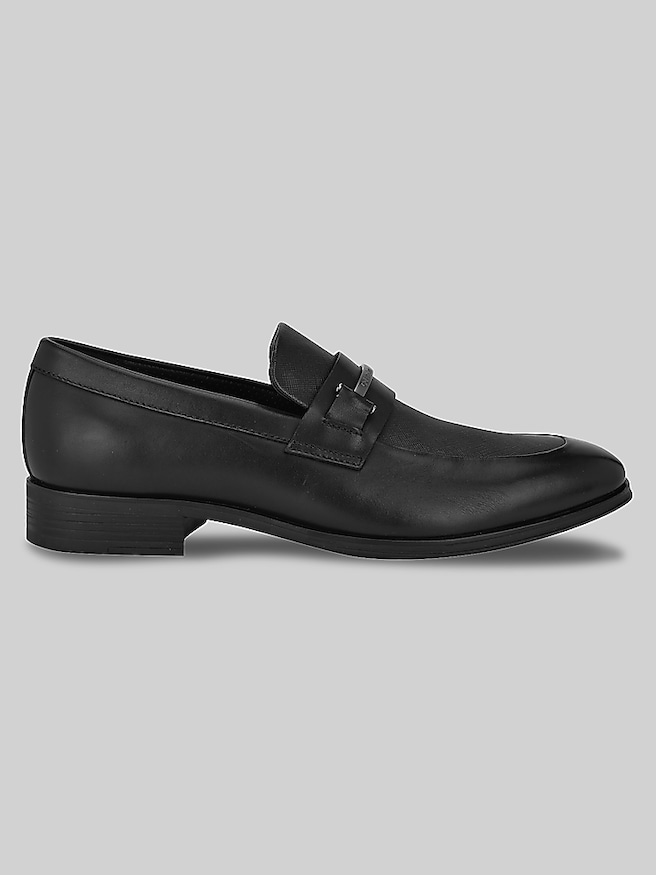
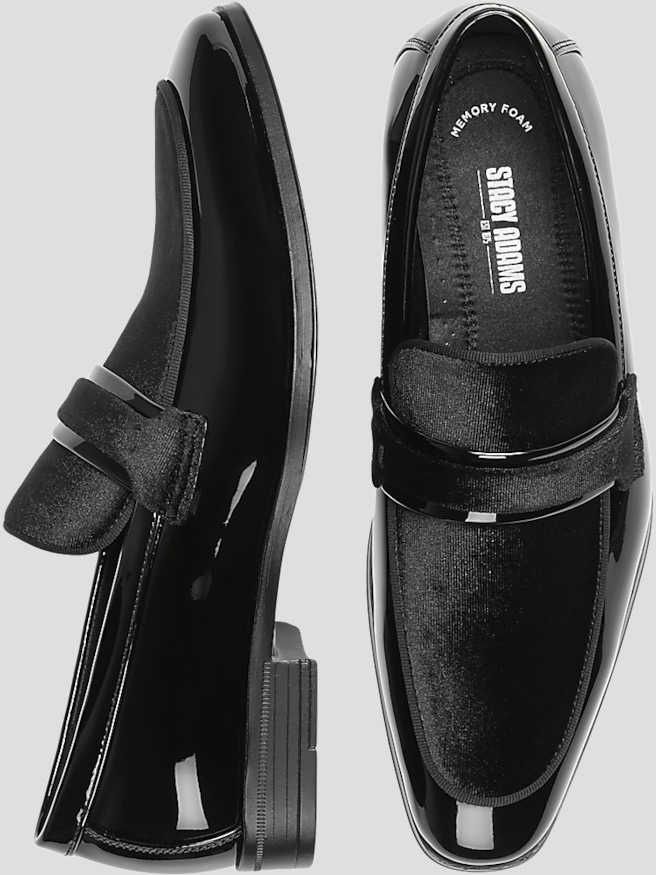
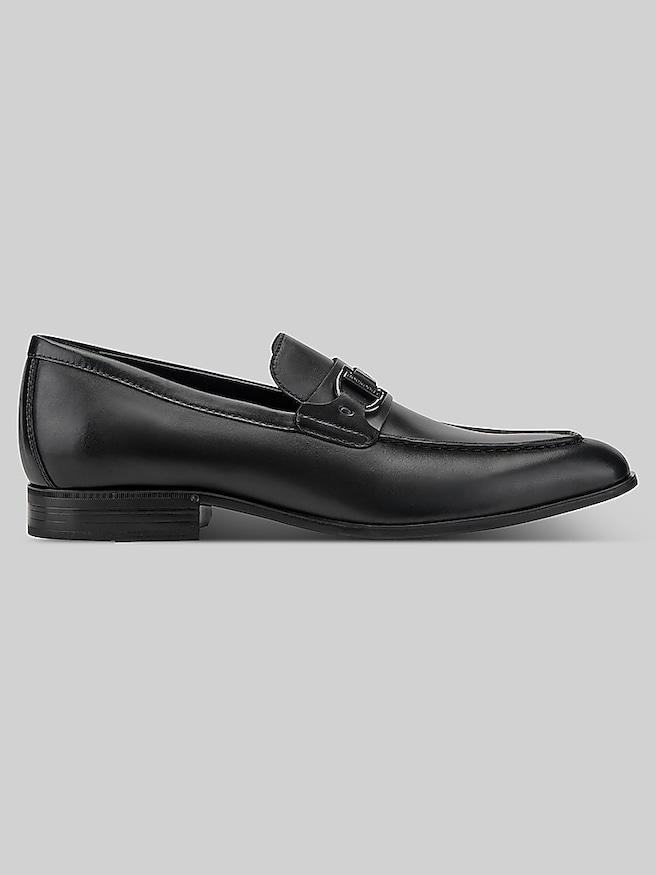
Black leather loafers for men combine the ease of a slip-on shoe with the clean finish of dress footwear. Their defining features—a low-cut opening, a shaped upper across the instep, and no laces—make them a versatile choice for office outfits, dinners, wedding guest attire, and everyday dressing that calls for something sharper than sneakers. The details establish the mood. Penny loafers have a leather strap across the vamp with a small central opening, creating a restrained look that works with both tailored trousers and chinos. Tassel loafers add movement and a more decorative finish, while bit loafers use metal hardware to give the upper a distinct focal point. A plain-vamp design keeps the emphasis on the leather, toe shape, and overall silhouette. Rounded toes tend to feel more relaxed; a gently tapered or almond-shaped toe can sit neatly beneath a tailored pant leg without looking exaggerated. Smooth black leather offers a strong visual foundation for charcoal, navy, gray, and earth-tone clothing, and its finish can make the same basic shoe shape feel understated or dressy. A subtle sheen suits daily office wear, while a carefully polished surface looks especially crisp with pressed trousers and a jacket. For a softer, more textured alternative, black suede loafers for men bring a less reflective finish to similar outfits. With smooth leather, the most convincing combinations usually keep proportions balanced: trousers with a slight break or a clean hem allow the shoe’s shape to remain visible, while excessively long hems can bunch over the vamp. Dark, clean-finished denim and a knit polo create an easy dinner outfit; wool trousers, a dress shirt, and a blazer move the same style toward business settings. Sleek loafers can complement many suits, though traditional black-tie dress codes generally call for more formal footwear rather than an everyday loafer.
Leather quality, construction, and fit determine how black loafers feel after the first impression. Full-grain leather retains the hide’s natural grain and may show subtle variation across its surface, while top-grain leather has been refined for a more uniform appearance. Corrected-grain finishes can provide a consistent look, although the coating and underlying leather influence flexibility, breathability, and how the surface responds to wear. None of these labels alone guarantees comfort or longevity; the thickness of the leather, the quality of the stitching, and the design of the shoe matter as well. Softer uppers may feel accommodating early on, while firmer leather can take time to flex naturally at the forefoot. That adjustment should not be confused with fixing an unsuitable size. Because loafers have no laces to tighten, a secure fit through the instep and heel is particularly important. The foot should feel held without pressure across the top, the toes should have room to rest naturally, and the widest part of the foot should align with the widest part of the shoe. A little heel movement can occur in some new leather-soled shoes, but repeated slipping, rubbing, or the need to grip with the toes suggests a fit problem. Trying loafers with the socks intended for regular wear gives a more useful sense of space than relying on the size printed inside another shoe. Thin dress socks in black, charcoal, or navy maintain a continuous line beneath trousers; low-profile no-show socks suit more casual outfits while providing a layer between the foot and lining. Leather linings, padded footbeds, and supportive shaping can improve comfort, but cushioning does not compensate for a cramped toe box or an unstable heel. Sole choice also affects everyday use. Leather soles offer a traditional profile and can feel firm underfoot; rubber soles often provide more grip and cushioning, depending on their tread and thickness. A low-profile sole keeps the look refined, while a heavier sole adds visual weight. Stitched and cemented constructions have distinct characteristics, and repair options depend on how the shoe is built, not simply on whether stitching is visible.
Regular care helps black leather loafers retain their shape, finish, and usefulness, especially when they move between commuting, meetings, and evening plans. Dust and grit can dull the surface and collect around seams, so a soft brush or clean cloth is useful for routine upkeep. A lightly damp cloth can remove ordinary surface marks from many smooth leathers, followed by drying at room temperature away from direct heat. Specialty finishes may need their own treatment, making the maker’s care directions important before applying cleaners or polish. Leather conditioner, used sparingly and only when appropriate for the finish, helps maintain suppleness; matching black cream polish can refresh color and soften the appearance of minor scuffs. Wax polish can add shine, particularly at the toe, but heavy layers around flex points may build up and crack. Testing any treatment on an inconspicuous area helps avoid an unexpected change in color or sheen. Leather is not inherently waterproof, and protective products should be compatible with both the upper and its finish. Inside the shoe, allowing moisture to dissipate between wears can make a noticeable difference to comfort and condition. Alternating pairs gives the lining and footbed time to dry, while properly sized cedar shoe trees help support the shape and absorb some moisture. A shoehorn protects the heel from being crushed during entry, an especially useful habit with slip-on footwear. For travel, separate shoe bags keep polish away from clothing and reduce rubbing against other belongings; at home, dry storage with room for air circulation is preferable to sealing shoes away while damp. These practical details also make black leather loafers a thoughtful gift for a father, brother, partner, or graduate building a versatile wardrobe. The best match reflects the recipient’s routine: understated penny loafers for someone who favors simple tailoring, decorative details for someone who enjoys a stronger accent, or a cushioned sole for a day that includes substantial walking. Confirming size, width, and preferred sock thickness is more useful than guessing from appearance alone. A well-fitting pair earns its place through repeated use, bringing a composed finish to familiar clothes without requiring an elaborate outfit.