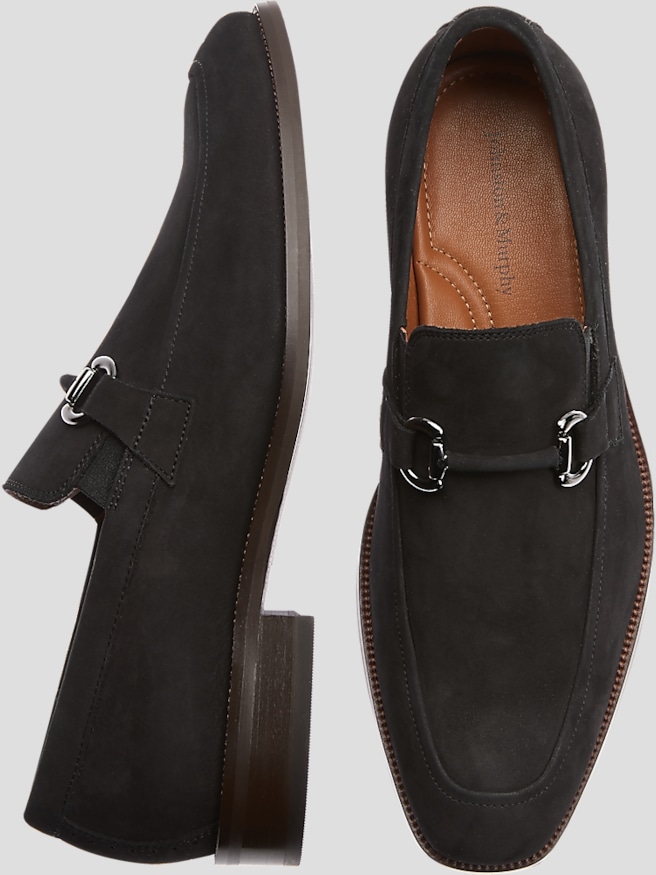
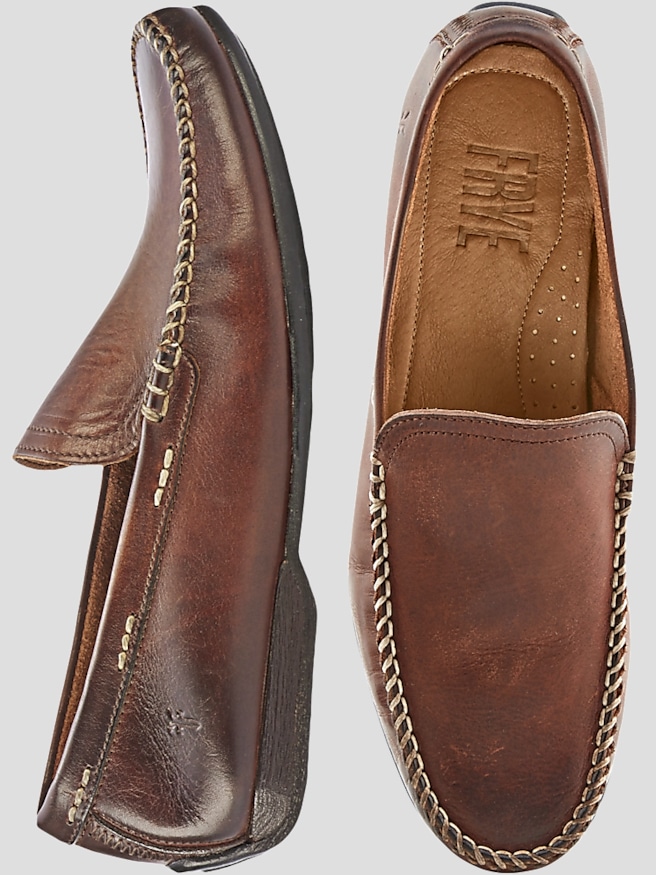
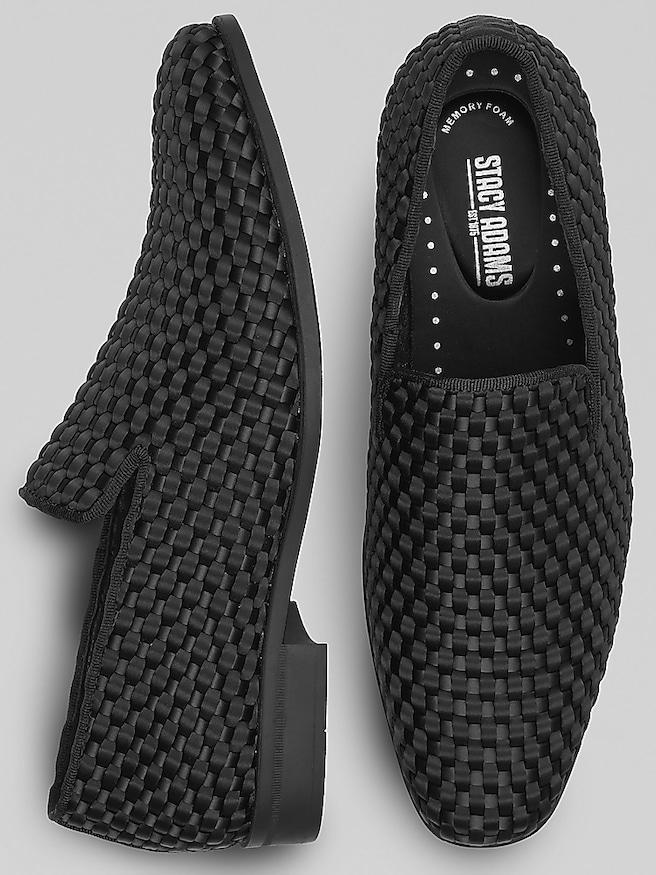
Leather dress loafers for men combine the clean lines of dress shoes with a slip-on design, making them a versatile choice for tailored trousers, business attire, and polished everyday outfits. Their character comes from the shape of the toe, the finish of the leather, the profile of the sole, and the detailing across the vamp—the upper section that covers the top of the foot. Penny loafers feature a slotted leather strap and offer a restrained look that works well with a navy suit or gray wool trousers. Tassel loafers add movement and texture without overwhelming a tailored outfit, while bit loafers use metal hardware to create a more distinctive focal point. A plain-vamp design keeps the emphasis on the leather and silhouette. For dressier settings, a gently tapered or almond-shaped toe and a relatively slim sole generally look more refined than a broad toe and thick, heavily textured outsole. Black leather creates a crisp finish with charcoal trousers and many dark suits; dark brown brings depth to navy, medium gray, and earth tones. Cognac and other lighter brown shades create stronger contrast and often feel more relaxed, especially with chinos or textured tailoring. Matching the general color and finish of a leather belt helps the outfit feel connected without requiring an exact shade match. Leather dress loafers can suit office presentations, dinner reservations, graduations, and weddings where the dress code allows them. For a conservative business setting, understated detailing and dark dress socks keep the look composed. At a celebration with a more relaxed dress code, loafers can complement an open-collar shirt and an unstructured jacket. Traditional black-tie attire generally calls for a more specialized formal shoe rather than an everyday loafer. The broader category of Men's Leather Slip On Loafers spans both tailored and casual styling, with leather finish, construction, and proportions helping distinguish one from the other.
Material and construction influence how leather loafers feel from the first wear and how they hold their shape over time. Smooth leather provides a clean surface that can usually be conditioned and polished, while pebbled leather introduces visible grain and a less uniform texture. Suede is also leather, but its soft nap gives it a more relaxed appearance and requires a separate care routine. Full-grain leather retains the hide's natural grain surface and can develop a distinctive patina with wear; corrected-grain leather has been treated to create a more consistent appearance. Neither a leather label nor a glossy finish alone establishes how comfortable or durable a shoe will be. Leather thickness, tanning, lining, stitching, and overall construction all matter. A supple upper may feel accommodating sooner, while a firmer upper may hold a sharper shape but need gradual wear to soften. Inside the shoe, smooth lining and neatly finished seams help limit friction, particularly around the heel and across the instep. Cushioned footbeds can soften the feel underfoot, though cushioning is not the same as structured arch support. Someone moving between a desk, meeting rooms, and a restaurant may prefer a balance of flexibility and support rather than the softest possible interior. Outsoles also change the experience: leather soles often create a slim, traditional profile, while rubber soles can add flexibility and traction, depending on their compound and tread. A low-profile rubber sole can preserve a dressy appearance without the visual weight of a lug sole. Some stitched constructions allow resoling when the upper remains sound, but repair options depend on the shoe's design and a cobbler's assessment. Handsewn details and moc-toe stitching contribute to appearance and flexibility without automatically guaranteeing longer wear. For lasting use, sound attachment at the sole, even stitching, and an upper that flexes comfortably at the ball of the foot are more meaningful than decorative details alone. The right balance depends on whether the loafers will spend most of their time beneath a conference table or covering longer stretches on foot.
Fit deserves particular attention with loafers because there are no laces to adjust the hold across the foot. A well-fitting pair should feel secure through the heel and instep without pinching the toes or pressing sharply across the top of the foot. Slight initial heel movement can occur as a sole begins to flex, but persistent slipping, toe gripping, or rubbing suggests a mismatch in size or shape. Leather can soften and give modestly in width; it should not be expected to gain meaningful length or correct a painful fit. Trying loafers with the socks intended for regular wear makes the assessment more useful. Thin dress socks take up less space than cushioned casual socks, and no-show socks need to stay beneath the opening without bunching underfoot. Walking on a clean indoor surface helps reveal pressure points that may not be noticeable while seated. Trouser length matters visually, too: a slight break creates a traditional line, while a clean, shorter hem shows more of the vamp and detailing. Once in regular rotation, leather dress loafers benefit from simple, consistent care. Brush away surface dust, wipe smooth leather gently as needed, and use a conditioner appropriate for the finish according to its instructions. Test care products on an inconspicuous area, especially on light or burnished leather. Color-matched cream polish can refresh smooth leather, while suede needs a suitable brush rather than conventional polish. Let shoes dry naturally away from direct heat if they become damp, and use properly sized shoe trees to help maintain their shape between wears. Alternating pairs gives the interiors time to air out, and timely heel or sole repairs can prevent more extensive damage. As a gift for a graduate, a new professional, or someone who enjoys tailored dressing, leather loafers are most useful when the recipient's size, width, and usual style are known. An understated shape and familiar leather color make them easy to incorporate into an established wardrobe.