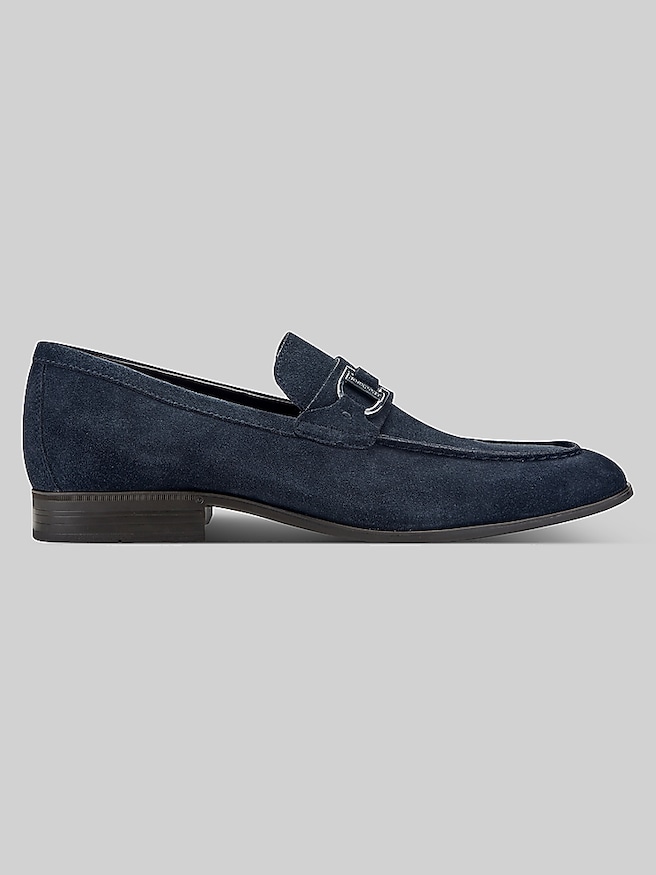
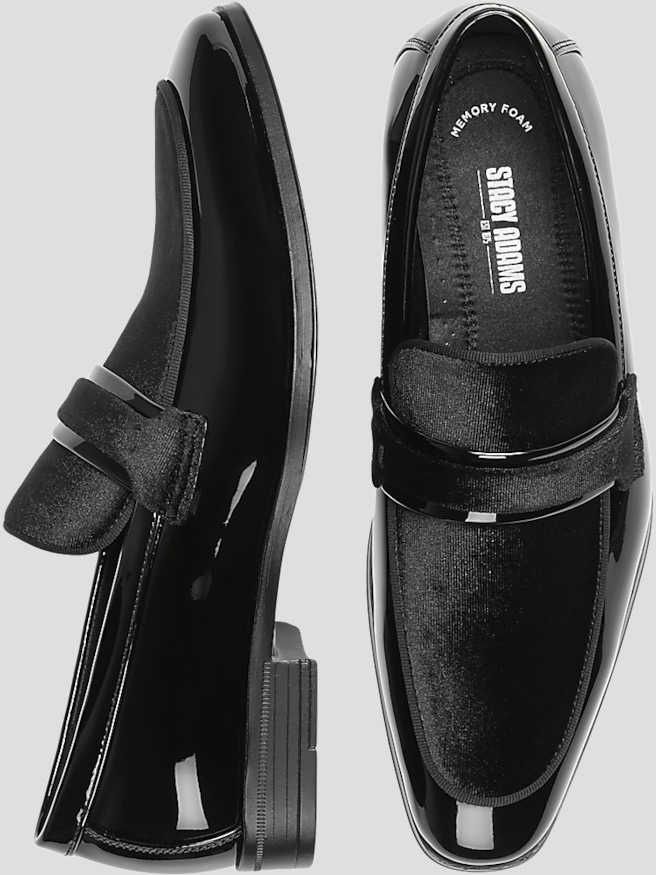
Dress loafers for men bring a clean, polished finish to tailored clothing without the visual detail of laces. Their slip-on shape keeps the focus on the line of the shoe, making proportions, leather texture, and finishing especially important. A streamlined loafer with a gently tapered toe and a low-profile sole sits neatly beneath dress pants, while a slightly rounded shape can feel more relaxed without losing its refined appearance. Penny loafers have a familiar strap across the upper that works with a wide range of outfits; tassel loafers introduce a little movement and character; and styles with understated metal hardware create a more pronounced focal point. The right choice depends as much on the clothing around the shoes as on personal taste. Black leather creates a crisp foundation for charcoal trousers and dark suits, while deep brown pairs naturally with navy tailoring, tan dress pants, and textured sport coats. Burgundy tones can add depth without becoming the loudest part of an outfit. Smooth leather generally reads as dressier than suede, particularly when it has an even finish and a restrained shine. Suede offers a softer surface that complements less structured jackets and trousers with visible texture, though its suitability depends on the occasion’s dress code. Full-grain leather retains the hide’s natural surface and can develop character with use; other leather finishes may create a more uniform appearance. Regardless of material, careful stitching, clean edges, and a well-finished interior contribute to how the shoes look and feel over time. These details become noticeable in ordinary moments: crossing an office lobby, sitting down for a client meeting, or standing beside the table at a wedding reception. Dress loafers work best when they complement the outfit rather than compete with it, providing enough polish for the setting while preserving the easy character that makes this footwear distinctive.
Fit deserves particular attention because a loafer relies on its shape, rather than adjustable laces, to stay securely on the foot. The upper should feel comfortably close across the instep, with enough room for the toes to rest naturally instead of pressing against the front or sides. A small amount of heel movement can occur in a new leather shoe, but persistent slipping, a heel that lifts noticeably with each step, or the need to curl the toes to keep the shoe on suggests that the fit needs another look. Length alone does not tell the whole story: width, instep height, heel shape, and the design of the shoe’s last all influence comfort. Trying loafers with the socks intended for regular wear gives a more useful sense of fit than switching between thick athletic socks and thin dress socks. Leather may soften and conform with wear, but that process should not be treated as a solution for pinching or a shoe that is too short. Interior construction matters, too. Smooth linings can reduce friction, cushioned footbeds can make standing more comfortable, and a supportive shape can help the foot feel settled throughout the day. Soles affect both appearance and intended use. Leather soles often provide a slim, traditional profile, while rubber soles can add flexibility and traction; actual grip depends on the sole pattern and the surface underfoot. For someone who moves between a desk, conference rooms, and a commute, a balanced combination of cushioning, flexibility, and secure fit is more useful than appearance alone. Trouser length also changes the overall effect. A modest break allows the loafer’s shape to remain visible without exposing excessive fabric bunching around the ankle. Fine-gauge dress socks create a continuous, dressed-up line with tailored pants, while discreet no-show socks may suit a more relaxed outfit when the setting allows. Neither approach changes the importance of a comfortable fit and an outfit appropriate to the occasion.
The appeal of dress loafers extends beyond a single office uniform. They can finish a suit for a daytime wedding, complement a jacket and trousers for an anniversary dinner, or bring intention to the clothing chosen for a presentation or graduation ceremony. For an interview, a restrained leather style pairs well with neatly pressed pants and a coordinated belt, allowing the overall appearance to feel considered rather than distracting. Matching the belt and shoes in general color and level of formality is usually more important than finding an identical shade. A formal invitation may call for footwear beyond the scope of an everyday loafer, so the stated dress code remains the best reference for highly ceremonial occasions. In settings with more flexibility, business casual loafers for men offer a related direction for outfits built around chinos, collared shirts, and unstructured jackets. Whichever setting the shoes serve, consistent care helps preserve their appearance and useful life. Smooth leather benefits from dust removal with a soft brush or cloth, conditioning suited to its finish, and an appropriate cream or polish used according to the care instructions. Suede needs tools made for its textured surface rather than standard leather polish. Shoe trees can help maintain shape between wears, and using a shoehorn limits unnecessary strain on the heel counter when putting the shoes on. Giving each pair time to air out between wears supports interior freshness and allows absorbed moisture to dissipate. Shoes that become damp should dry naturally away from direct heat. Over time, worn heels, separating edges, and thinning soles deserve attention; some constructions can be repaired or resoled, while others cannot. Dress loafers can also make a thoughtful gift for a graduate entering a professional setting, a partner updating everyday tailoring, or someone who enjoys dressing for special occasions. Knowing the recipient’s size, width, preferred colors, and typical dress code helps turn that gift into footwear that feels personal and earns regular use.