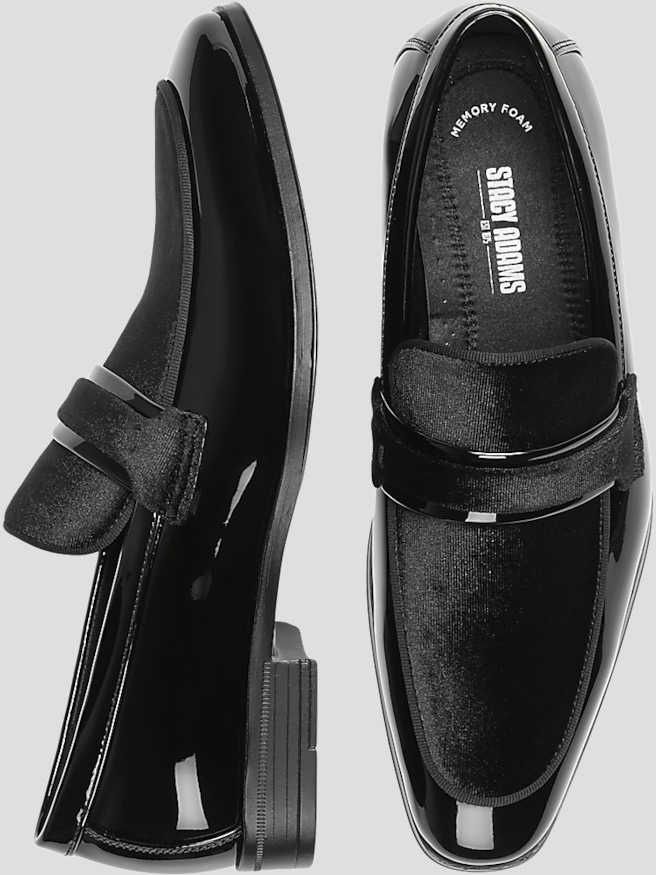
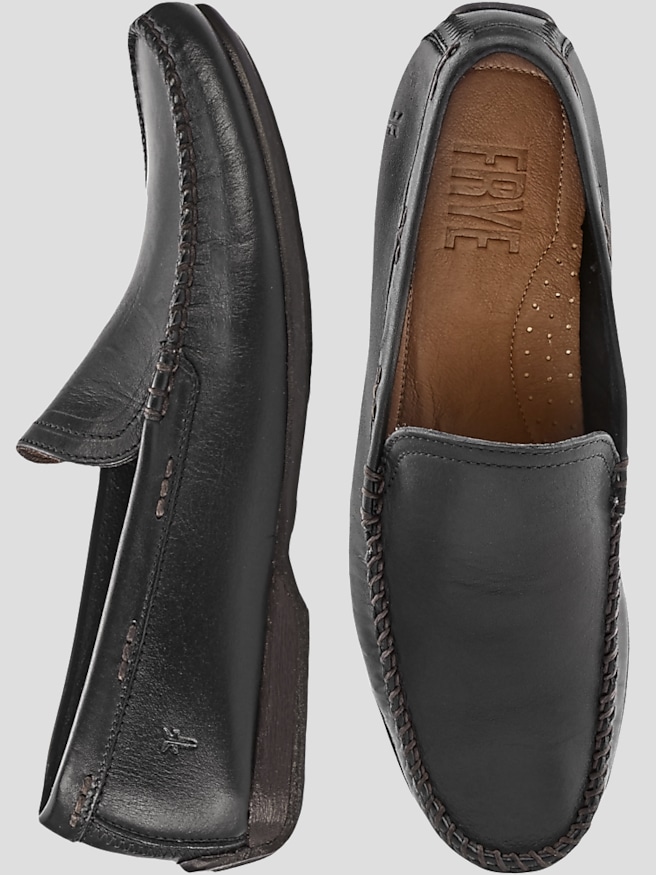
Black leather loafers for work bring a clean, finished look to a professional wardrobe without the laces and visual weight of a traditional lace-up dress shoe. The low profile sits neatly beneath tailored trousers, while black leather creates a consistent foundation for charcoal, gray, navy, and black clothing. In an office where the day might include a morning presentation, lunch with a client, and an afternoon at a desk, that versatility can make getting dressed more straightforward. A smooth upper with restrained detailing generally reads as more formal than a heavily textured surface or a pronounced decorative accent. Penny loafers offer a familiar strap across the vamp, while tassel styles introduce a little more movement and personality; either can look polished when the shape, finish, and surrounding clothing suit the workplace. For traditional business settings, a streamlined toe and relatively slim sole often complement tailored pants better than a broad, chunky silhouette. In a business-casual environment, a slightly fuller shape can work comfortably with chinos, a tucked-in shirt, and an unstructured jacket. Trouser length matters, too: a modest break keeps fabric from pooling over the shoe and lets the loafer’s shape remain visible. Dress socks in a dark, complementary color maintain a continuous line between the hem and the shoe, especially when seated during a meeting. A black leather belt with a compatible level of shine can bring the outfit together without requiring every accessory to match precisely. The broader category of black leather loafers spans understated and more expressive designs, but work-focused choices tend to benefit from simplicity. They are particularly useful for professionals whose dress expectations fall between a full suit and casual footwear, including office staff, managers, and people moving between internal meetings and customer-facing appointments. Where a workplace requires protective footwear or has a strict dress policy, those requirements take priority over appearance. Within an appropriate setting, the appeal is a shoe that feels considered rather than conspicuous, with enough structure to support a polished outfit.
Leather quality, construction, and fit have a greater effect on everyday satisfaction than shine alone. Smooth leather can develop gentle creases across the forefoot as it flexes, and that natural movement is different from a shoe being poorly fitted. Full-grain leather retains its natural surface characteristics and can develop depth with regular wear and care, while other leather finishes may emphasize a more uniform appearance. No single label tells the whole story: leather thickness, finishing, lining, and the way the upper is assembled all influence how a loafer feels and holds its shape. A lined interior can provide a smooth contact surface, though its comfort also depends on seam placement and fit. Because a loafer has no laces to adjust, the relationship between the heel, instep, and toe box deserves particular attention. The heel should feel secure, the vamp should hold the foot without pressing sharply across the instep, and the toes should have room to rest naturally rather than being pushed together. A small amount of initial heel movement can occur in a structured new shoe, but persistent slipping or rubbing is not something to overlook. Leather may soften through wear; a shoe that is too short or noticeably restrictive is unlikely to become the right size simply by being worn longer. Width and instep shape can explain why two loafers marked with the same size feel quite different. The socks intended for work also affect the fit, especially when moving between thin dress socks and more substantial everyday pairs. Underfoot, cushioning may soften contact with hard office floors, while a supportive footbed and a stable heel can contribute to comfort during stretches of standing. A clean-looking loafer is not automatically suitable for hours of continuous walking, however. For a commute that includes substantial time on foot, flexibility, secure fit, and the sole’s contact with the ground matter as much as the upper’s appearance. These details become especially noticeable when a workday alternates between sitting, standing at a presentation, and walking through a large building.
Durability comes from both the way a shoe is built and the attention it receives after wear. The sole is a practical starting point: leather soles often create a traditional dress-shoe profile, while rubber soles can provide a different combination of flexibility, cushioning, and surface grip. Performance varies with the sole design and flooring, so material alone does not establish how securely a shoe will feel underfoot. An outsole with visible texture may be useful on smooth indoor surfaces, although it should not be assumed to meet workplace slip-resistance requirements without an appropriate rating. The connection between the upper and sole also affects long-term use. Some constructions allow a worn sole or heel to be replaced by a qualified shoe repair professional, while others are less suited to that work. Repairability can be worth considering for footwear expected to become a regular part of a professional wardrobe. Routine leather care helps preserve the finish without requiring a mirror shine. Removing surface dust with a soft brush or cloth keeps buildup from dulling the upper, and an appropriate leather conditioner can help maintain suppleness when used according to its directions. Polish suited to the leather’s finish can refresh black color and create an even appearance around the toe and heel, where marks are often most noticeable. Decorative seams and straps also benefit from gentle cleaning rather than heavy applications of product that collect in narrow edges. Letting shoes air out between wears and using properly fitted shoe trees can help manage interior moisture and support the shape of the upper. Storage away from direct heat helps avoid unnecessary stress on the leather. For someone beginning a first office job, stepping into a management role, or rebuilding a professional wardrobe, work-appropriate loafers can also make a thoughtful gift when size, width, and preferred style are already known. Personal fit remains important; a familiar silhouette is not a substitute for the recipient’s comfort. A well-chosen pair earns its place through repeated use, bringing a composed finish to everyday work clothes while remaining practical enough for the routines that fill a working day.