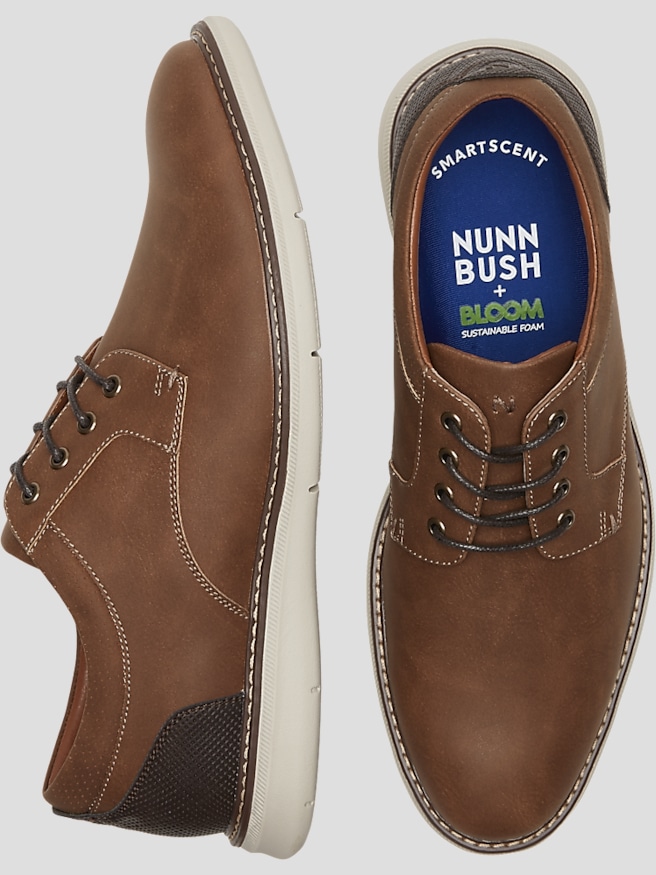
Comfortable derby shoes combine an adjustable, open-lacing design with a foot shape, cushioning system, and sole construction suited to extended wear. The defining feature is the placement of the lace panels: they sit on top of the vamp, the section covering the front of the foot, rather than being joined beneath it as they are on an Oxford. This construction allows the opening to spread as the laces loosen, offering flexibility across the instep and making it easier to adjust the fit. Comfort still depends on the whole shoe, not just its lacing. A well-shaped toe box, smooth interior seams, a secure heel, and cushioning that does not collapse immediately underfoot all contribute to a pair that feels comfortable beyond the first few steps. Soft leather uppers can gradually conform to the foot, while structured leather helps preserve a clean profile alongside tailored trousers. Suede brings a softer texture that works especially well with chinos, knitwear, and less formal jackets. Neither material guarantees comfort on its own; thickness, finishing, lining, and the underlying construction matter just as much. A supple upper with a rough seam can be less pleasant than a firmer one with a carefully finished interior. Leather linings can help manage moisture, while textile linings may offer a softer initial feel, depending on their construction. Padded tongues and collars can reduce pressure where the shoe meets the foot, though excessive padding may take up space needed for a comfortable fit. Some designs also incorporate lightweight midsoles or cushioned footbeds for a feel closer to casual footwear, without losing the recognizable shape of a dress shoe. The appeal of Men's Derby Shoes lies in that combination of structure and adaptability: polished enough for an office meeting, relaxed enough for dinner afterward, and adjustable enough to accommodate a range of instep shapes when the size and width are right.
Fit is what turns those construction details into everyday comfort. A comfortable derby should hold the heel securely without rubbing, leave enough room for the toes to rest naturally, and bend near the ball of the foot rather than across the middle of the arch. The widest part of the foot should sit comfortably within the widest part of the shoe, without the upper bulging over the sole edge. An elongated toe can create the appearance of extra room while still feeling narrow where the foot actually needs space, so the silhouette alone does not tell the whole story. Open lacing offers useful adjustment, but it cannot compensate for a shoe that is too short or fundamentally too narrow. Leather may soften with wear; it should not be expected to resolve persistent squeezing, numbness, or sharp pressure. The socks worn with the shoes also affect fit, particularly when moving between thin dress socks and more substantial everyday pairs. Underfoot, cushioning and support serve distinct purposes. A plush footbed can soften the initial step, while a stable base and an appropriately shaped insole help the shoe feel steady over longer periods. Removable footbeds may accommodate personal inserts, provided the shoe has enough depth and the replacement does not crowd the toes or lift the heel excessively. Outsole choice adds another layer of consideration. Rubber soles often provide flexibility and useful traction, although actual grip depends on the tread, compound, and walking surface. Leather soles offer a traditional profile and can become more flexible with use, but may feel firmer underfoot. A welted construction may permit resoling, depending on the design and condition of the upper, while other construction methods can produce a lighter, more flexible shoe. Neither approach automatically makes a pair more comfortable. For someone walking between meetings, standing through a presentation, or spending an evening at a wedding reception, the most useful combination is a secure fit, manageable weight, and cushioning that remains comfortable as the hours pass.
The best use for a comfortable derby often comes down to its shape and finish. A smooth black pair with a restrained toe and a relatively slim sole sits naturally beneath a dark suit or dress trousers, especially for business settings and ceremonies where a clean, understated appearance matters. Brown leather adds depth beside navy, charcoal, and earth-toned clothing, while suede and more substantial soles lean toward chinos, textured trousers, and unstructured sport coats. A plain toe keeps the overall impression simple; broguing or an apron-toe seam adds visual texture without changing the open-laced foundation. Trouser proportions matter, too. A slim shoe can look balanced beneath a neat hem, while a broader sole often works better with a slightly fuller trouser leg. Comfortable derbies can also make thoughtful gifts for a graduate starting an office role, a partner building a tailored wardrobe, or a father who enjoys dressing well for family occasions. Shoe size, width, usual sock thickness, and preferred toe shape are more useful gift considerations than appearance alone, particularly for someone who already knows which fits feel right. Thoughtful care helps preserve both that fit and the shoe’s appearance. Surface dust is best removed before it works into creases, and leather benefits from occasional conditioning with a product appropriate to its finish. Too much conditioner can leave residue or alter the surface, so a light application and a discreet test area are sensible precautions. Suede needs its own brush and suitable care products to maintain the nap rather than flatten it beneath leather cream. After wear, allowing the interior to dry naturally and using properly sized shoe trees can help control moisture and maintain shape; direct heat can damage leather and adhesives. Rotating footwear gives each pair time to dry between wears, while attention to worn heels, damaged laces, and separating sole edges can prevent small problems from becoming larger repairs. With suitable materials, an accommodating fit, and consistent care, derby shoes can remain a dependable part of a wardrobe that moves comfortably between work, celebrations, and everyday plans.